How Nigeria's Underground Crypto Economy Survived the CBN Ban
 Aug, 28 2026
When the Central Bank of Nigeria (CBN) banned banks from dealing in cryptocurrency in February 2021, most observers expected the market to collapse. They were wrong. Instead of disappearing, Nigerian traders simply moved offline and off-bank, building a massive, resilient underground crypto economy that thrived for nearly three years. This wasn't just a few people hiding coins under mattresses; it was a sophisticated parallel financial system involving millions of users, complex peer-to-peer networks, and community-driven trust mechanisms that processed billions of dollars in transactions.
The ban period, which officially lasted until December 2023, created a unique "gray market." The CBN didn't ban individuals from owning crypto; they only stopped financial institutions from facilitating the trades. This regulatory loophole allowed Nigerians to keep trading while cutting off the formal banking rails. The result? Nigeria jumped from 28th to 2nd globally in crypto adoption during this time, proving that when you squeeze the official channels, the informal ones explode.
Key Takeaways
- Binance P2P became the backbone: By late 2022, over 1.2 million Nigerians used Binance P2P, moving roughly $150 million monthly in naira-denominated trades.
- Community replaced regulation: With no legal recourse, traders relied on WhatsApp groups, Telegram channels, and community blacklists to verify partners and avoid scams.
- Fraud was high but manageable: While 42% of traders reported at least one scam, community-developed "test transaction" protocols reduced risk significantly.
- Banking remained the biggest pain point: 67% of users experienced frozen accounts or delayed transfers, forcing many to use mobile money or airtime as intermediaries.
- The ban backfired: Rather than killing adoption, the restrictions accelerated innovation, leading to the creation of local platforms like Quidax and Bundle.
How the Underground Network Actually Worked
You might think trading without banks would be chaotic. In reality, it was surprisingly organized. When the CBN directive hit, the immediate problem was how to move naira into crypto without triggering bank alerts. The solution was Peer-to-Peer (P2P) trading. Platforms like Binance P2P acted as escrow services, holding the crypto until the buyer confirmed payment. But since banks were slow or suspicious, traders developed workarounds.
Many used mobile money services or even bought phone airtime to settle trades, which could then be swapped for cash by third parties. According to a 2022 survey by Breet.io, 78% of underground traders used WhatsApp groups to verify identities before closing deals. If you wanted to buy Bitcoin, you didn't just click a button; you messaged the seller, checked their reputation in a shared group chat, did a small test transfer, and only then released the main amount. It was manual, slow, but effective.
| Feature | Formal Banking Channel | Underground/P2P Network |
|---|---|---|
| Primary Platform | Bank Transfer | Binance P2P, Paxful, Local Apps |
| Verification Method | KYC via Bank ID | Community Reputation, Test Trades |
| Transaction Speed | Instant (if not flagged) | 12-72 hours (due to delays) |
| Risk of Account Freeze | High (post-ban scrutiny) | Moderate (if using multiple banks) |
| Legal Status | Prohibited by CBN Directive | Legal for Individuals (Gray Area) |
| Average User Base | Declining | Surging (Millions active) |
The Role of Community Trust and Risk Management
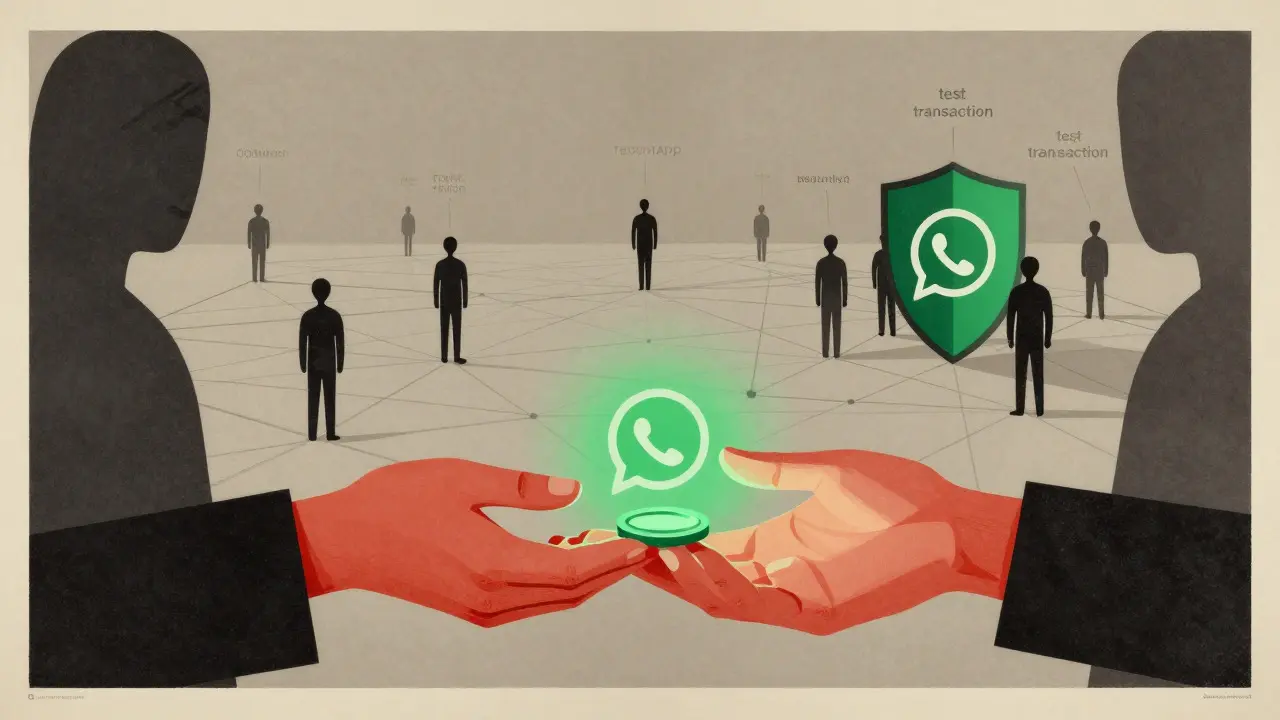
In a world without legal contracts, trust is currency. Nigerian traders built their own social safety nets. Large WhatsApp groups with over 50,000 members circulated lists of scammers in real-time. If someone tried to fake a bank receipt, the community would flag them within minutes. This collective vigilance was crucial because the cost of being scammed was total loss. One user on Reddit, 'AbujaInvestor,' lost ₦380,000 after a seller vanished post-trade. Stories like this kept everyone alert.
To mitigate risk, a practice known as the "trade verification protocol" emerged. Before a large trade, both parties would exchange small amounts-say, $10 worth of crypto-to ensure the process worked end-to-end. CryptoNaija data suggests this simple step reduced scam rates by 37%. It’s a brilliant example of how communities self-regulate when governments step away. You weren't just trading with a stranger; you were trading with their entire network of connections.
Why the Ban Failed to Stop Adoption
Regulators often assume that restricting access kills demand. In Nigeria, the opposite happened. The CBN's focus on banning institutional involvement ignored the fact that most crypto users were young, tech-savvy individuals who didn't rely heavily on traditional banking for daily life. According to Chainalysis, Nigeria ranked 2nd globally in the 2022 Cryptocurrency Adoption Index, scoring 71.93 out of 100. Why? Because crypto solved real problems: inflation protection, remittance costs, and access to global markets.
The underground economy facilitated an estimated $18.3 billion in transactions in 2022 alone. That’s significant. For students, it meant funding tuition. For small business owners, it meant hedging against naira devaluation. The ban didn't remove the need for these tools; it just forced users to find more efficient, albeit riskier, ways to get them. As analyst Olumide Soyombo noted, the ban accelerated adoption rather than curbing it.
Challenges and Pain Points for Traders
It wasn't all smooth sailing. The biggest headache was banking friction. Even though individual trading was technically legal, banks treated crypto-related transfers with suspicion. Many users reported having their accounts frozen simply for receiving a P2P payment. A Creditcoin.org survey found that 58% of traders cited frozen accounts as their most significant challenge. To survive, experienced traders maintained accounts at multiple banks and used different names for payees to avoid pattern recognition by compliance officers.
Another issue was liquidity mismatch. While small trades under $600 worked well, larger institutional-sized deals struggled. The informal network was designed for retail, not wholesale. If you needed to move $100,000, you had to break it down into dozens of smaller trades, increasing the risk of error and fraud. This limitation highlighted why the underground model, while robust for individuals, wasn't a long-term solution for the broader economy.
The Legacy: From Underground to Regulated
The ban ended in December 2023, but its effects linger. The infrastructure built during those three years remains. Platforms like Quidax and Bundle, which started as niche tools, now handle substantial volume. More importantly, the cultural shift is permanent. A Techpoint Africa survey found that 89% of Nigerians now view crypto as a legitimate financial tool, regardless of what the government says. The underground economy proved that you can't ban a technology if the people have a genuine reason to use it. Today, as new regulations roll in, including a 25% tax on profits starting in 2026, we'll likely see a hybrid model emerge: formalized where possible, informal where necessary. The ban didn't kill the market; it taught it how to be resilient.
Was cryptocurrency illegal for individuals in Nigeria during the ban?
No. The CBN ban targeted financial institutions, not individuals. People were free to buy, hold, and trade crypto, as long as they didn't use banks or licensed financial entities to facilitate the transaction. This distinction created the "gray market" environment.
What was the most popular platform for underground trading?
Binance P2P was the dominant platform. By Q3 2022, it had over 1.2 million Nigerian users and handled approximately $150 million in monthly naira-denominated transactions. Other platforms like Paxful and local apps like Quidax also played significant roles.
How did traders avoid bank account freezes?
Traders used several strategies: maintaining accounts at multiple banks, using mobile money or airtime as intermediate payment methods, and breaking large transactions into smaller ones. They also relied on community verification to ensure payments were legitimate before releasing crypto.
Did the ban reduce the number of crypto users in Nigeria?
No, it increased them. Nigeria rose from 28th to 2nd globally in Chainalysis' adoption index during the ban period. The restrictions drove users toward P2P networks, accelerating innovation and community formation rather than suppressing participation.
What happened to the underground economy after the ban was lifted?
The infrastructure remained intact. Many users continued using P2P methods due to familiarity and efficiency, while others moved to newly licensed exchanges. The SEC has since moved to regulate P2P trading, aiming to bring some of this activity into the formal framework while protecting the national currency.
Rebecca Springer
August 30, 2026 AT 05:20It is fascinating to see how cultural resilience shapes economic behavior in ways that formal policy often overlooks. The Nigerian experience serves as a profound reminder that financial inclusion is not just about infrastructure, but about the social fabric that supports it. When institutions fail to meet the needs of the people, the people find a way.
Jane yuan
August 31, 2026 AT 06:22This is a classic case of third-world inefficiency masking itself as innovation. You cannot build a stable economy on the back of WhatsApp groups and trust-based handshakes; you need strong central governance and robust institutional frameworks to ensure long-term stability for all citizens.
Carey Thornton
September 1, 2026 AT 19:39Oh, the tragicomedy of it all! 🎭 To think that the mighty CBN, with all its regulatory might, was outsmarted by a bunch of guys trading airtime on Telegram channels. It’s not just resilient, it’s almost poetic in its absurdity. The 'gray market' isn't gray, it's the vibrant, chaotic canvas of human ingenuity that bureaucrats simply cannot paint over with their dull directives. I suppose we should be grateful for the chaos, at least it wasn't boring.
David Powell
September 3, 2026 AT 18:13Sure, let's call it a "sophisticated parallel financial system." Let's not forget that 42% got scammed and half of them had their accounts frozen. That's not sophistication, that's just organized anarchy with better branding. The only thing sophisticated here is the excuse-making for why regulation failed because the population refused to listen to the adults in the room.
Ellie Brooks
September 5, 2026 AT 01:37I am absolutely thrilled to see this kind of grassroots innovation popping up around the world, especially when it helps people protect their savings from inflation which is such a huge problem for so many families right now! It really shows us that when communities come together to solve their own problems they can create amazing solutions that even big banks couldn't figure out, and I think that is such a powerful message for everyone who feels like the system is working against them!
Dave Worth
September 6, 2026 AT 16:55Did anyone else notice that the "community trust" mechanism is basically just decentralized surveillance? 👀 The CBN didn't ban crypto, they just tried to control the narrative, but the real story is that these P2P networks are perfect tools for moving money off the radar without tax implications. The "test transaction" protocol isn't just risk management, it's a way to verify if your counterparty is also part of the underground circuit. The government thinks they're fighting a market, but they're actually fighting a culture of distrust in their own currency. 📉💸
Kelechi Precious Nwachukwu
September 6, 2026 AT 20:20As someone who lived through the freeze period in Lagos, this hits close to home. We weren't just traders, we were survivors trying to keep our naira from evaporating while the CBN played cat and mouse with our bank accounts. The airtime workaround was genius but exhausting, having to coordinate with three different friends just to move $500 was no joke. But yeah, the community kept us safe, even if it meant checking every single receipt twice before releasing the coins. Now that the ban is lifted, I hope they finally understand that you can't legislate away demand, you can only make life harder for the people who need those tools most.