Iranian Central Bank Crypto Mining Rules: Licensing, Sales, and State Control
 Jul, 26 2026
The New Reality for Miners in Iran
If you are running a mining rig in Missoula, you probably worry about electricity costs or hardware failures. But if you are operating in Iran, the stakes are entirely different. The landscape changed drastically in early 2025. The Central Bank of Iran (CBI) is the sole regulatory authority for cryptocurrency markets in Iran, enforcing strict licensing, data transparency, and state control over all digital asset activities. They didn't just tweak the rules; they rewrote them.
You might have heard rumors about "mandatory crypto sales" for miners. While there isn't a single law that says "you must sell your Bitcoin to the government at market price," the reality is functionally similar due to how the system works. To mine legally, you need a license. To get a license, you need total transparency. And because domestic payments in crypto are banned, your mined coins are essentially trapped until they move through state-approved channels or specific export mechanisms. This creates a situation where the state controls the flow of value, even if it doesn't own every satoshi directly.
This article breaks down what this means for operators, investors, and anyone watching the intersection of energy policy and digital finance. We will look at the licensing hurdles, the role of the military in mining, and why the power grid is the real bottleneck.
From Chaos to Total Control: The 2025 Shift
Before January 2025, the rules were messy. There were blocks on exchanges, but also pockets of activity that slipped through. Then, President Masoud Pezeshkian issued a directive. It was clear: the CBI is now the boss of everything crypto.
Here is what that actually looks like on the ground:
- Exclusive Jurisdiction: Only the CBI can issue licenses for holding or exchanging digital assets. No more gray areas with other ministries.
- Data Transparency: The bank demands direct, unrestricted access to all data from mining entities. If you are mining, they want to see your stats, your records, and your user interactions.
- Licensing Mandate: Every participant-individuals, companies, miners-must have a license from the CBI. Operating without one is illegal.
This wasn't just paperwork. In December 2024, the CBI blocked all crypto-to-rial payments on websites. By January 2025, they unblocked some exchanges, but only those with government APIs installed. These APIs give the state real-time visibility into transactions. For a miner, this means your revenue stream is monitored from the moment a block is found.
The "Mandatory Sale" Myth vs. Economic Reality
So, do miners have to sell their crypto? Not exactly in the way a Western investor might think. You aren't forced to hand over your wallet keys. However, the economic pressure makes selling through state-aligned channels almost mandatory for survival.
Domestic use of crypto for payments is prohibited. You can't pay for groceries with Bitcoin in Tehran. So, what do you do with the coins you mine? You have two main options:
- Export Revenue: Sell the crypto on international markets to bring in foreign currency (like dollars or euros) to offset sanctions. This aligns with the state's goal of earning hard currency.
- State Partnerships: Operate within special economic zones or partner with state-affiliated entities who handle the conversion.
If you try to hold onto your coins indefinitely without a clear exit strategy approved by the regulators, you risk falling out of compliance with the "transparency" mandates. The CBI wants to know where the value goes. If the value stays hidden, the license gets revoked. This effectively forces miners to participate in the state's sanctioned economic ecosystem.
Who Really Controls the Grid? The IRGC Factor
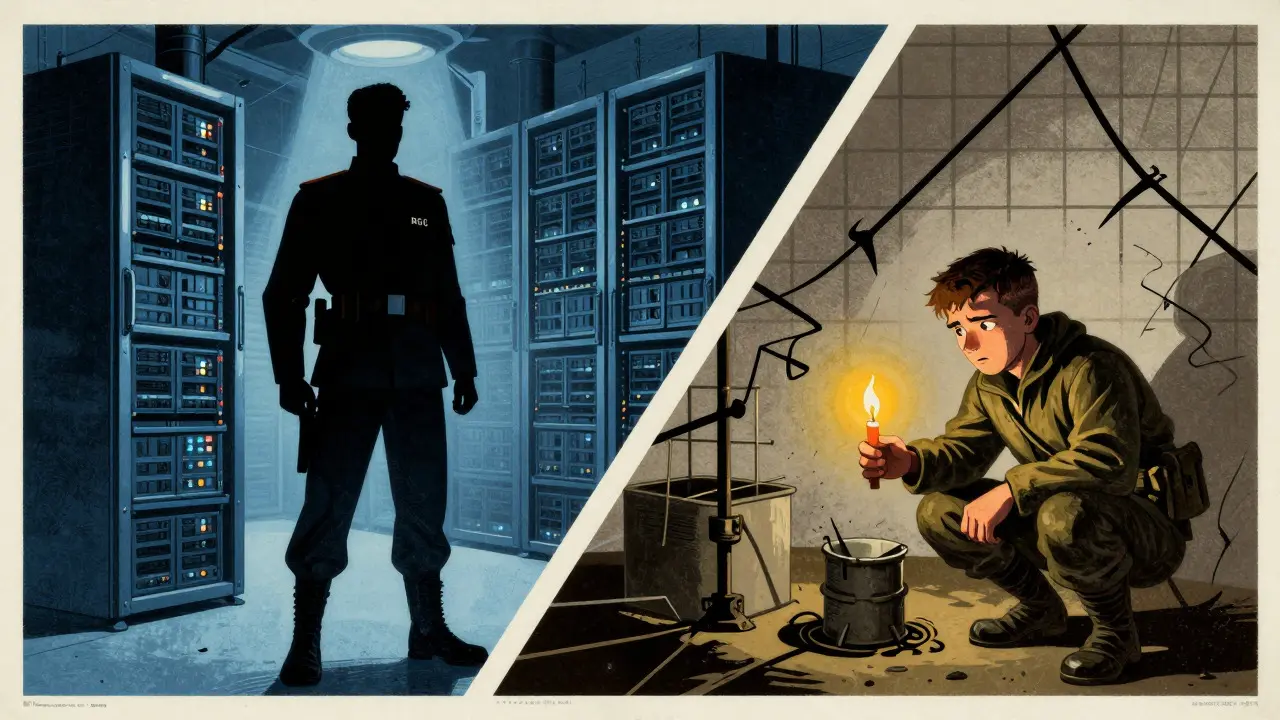
You cannot talk about Iranian mining without talking about the Islamic Revolutionary Guard Corps (IRGC). A powerful branch of Iran's armed forces that has become a dominant player in the country's cryptocurrency mining sector, often partnering with foreign firms to build large-scale farms. Since 2019, the IRGC has moved aggressively into this space. Why? Because they need dollars, and the US sanctions make traditional banking difficult.
Consider the scale. A joint venture between an IRGC-linked enterprise and Chinese investors built a 175-megawatt Bitcoin farm in Rafsanjan, Kerman province. That is massive. These facilities operate in special economic zones or on military bases. They get dedicated power feeds. They face minimal scrutiny compared to private miners.
For a private operator, this creates an uneven playing field. The IRGC benefits from cheap, subsidized electricity and political protection. Private miners, even with licenses, struggle with energy caps and sudden outages. The state prioritizes its own revenue-generating arms.
| Feature | State-Affiliated (e.g., IRGC) | Licensed Private Miner | Unlicensed Miner |
|---|---|---|---|
| Electricity Cost | Subsidized / Dedicated Feed | Capped / Industrial Rate | Risky / Theft Penalties |
| Regulatory Scrutiny | Minimal | High (Full Data Access) | Targeted for Shutdown |
| Revenue Exit | Direct State Channels | Approved Exchanges Only | P2P / Black Market |
| Legal Status | Favored | Conditional | Illegal |
The Energy Crisis: Mining vs. The Lights
Here is the biggest problem facing any miner in Iran: the power grid. Cryptocurrency mining is energy-intensive. Iran has cheap electricity, which attracts miners. But the infrastructure is old and strained.
In December 2024, rolling blackouts hit multiple regions. Authorities blamed unauthorized Bitcoin mining. They found large-scale illegal operations siphoning power from residential grids. The response? Judicial action and stricter consumption caps.
Even licensed miners face limits. The government needs to balance generating crypto revenue with keeping hospitals and homes powered. This means your hash rate might be throttled during peak demand times. If you are planning to invest in Iranian mining capacity, you need to factor in downtime. It’s not just about hardware efficiency; it’s about grid stability.

Compliance Hurdles: KYC, AML, and Data Sharing
To get that precious CBI license, you need to pass rigorous checks. The framework includes Anti-Money Laundering (AML) and Counter-Terrorism Financing (CTF) protocols. But it goes deeper.
The CBI requires invasive data sharing. Service providers must share confidential information about users dealing in crypto. This extends beyond standard security details. The Iran Fintech Association called these requirements a "red line." Some platforms refused to comply, fearing they would betray user trust.
For miners, this means your identity, your financial flows, and potentially your customer data (if you run a pool or exchange) are exposed to the state. Privacy is not a priority in this regulatory model. Transparency is.
Market Impact: Trading Volumes and Currency Flight
Despite the restrictions, people still want crypto. Why? Because the rial is unstable. When the local currency freefalls, citizens turn to Bitcoin and stablecoins to hedge against inflation.
In January 2025, restrictive measures left an estimated one million Iranians unable to buy crypto for 23 days. This caused frustration and drove activity to unofficial markets. Daily trading volume hovers around $16-$20 million across various cryptocurrencies. The annual Bitcoin mining output approaches $1 billion. These numbers show that demand persists despite state control.
The government also launched a pilot program for a digital rial on Kish Island. This is part of a broader strategy to reduce dollar dependency while maintaining sovereignty. It’s a controlled experiment in central bank digital currencies (CBDCs), aimed at tightening the leash on capital flight.
What This Means for Investors and Observers
If you are looking at Iran as a mining destination, proceed with extreme caution. The potential for low-cost energy is real, but the regulatory risk is high. You are entering a system where the rules can change overnight, and where the state competes directly with private actors.
Key takeaways for decision-makers:
- Licensing is Non-Negotiable: Without a CBI license, you are operating illegally and risking asset seizure.
- Expect High Oversight: Prepare for full data transparency. There are no secrets in this ecosystem.
- Energy is Scarce: Budget for outages and consumption caps. The grid is under stress.
- State Competition: Acknowledge that the IRGC and other state entities have advantages you may not match.
The era of wild west mining in Iran is over. It has been replaced by a tightly controlled, state-centric model designed to extract value while minimizing political risk. Understanding this dynamic is crucial for anyone involved in the region's digital economy.
Is cryptocurrency mining legal in Iran?
Yes, but only with a license from the Central Bank of Iran (CBI). Unlicensed mining is illegal and subject to judicial action, especially if it strains the power grid.
Do miners have to sell their crypto to the government?
There is no explicit law forcing a direct sale to the state at a fixed price. However, strict licensing, data transparency, and bans on domestic crypto payments force miners to use state-approved channels for converting their assets, effectively giving the state control over the revenue flow.
Who regulates cryptocurrency in Iran?
The Central Bank of Iran (CBI) is the sole regulatory authority, designated by presidential directive in early 2025. They oversee licensing, data access, and market conditions.
What role does the IRGC play in crypto mining?
The Islamic Revolutionary Guard Corps (IRGC) is a major player, operating large-scale mining farms often in partnership with Chinese firms. They benefit from subsidized electricity and political protection, creating competition for private miners.
Why are there power outages related to mining?
Bitcoin mining consumes vast amounts of electricity. Unauthorized miners tapping into the grid exacerbated existing infrastructure weaknesses, leading to rolling blackouts. The government has since imposed stricter caps and cracked down on illegal operations.
Can Iranians use crypto for daily payments?
No, domestic use of cryptocurrency for payments is prohibited. Citizens use it primarily as a store of value to hedge against inflation of the rial, trading through approved exchanges or unofficial P2P markets.