Metaverse Economy and Token Systems: How Virtual Currencies Work in 2026
 Jul, 3 2026
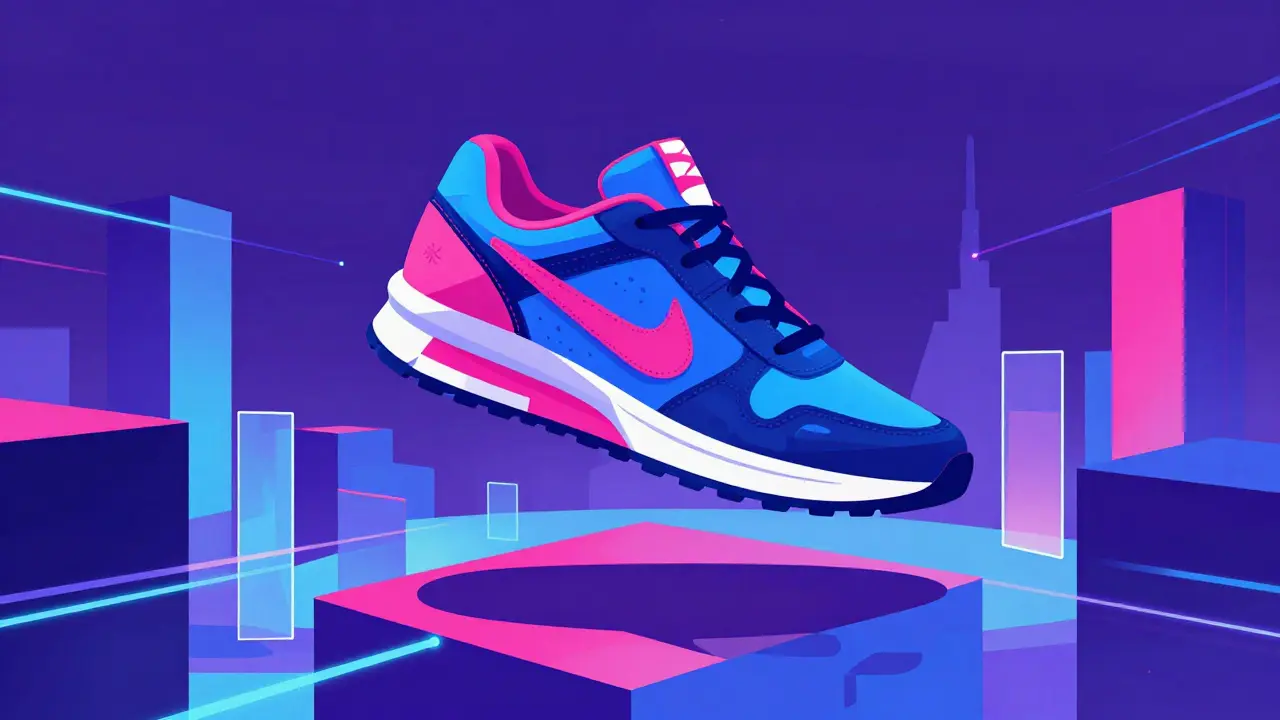
Imagine buying a pair of sneakers that you can’t wear on your feet but can sell for thousands of dollars. Or owning a plot of land in a virtual city where you rent out space to other users. This isn’tenants. This is the reality of the metaverse economy, a decentralized digital ecosystem where blockchain-based tokens facilitate ownership, transactions, and value exchange within virtual environments. By 2032, this market is projected to hit $2.3 trillion, growing at a staggering 44.4% annually. But how does it actually work? And more importantly, is it sustainable?
The short answer is: it’s complicated. The metaverse economy relies on token systems to prove who owns what. Without these systems, digital items are just code copies. With them, they become scarce, tradable assets. However, many early models failed because they prioritized hype over real utility. Today, we’re seeing a shift toward platforms that connect virtual activity with real-world value.
How Metaverse Token Systems Work
At its core, a metaverse token system uses blockchain technology to create verifiable digital scarcity. Think of it like a digital deed to a house. In the physical world, a government registry proves you own your home. In the metaverse, a blockchain ledger does the same job.
Most systems operate on three layers:
- The Blockchain Layer: This handles transaction settlement. It ensures that when you buy an item, the record is permanent and tamper-proof. Ethereum is the most common choice here, though Solana and Polygon are gaining ground for their speed.
- The Token Layer: This is the economic engine. Tokens act as currency, governance votes, or rewards. For example, you might use one token to buy land and another to vote on platform rules.
- The Virtual World Layer: This is what users see. It’s the game, the social space, or the virtual office where the tokens have actual use.
Take Axie Infinity, created by Sky Mavis in 2018. It pioneered the "play-to-earn" model using a dual-token system. Users earned SLP (Smooth Love Potion) by playing, which could be sold for real money. They also used AXS tokens to govern the platform. While innovative, this model highlighted a critical flaw: if rewards aren’t tied to real demand, inflation destroys value. SLP’s price crashed from $0.40 in 2022 to less than a fraction of a cent by 2023 due to unsustainable issuance.
Key Platforms and Their Economic Models
Not all metaverse economies are built the same way. Some focus on gaming, others on social interaction or brand experiences. Here’s how the major players compare:
| Platform | Primary Token | Market Cap (Sep 2024) | Daily Active Users | Key Feature |
|---|---|---|---|---|
| The Sandbox | SAND | $1.8 billion | ~200,000 | Brand partnerships (Adidas, Ubisoft) |
| Decentraland | MANA | $1.2 billion | ~8,000 | Strong community governance |
| Axie Infinity | AXS / SLP | $4.2 billion (AXS) | Variable | Play-to-earn gaming |
| Star Atlas | ATLAS | Data limited | <5,000 | Unreal Engine 5 graphics |
The Sandbox, founded in 2011 by Sebastien Borget and Arthur Madrid, excels in brand integration. With over 200 major brands involved, it generated $150 million in virtual land sales in Q1 2024 alone. Its SAND token serves as both currency and governance tool.
Decentraland, launched in 2017 by Esteban Ordano and Ariel Meilich, focuses heavily on user governance. About 78% of MANA token holders participate in voting decisions, compared to just 32% in The Sandbox. However, Decentraland struggles with lower daily active users despite having 1.5 million registered wallets.
Technical Challenges: Speed, Cost, and Security
You might wonder why everyone doesn’t just use Ethereum for everything. The answer lies in scalability. Ethereum processes about 15-30 transactions per second (TPS). During peak times, gas fees can spike to $5-$50 per transaction. That’s expensive for buying a $10 digital hat.
This is where alternative blockchains come in. Solana, used by Star Atlas, can handle 4,000 to 65,000 TPS. Polygon, which powers The Sandbox, achieves finality in 2-5 seconds. These layer-2 solutions make micro-transactions viable.
Security remains a major concern. In March 2022, the Axie Infinity Ronin bridge was hacked, resulting in a $625 million loss. Most platforms now use multi-signature wallets and 90-day timelocks for governance changes to prevent such breaches. Still, interoperability is weak. Only 12% of metaverse projects allowed cross-platform asset compatibility as of mid-2024. If you buy a sword in one game, you likely can’t take it to another.
Real-World Utility vs. Speculative Hype
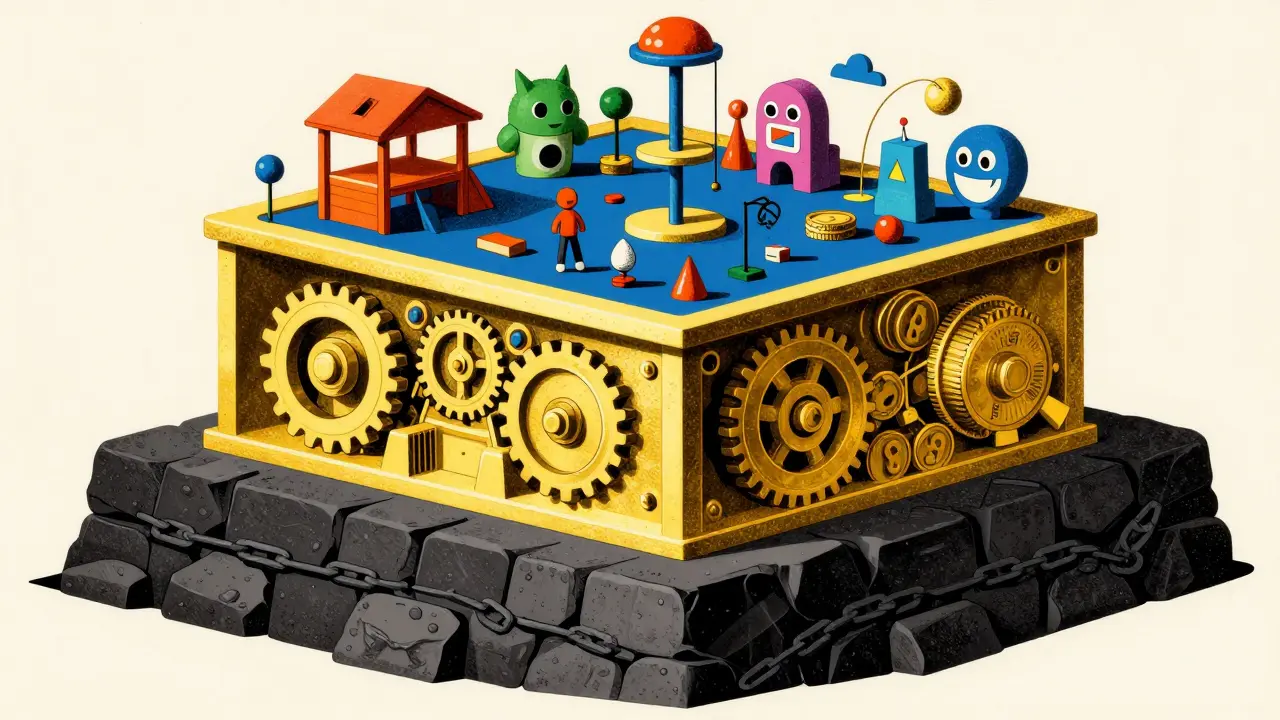
The biggest debate in the metaverse economy is sustainability. Gartner analyst Avivah Litan predicted that by 2026, 25% of metaverse platforms would collapse due to bad tokenomics. Vitalik Buterin, co-founder of Ethereum, criticized many models for extracting value from players rather than creating sustainable cycles.
However, there are success stories. Nike’s .SWOOSH platform generated $185 million in virtual sneaker sales in Q2 2024. Mastercard integrated carbon credits into metaverse transactions via its “Priceless Planet” initiative. These examples show that when virtual assets connect to real-world brands or utilities, they hold value.
Enterprise adoption is also rising. In 2024, Fortune 500 companies spent $54.1 billion on metaverse initiatives. Most use cases involve virtual meetings (58%), product showcases (32%), and employee training (10%). Brands report 20-35% higher engagement in virtual events compared to traditional webinars.
Getting Started: A Practical Guide
If you want to participate, you need to navigate some technical hurdles. The average learning curve takes 3-6 months. Here’s a simplified path:
- Create a Web3 Wallet: MetaMask or Trust Wallet are standard choices. You’ll need to securely store your seed phrase-losing it means losing your assets forever.
- Acquire Tokens: Buy platform-specific tokens like SAND or MANA through centralized exchanges like Coinbase or Binance, then transfer them to your wallet.
- Connect to the Platform: Use your wallet to log into the virtual world. Be prepared for a steep learning curve; 58% of new users abandon platforms during wallet setup.
- Purchase Assets: Start small. Buy a wearable or a small land parcel. Check current gas fees using tools like Etherscan’s Gas Tracker to avoid overpaying.
- Participate in Governance: If you hold governance tokens, vote on proposals. This helps shape the platform’s future and often yields additional rewards.
Documentation quality varies wildly. Decentraland scores 4.1/5 for developer docs, while Somnium Space rates only 2.3/5. Join Discord communities-they’re invaluable for troubleshooting. The Sandbox’s Discord, with 180,000 members, responds to 95% of technical queries within two hours.
Regulatory Landscape in 2026
As the industry matures, so do regulations. The EU’s MiCA legislation classifies most metaverse tokens as utility tokens requiring 80% reserve backing by 2025. In the US, the SEC has filed lawsuits against 12 metaverse projects for unregistered securities offerings. This regulatory pressure is forcing platforms to adopt more transparent financial practices.
User sentiment reflects this caution. Reddit’s r/Metaverse community shows 68% negative sentiment toward play-to-earn models after Axie Infinity’s collapse. Trustpilot reviews average 2.8/5 stars, with complaints focusing on wallet complexity (42%) and unpredictable token values (38%).
Future Outlook: Interoperability and Sustainability
The next frontier is interoperability. The Metaverse Standards Forum, comprising 1,800+ companies including Meta, Microsoft, and Nvidia, aims to enable cross-platform asset compatibility by late 2026. Standards like ERC-6551 will allow NFTs to interact directly with smart contracts, making assets more functional.
Bernstein Research projects that by 2030, 20-30 sustainable metaverse economies will generate $800 billion in annual transaction volume. Conversely, JP Morgan warns that 80% of current projects may become inactive by 2027 if they fail to integrate real-world utility. The winners will be those that blend virtual creativity with tangible economic value.
What is the metaverse economy?
The metaverse economy is a decentralized digital ecosystem where users buy, sell, and trade virtual assets like land, wearables, and art using blockchain-based tokens. It operates independently of traditional financial systems, relying on cryptocurrencies for transactions and smart contracts for ownership verification.
How do token systems work in the metaverse?
Token systems use blockchain standards like ERC-20 (for fungible currencies) and ERC-721 (for unique NFTs) to represent value. Tokens can serve as payment methods, governance votes, or reward mechanisms. For example, SAND is used to buy land in The Sandbox, while AXS allows voting in Axie Infinity.
Is investing in metaverse tokens safe?
It carries significant risk. Many early projects suffered from unsustainable tokenomics, leading to massive price crashes. Security risks include hacks and scams. Always research a project’s utility, team, and regulatory compliance before investing. Diversify and never invest more than you can afford to lose.
What are the best metaverse platforms to start with?
For beginners, The Sandbox and Decentraland offer robust ecosystems with strong communities and documentation. The Sandbox excels in brand partnerships and user-friendly creation tools. Decentraland offers deeper governance participation. Both support major wallets like MetaMask and have active Discord support channels.
How much does it cost to enter the metaverse economy?
Entry costs vary widely. You can start with a few dollars worth of tokens for small items. However, virtual land prices range from hundreds to millions of dollars. Additional costs include gas fees for transactions, which fluctuate based on network congestion. Using layer-2 solutions like Polygon can significantly reduce these fees.