MintMe Crypto Exchange Review: Is This Creator-Focused Platform Worth Your Time?
 Aug, 29 2026
You’ve probably heard of Binance or Coinbase. They’re the giants where you buy Bitcoin and hope for the best. But what if you could launch your own cryptocurrency? Not just trade it, but actually create a token for your music project, your blog, or that meme idea you can’t stop thinking about? That’s the pitch behind MintMe. It’s not just another trading venue; it’s trying to be a social network and a token factory rolled into one.
But does it actually work? Or is it just another shiny object in the crowded crypto space? I dug into MintMe to see if this "creator-centric" exchange lives up to the hype. If you’re a content creator wondering if tokenization is worth the hassle, or a trader looking for new altcoins, this breakdown covers everything from fees to the weirdness of web mining.
The Core Idea: More Than Just Charts
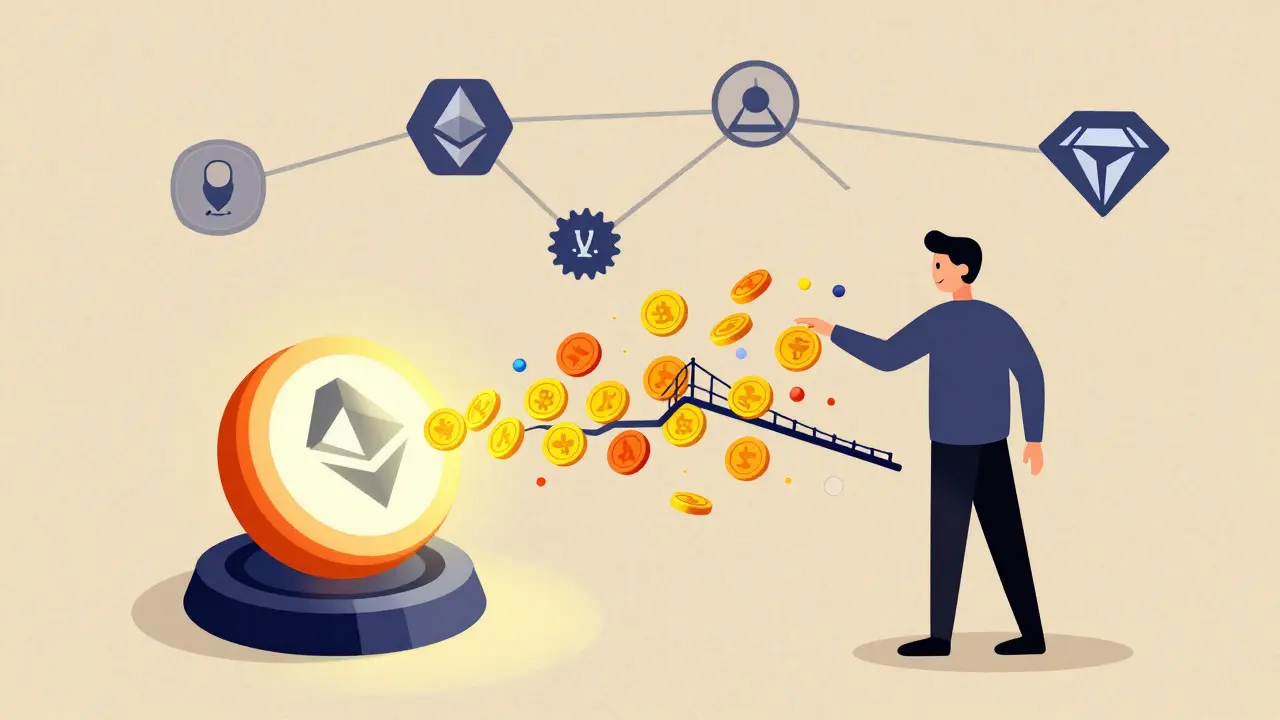
Most exchanges are cold. You log in, you stare at red and green candles, you leave. MintMe tries to fix that by blending trading with social features. Think of it less like a stock market and more like Instagram meets Uniswap. The platform allows users to create tokens for free. Yes, free. No smart contract coding skills required. You click a button, name your token, and boom-you have an asset on the blockchain.
This approach targets a specific gap. Platforms like Ethereum make token creation powerful but expensive and technical. MintMe abstracts that complexity. It supports major networks like Ethereum, Binance Smart Chain, Solana, and Polygon, so your token isn’t stuck on some obscure chain nobody uses. For creators in niches like music, writing, or AI development, this lowers the barrier to entry significantly. You don’t need a developer team; you just need an idea and a community.
How the Tech Actually Works
Under the hood, MintMe runs on its own protocol, the MintMe.com Coin (MINTME). This isn’t just a standard ERC-20 token; it’s built on a custom blockchain designed for transparency and ASIC resistance. What makes this interesting is their "web mining" concept via CoinIMP. Instead of needing massive GPU rigs, website owners can monetize traffic through this system, aiming to challenge the dominance of Google AdSense.
The platform supports both ERC20 and ERC223 contracts, which matters if you care about compatibility with other DeFi protocols. It also offers API access for automated trading, so if you’re a bot trader, you aren’t locked out. However, the multi-chain support is a double-edged sword. While supporting chains like Avalanche, Arbitrum, and BASE gives you flexibility, managing assets across all these networks can get messy if you aren’t careful with wallet addresses.
User Experience: The Good and The Glitchy
I tested the onboarding process, and honestly, it was smoother than expected. Registration is straightforward, and the interface doesn’t overwhelm you with jargon immediately. Users on review sites like G2 and Serchen have praised the ease of launching a token. One user specifically mentioned how easy it was to fund a music project, noting that the social feed feature allowed them to keep backers updated without leaving the platform.
That social feed is MintMe’s secret weapon. Most exchanges don’t let you post updates. Here, you can share news, engage with holders, and build a community around your token. It turns passive investors into active participants. But it’s not perfect. Some users reported confusion about marketing their newly created tokens. Creating a token is easy; getting people to buy it is hard. MintMe provides the tools, but it doesn’t hand you a marketing strategy. You still have to hustle to bring your audience over.
Fees, Liquidity, and Real Costs
Let’s talk money. Token creation is free, which is a huge win compared to platforms charging hundreds of dollars in gas fees or deployment costs. However, trading fees apply when you swap assets. Because MintMe integrates with centralized exchanges like KuCoin for liquidity, you might face slippage issues on smaller, newer tokens. Always check the order book before making large trades.
| Feature | MintMe | Binance/Coinbase | PancakeSwap/Uniswap |
|---|---|---|---|
| Token Creation | Free, no-code | N/A (Listing fees apply) | Requires Dev Skills/Gas Fees |
| Social Features | Integrated Feed | Minimal/None | None |
| Blockchain Support | Multi-chain (ETH, BSC, SOL, etc.) | Limited Native Chains | Chain Specific |
| Target Audience | Creators & Fans | Traders & Investors | DeFi Users |
As you can see, MintMe sits in a unique middle ground. It’s not competing directly with Binance for volume traders, nor is it purely a DeFi playground like Uniswap. It’s targeting the "creator economy," a sector growing fast as artists seek direct monetization models.
Who Should Use MintMe?
If you’re a hardcore day trader chasing 1% moves on Bitcoin, skip this. The liquidity on niche tokens won’t support high-frequency strategies. But if you fit one of these profiles, MintMe deserves a look:
- The Independent Artist: You want to sell exclusive tracks or digital art using a branded token.
- The Community Builder: You run a Discord or forum and want to reward loyal members with a utility token.
- The Experimenting Developer: You want to test a simple tokenomics model without paying $500 in gas fees on Ethereum mainnet.
Conversely, avoid it if you demand institutional-grade security audits for every single asset listed. Since anyone can create a token, the quality varies wildly. Do your due diligence. Check if the creator has a roadmap or if they just dumped the supply after launch.
Risks and Red Flags
No platform is flawless. MintMe’s biggest risk is its reliance on the success of small-cap tokens. Many creator tokens fail because the creator loses interest or the community evaporates. There’s also regulatory uncertainty. As the SEC tightens rules on securities, some tokens launched here might face scrutiny later.
Additionally, while the roadmap promised NFT marketplaces and mobile apps, execution timelines in crypto often slip. Keep expectations realistic. The platform is functional now, but some advanced features might still be in beta. Always test with small amounts first.
Is MintMe safe to use?
MintMe operates on its own blockchain and integrates with major chains like Ethereum and BSC. While the underlying tech is solid, safety depends heavily on the specific tokens you trade. Since token creation is open to everyone, always verify the legitimacy of individual projects before investing.
Can I really create a token for free?
Yes, MintMe allows free token creation without upfront deployment fees. This removes the barrier of gas costs associated with creating smart contracts manually on networks like Ethereum. However, standard transaction fees may still apply when transferring or trading the token.
What blockchains does MintMe support?
The platform supports multiple networks including Ethereum, Binance Smart Chain, Solana, BASE, Avalanche, CRO, Arbitrum, and Polygon. This multi-chain approach allows creators to choose the network that best fits their cost and speed requirements.
Does MintMe have a mobile app?
Mobile accessibility has been part of their roadmap. While web-based usage is fully functional, check the latest status on their official channels for native iOS or Android applications, as feature releases can vary in timing.
How do I buy MINTME coins?
You can purchase MINTME tokens through supported centralized exchanges like KuCoin. The process involves standard KYC verification, adding a payment method, and swapping fiat or stablecoins like USDT for MINTME.