Orderly Network Review: Is It the Best Crypto Exchange Infrastructure for 2026?
 Jun, 9 2026
You might be looking for a place to buy Bitcoin or Ethereum directly. If that’s your goal, you’ve landed on the wrong page. Orderly Network is not a traditional centralized exchange like Binance or Coinbase where you deposit funds and trade with a click. Instead, it is a foundational piece of technology-an omnichain liquidity layer-that powers decentralized exchanges (DEXs) across multiple blockchains. Understanding this distinction is crucial before you decide whether Orderly fits into your portfolio or development stack.
In the rapidly evolving world of Web3, fragmentation has been the enemy of growth. Liquidity was scattered across dozens of isolated chains, making trading inefficient and expensive. Orderly Network solves this by aggregating liquidity into unified orderbooks, allowing traders to access deep markets without moving assets manually between networks. This review breaks down what Orderly actually does, how its flagship tool Orderly One changes the game for developers, and what the future holds for the ORDER token in 2026.
What Is Orderly Network? The Backbone of Decentralized Trading
To understand Orderly, you have to look past the user interface and examine the engine room. Most decentralized exchanges rely on Automated Market Makers (AMMs), which use mathematical formulas to price assets based on pool ratios. While simple, AMMs often suffer from slippage and impermanent loss for providers. Orderly introduces an orderbook-based trading model, similar to traditional stock markets, but built entirely on-chain.
This architecture allows for sophisticated trading strategies, including perpetual contracts and limit orders, which were previously difficult to execute efficiently in DeFi. By acting as middleware, Orderly connects various blockchain networks-such as Ethereum, Arbitrum, Optimism, Polygon, Base, Mantle, and Avalanche-into a single cohesive trading environment. As of late 2025, the platform had integrated with over 17 decentralized exchanges, processing more than $90 billion in cumulative trading volume.
The significance here is scale. With over 400,000 onchain users, Orderly isn’t just a niche experiment; it’s becoming critical infrastructure. Its partnerships with major players like LayerZero and Celestia further cement its position. In fact, Orderly contributed 28% of LayerZero’s messaging volume and 35% of Celestia’s data availability metrics, proving that other protocols rely heavily on its network effects.
Orderly One: Building a DEX Without Coding
If you are a developer, community leader, or even a memecoin creator, Orderly One is likely the feature that grabs your attention. Historically, launching a branded decentralized exchange required months of engineering work. You needed teams to handle front-end design, smart contract security, order-book integration, and liquidity bootstrapping. It was expensive, slow, and risky.
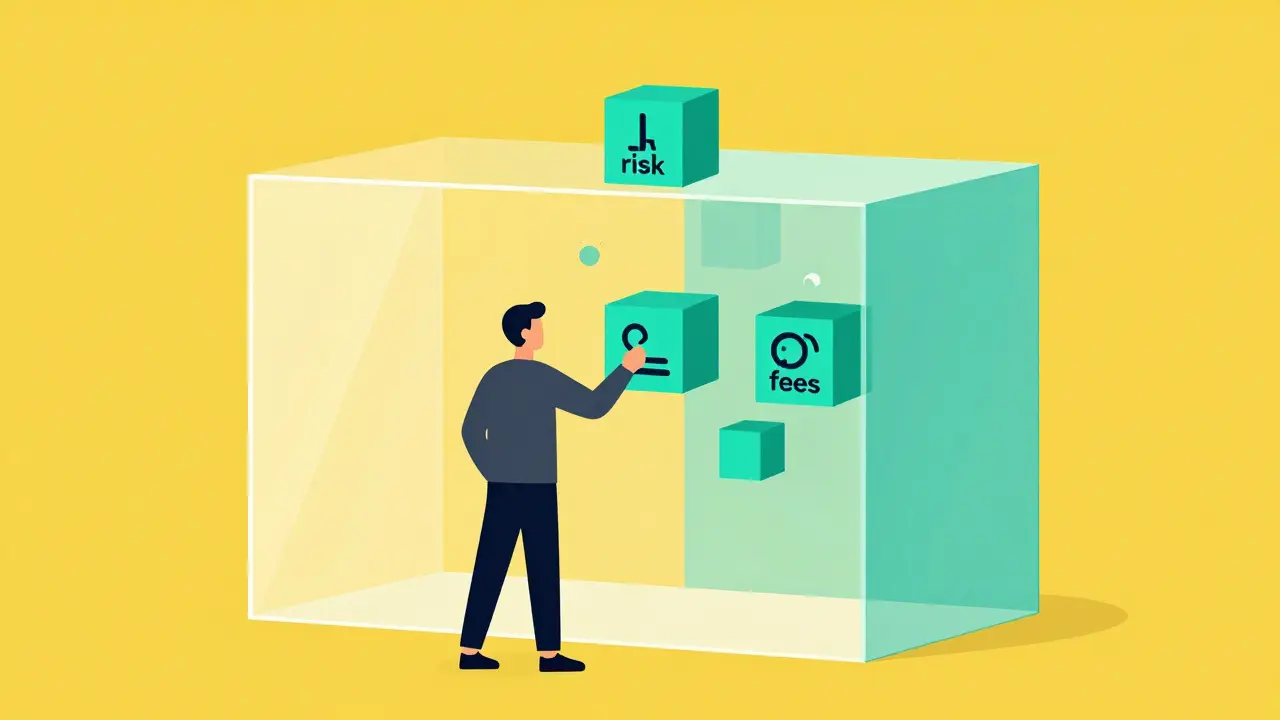
Orderly One flips this script. Launched as a no-code, AI-assisted builder, it allows anyone to create a branded perpetual-contract DEX in minutes. Available at dex.orderly.network, the platform packages Orderly’s complex backend-including risk management, cross-chain deployment, and funding rate logic-into a self-serve interface. You get templates, guided workflows, and full control over fees and leverage parameters through a simplified UI.
The results speak for themselves. Within just seven days of its enhanced launch, Orderly One enabled the creation of 773 new decentralized exchanges. Twenty-four of these immediately entered revenue-sharing mode. Notable projects like BabyDoge and Pnut integrated into the ecosystem, generating fees that directly contribute to ORDER token buybacks and burns. This deflationary mechanism creates a tangible value accrual loop for token holders, linking protocol usage directly to tokenomics.
How Orderly Compares to Traditional Exchanges
When evaluating any crypto platform, comparison is key. How does Orderly stack up against the giants?
| Feature | Orderly Network | Centralized Exchanges (e.g., Binance) | AMM DEXs (e.g., Uniswap) |
|---|---|---|---|
| Custody | Non-custodial (Self-custody preserved) | Custodial (Exchange holds funds) | Non-custodial (Smart contract holds funds) |
| Trading Model | Orderbook (Limit/Market orders) | Orderbook | Automated Market Maker (Pools) |
| Chain Support | Omnichain (EVM + others via bridges) | Internal Ledger (Not on-chain) | Single Chain (Usually) |
| Product Offering | Perpetuals, Spot, Derivatives | Spot, Futures, Margin, Earn | Primarily Spot Swaps |
| User Control | High (Custom fee structures for builders) | Low (Fixed fees set by exchange) | Medium (Protocol-level fees) |
The table highlights Orderly’s unique value proposition. Unlike centralized exchanges, you never give up custody of your assets, reducing counterparty risk. Unlike standard AMM DEXs, you get the precision of an orderbook, which is essential for professional traders who need to minimize slippage on large orders. However, this comes with a caveat: Orderly is primarily infrastructure. End-users interact with it through partner interfaces or custom-built DEXs created via Orderly One, rather than logging into a single "Orderly App" to trade spot pairs.
ORDER Token Analysis: Price Performance and Utility
The native asset of the ecosystem is the ORDER token. Its performance in late 2025 demonstrated significant market interest. On September 30, 2025, ORDER hit an all-time high of $0.433, stabilizing around $0.395 shortly after. This rally was driven by a 54% surge in 24 hours, outperforming major assets like Solana and Ethereum, with trading volume exploding by 388% to $393 million.
What triggered this movement? A major listing on Upbit, South Korea’s largest cryptocurrency exchange. Opening ORDER/BTC and ORDER/USDT pairs exposed the project to Asia’s most liquid retail market, sending overnight volumes soaring by 355%. This event validated Orderly’s institutional credibility and expanded its user base significantly.
Looking ahead to 2026, price predictions remain mixed but cautiously optimistic. Analysts using technical indicators like RSI and MACD, combined with AI trend analysis, suggest volatility will continue. CoinLore forecasts a potential dip to $0.3396 in early 2025 before long-term growth toward $2.92 by 2040. Meanwhile, 3Commas projects average prices around $0.365, with resistance levels near $0.447. Remember, these are speculative models. The real driver for ORDER’s value is the burn mechanism fueled by fees from Orderly One deployments. As more communities build DEXs on Orderly, the demand for ORDER increases while supply decreases.

Pros and Cons: Who Should Use Orderly?
Before diving in, it’s important to assess if Orderly aligns with your goals. Here is a breakdown of the advantages and limitations based on current user feedback and technical capabilities.
- Pros:
- Liquidity Aggregation: Accesses deep liquidity across multiple chains without manual bridging.
- Developer Friendly: Orderly One drastically reduces time-to-market for new DEX projects.
- Advanced Trading Tools: Supports perpetual contracts and limit orders, rare in pure DeFi environments.
- Strong Backing: Funded by top-tier investors like Pantera Capital and Sequoia China, adding a layer of trust.
- Cons:
- Complexity for Beginners: The concept of omnichain orderbooks can be confusing for casual traders used to simple swap interfaces.
- Indirect Usage: Retail traders must find a partner interface or wait for specific integrations; there is no single unified consumer app yet.
- Learning Curve: Customizing Orderly One requires some understanding of blockchain basics and fee structures.
For institutional investors and DAOs, the benefits outweigh the complexity. For a casual trader wanting to buy $50 worth of meme coins, a standard AMM DEX might still be simpler. However, as Orderly expands its user-facing products like Quantum Pools, accessibility is expected to improve throughout 2026.
Future Roadmap and Institutional Adoption
Orderly’s trajectory points toward deeper institutional adoption. The DeFi infrastructure sector is estimated at $12 billion in total value locked, and omnichain solutions are projected to capture significant market share. Orderly’s focus on solving liquidity fragmentation positions it perfectly for this shift.
Recent developments include the launch of Quantum Pools, offering enhanced liquidity options, and seamless perpetual contract listings. Future updates are likely to emphasize broader blockchain integration beyond EVM-compatible chains, enhanced risk management tools for institutional clients, and expanded partnership networks. The strategic alignment with LayerZero and Celestia suggests that Orderly will play a pivotal role in the next generation of cross-chain communication standards.
As we move through 2026, keep an eye on regulatory developments. Orderly’s non-custodial nature provides some protection, but the rise of perpetual contracts brings scrutiny. The team’s proactive approach to compliance and transparent governance will be critical in maintaining trust among both retail and institutional users.
Is Orderly Network a centralized or decentralized exchange?
Orderly Network is a decentralized infrastructure provider, not a traditional exchange. It operates as a non-custodial omnichain liquidity layer that powers decentralized exchanges. Users retain custody of their funds, and trades are executed on-chain using smart contracts, distinguishing it from centralized platforms like Binance.
What is Orderly One and who should use it?
Orderly One is a no-code, AI-assisted builder that allows developers, DAOs, and creators to launch branded perpetual-contract decentralized exchanges in minutes. It is ideal for teams wanting to create custom trading interfaces without extensive engineering resources, enabling them to capture 100% of trading fees and customize risk parameters.
How does the ORDER token generate value?
The ORDER token derives value from its utility within the ecosystem. Fees generated by decentralized exchanges built on Orderly One contribute to token buybacks and burns, creating a deflationary pressure. Additionally, the token is used for governance and staking, aligning incentives between users, developers, and the protocol.
Which blockchains does Orderly Network support?
Orderly supports a wide range of EVM-compatible chains, including Ethereum Mainnet, Arbitrum, Optimism, Polygon, Base, Mantle, and Avalanche. Its omnichain architecture allows for seamless cross-chain trading, aggregating liquidity from these diverse networks into unified orderbooks.
Is Orderly Network safe to use?
Orderly enhances safety by being non-custodial, meaning users never surrender control of their private keys. The platform is backed by reputable investors like Pantera Capital and Sequoia China, and its smart contracts undergo rigorous auditing. However, as with any DeFi protocol, users should always conduct their own research and manage their wallet security carefully.
Can I trade spot cryptocurrencies on Orderly?
While Orderly’s core strength lies in perpetual contracts and derivatives via its orderbook system, it integrates with various DEXs that may offer spot trading. However, Orderly itself focuses on providing the liquidity infrastructure for advanced trading products. For simple spot swaps, traditional AMM DEXs might be more straightforward, though Orderly’s partners are expanding their offerings.
What happened to the ORDER token price in September 2025?
In September 2025, the ORDER token experienced a significant rally, reaching an all-time high of $0.433. This surge was largely driven by its listing on Upbit, South Korea’s largest exchange, which increased visibility and liquidity. Trading volume spiked by 388%, reflecting strong market interest and adoption during that period.
sreeja boora
June 10, 2026 AT 16:37The infrastructure narrative is overhyped and lacks the robustness required for true financial sovereignty. We need systems that prioritize national security and local control, not these fragmented, unregulated global layers that serve foreign interests. The reliance on cross-chain protocols introduces vulnerabilities that can be exploited by external actors. It is concerning that such critical technology is being developed without strict adherence to domestic regulatory frameworks. The focus should be on strengthening our own digital ecosystems rather than integrating into a chaotic international web. This approach undermines the stability of our financial institutions and exposes citizens to unnecessary risks.
Abby Sivertsen
June 11, 2026 AT 15:59Hey Sreeja, I get where you are coming from regarding security concerns, but the whole point of DeFi is to remove those centralized points of failure entirely.
Orderly isn't trying to replace national banks; it's just providing a better engine for traders who want actual custody of their assets. The fact that it aggregates liquidity across chains means you don't have to worry about which specific chain has the best price at any given moment. It’s actually quite chill once you realize you’re not trusting a CEO with your keys anymore. Plus, the burn mechanism tied to Orderly One deployments creates real value accrual, which is something most traditional finance models completely ignore. It’s not about politics, it’s about efficiency and self-sovereignty.
Annemarie Fitzgerald
June 13, 2026 AT 12:58oh but do we really know what 'liquidity' even means in this context? it seems like a buzzword thrown around to justify another layer of abstraction. the philosophical implications of an omnichain orderbook are terrifying if you think about it. are we creating a hive mind of transactions? i mean, sure, 773 dexs in 7 days sounds impressive, but at what cost to our individual agency? the typo in my thought process reflects the chaos of the system itself. we are building castles on sand while pretending the tide won't come in. the 'deflationary loop' is just a psychological trick to keep us engaged in the game. wake up sheeple.
Grace Newman
June 13, 2026 AT 22:10I must express my profound skepticism regarding the 'AI-assisted' nature of Orderly One. Who is programming the AI? What data sets are they using? There is a high probability that this technology is being used to track user behavior across multiple blockchains under the guise of 'convenience'. The integration with LayerZero and Celestia suggests a massive surveillance network is being built. These entities claim to be non-custodial, but I suspect they are harvesting metadata to build profiles of every trader. The sudden surge in volume after the Upbit listing was likely manipulated by insiders to create a false sense of legitimacy. Do not trust this infrastructure. It is a trap designed to centralize power further while hiding behind decentralized terminology.
Benjamin Eisen
June 14, 2026 AT 14:53Grace, I hear your concerns about privacy and that is totally valid in today's climate. However, looking at the technical specs, the orderbook model actually reduces slippage which helps everyday traders save money. I think the key is to stay informed and maybe start small with Orderly One to see how it works. The fact that developers can build custom DEXs quickly is huge for innovation. We should encourage transparency rather than shutting down new tech. Let's hope the audits hold up and the community stays vigilant. It's all about finding the right balance between safety and progress.