Portugal Crypto Tax & Regulations: The 2026 Trader's Guide
 Nov, 10 2026
Imagine holding Bitcoin for three years, selling it for a massive profit, and paying zero tax on that gain. For years, this wasn't just a fantasy; it was the standard operating procedure in Portugal, which became the go-to haven for digital asset traders worldwide. But if you're eyeing Lisbon or Porto as your next base, you need to know that the landscape shifted dramatically between 2023 and 2026. The days of a complete free-for-all are over, but Portugal remains one of Europe's most attractive spots-if you know how to navigate the new rules.
The Big Shift: From Zero Tax to 28%
Let's cut through the noise. If you read articles from 2019 or 2020, they likely told you that all crypto profits were tax-free. That changed with the 2023 State Budget. Today, the rule is simple but strict: if you buy and sell within less than 365 days, you owe a flat 28% capital gains tax. It doesn't matter if you made €1,000 or €1 million. You pay 28%.
However, the golden ticket still exists for long-term holders. If you hold your assets for more than one year, those gains remain exempt from personal income tax (IRS). This distinction creates two distinct types of traders in Portugal:
- The Flippers: Traders who move fast, day-trade, or swing trade. They face the same 28% rate regardless of their total income bracket. No progressive tax slabs here-just a flat hit.
- The HODLers: Investors who buy and wait. They enjoy the legacy benefit of tax-free exits, provided they keep meticulous records proving the holding period.
What about mining or staking? Those activities are generally treated differently. Income from mining is often categorized as self-employment or business income, subject to different rates and social security contributions. Don't assume your staking rewards fall under the "capital gains" exemption without checking current rulings from the Autoridade Tributária e Aduaneira (AT).
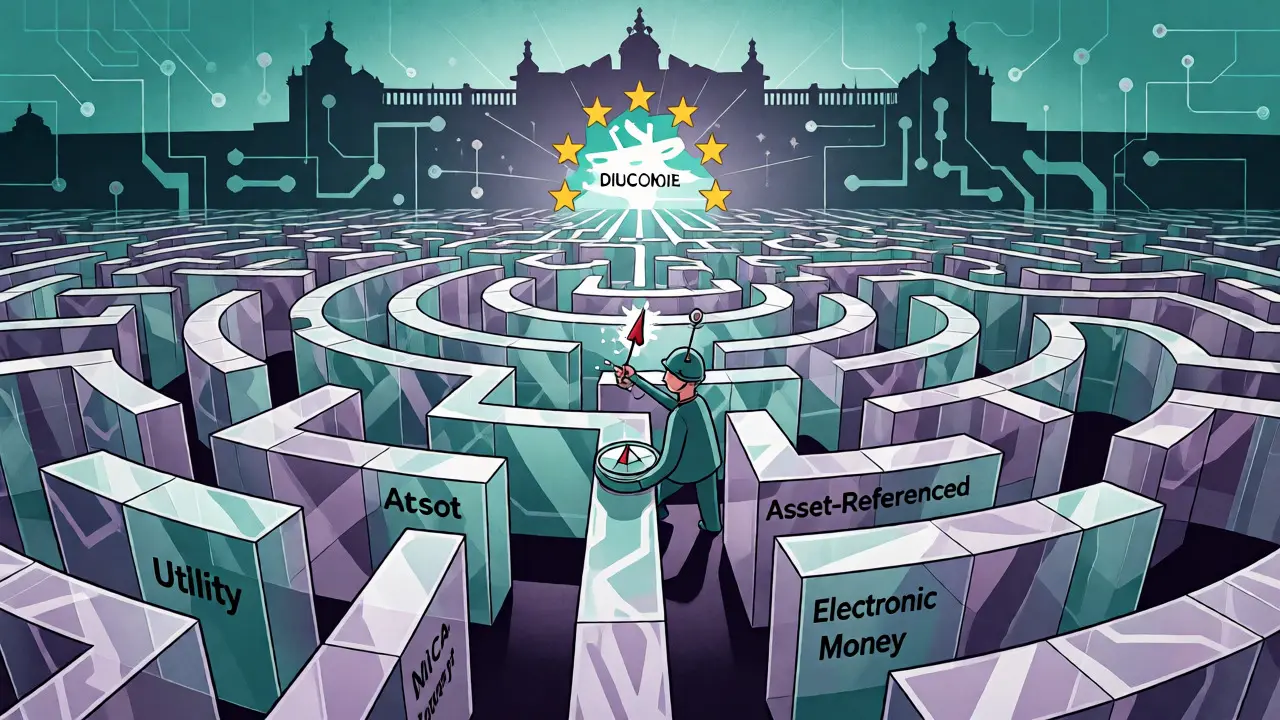
Navigating the Regulatory Maze: MiCA and Local Laws
Here is where things get tricky. While the tax side is relatively clear, the regulatory side has been a moving target. The European Union introduced the Markets in Crypto-Assets (MiCA) regulation, which became effective across the EU in late 2024. However, Portugal had to transpose these rules into national law, leading to a period of confusion known as the "regulatory gap."
In early 2025, Banco de Portugal announced it could no longer authorize new crypto service providers because local legislation hadn't caught up with MiCA requirements. Existing companies continued operating under transitional arrangements, but new entrants faced barriers. By late 2025, parliamentary debates signaled a push to finalize these rules, aiming for full compliance before July 1, 2026-the MiCA transition deadline.
So, what does this mean for you as a trader?
- Service Provider Safety: Ensure your exchange is registered with Banco de Portugal. While registration doesn't equal prudential supervision (meaning they don't guarantee your funds like a bank), it confirms the entity follows Anti-Money Laundering (AML) standards.
- Token Classification: Not all tokens are created equal. Under MiCA, utility tokens have lighter rules than Asset-Referenced Tokens (ARTs) or Electronic Money Tokens (EMTs). If you deal in stablecoins, expect stricter KYC (Know Your Customer) checks.
- Documentation: The AT is getting better at auditing. Keep every transaction record. If you can't prove the date of acquisition, you might lose your long-term exemption status.
| Feature | Portugal | Germany | France | Switzerland |
|---|---|---|---|---|
| Short-Term Capital Gains Tax | Flat 28% | Up to 45% (Income Tax) | Flat 30% (PFU) | Wealth Tax + Income Tax* |
| Long-Term Exemption | Yes (>1 year) | Yes (>1 year) | No (Taxed upon sale) | Generally No (Wealth Tax applies) |
| Regulatory Status | MiCA Implementation Pending Finalization | Fully Regulated (BaFin) | Fully Regulated (AMF) | Fully Regulated (FINMA) |
| Residency Requirement | 183+ days/year | Center of Life Interests | 183+ days/year | Varies by Canton |
*Note: Switzerland taxes wealth holdings rather than realized gains for individuals not classified as professional traders.
The Non-Habitual Resident (NHR) Program: Is It Still Worth It?
You've probably heard of the Non-Habitual Resident (NHR) regime. It used to be a massive drawcard, offering a flat 20% tax rate on certain Portuguese-sourced income and exemptions on foreign income. But the original NHR closed to new applicants in 2023.
Don't panic. A successor scheme, often called NHR 2.0 or the IFICI (Incentive for Scientific Research and Innovation), targets specific sectors like tech, R&D, and higher education. For pure crypto traders who aren't employed by a tech firm or university, accessing this flat rate is harder now. Most individual traders will default to the standard progressive IRS rates (which go up to 48%) or the flat 28% capital gains rate, depending on how their income is classified.
If you are setting up a company in Portugal to manage your trading portfolio, you might qualify for corporate tax benefits. Corporate tax in Portugal is 21%, plus municipal surcharges. If your trading activity is deemed a business, this route might offer deductions for expenses (laptops, internet, office space) that individual investors cannot claim.
Practical Steps for Relocating Traders
Ready to pack your bags? Here’s the checklist for a smooth transition to Portugal:
- Get Your NIF: The Número de Identificação Fiscal is your tax ID. You need this for everything-opening a bank account, renting an apartment, and registering with the tax authority. You can get this remotely via a power of attorney if you're not there yet.
- Establish Tax Residency: To be considered a tax resident, you typically need to spend 183 days in Portugal in a given year, or have a habitual residence there. Be careful with "center of vital interests" rules. If your family stays in London while you live in Lisbon, HMRC might still claim you.
- Open a Local Bank Account: Traditional banks like Millennium BCP or Novo Banco are cautious with crypto-related cash flows. Have your source-of-funds documentation ready. Some fintechs like Revolut or Wise work well for initial transfers, but a local IBAN helps with rent and utilities.
- Hire a Local Accountant: Do not DIY your first Portuguese tax return. The classification of crypto income (capital vs. business) is nuanced. A good accountant ensures you don't accidentally trigger a business audit when you meant to file as an investor.

Risks and Reality Checks
Is Portugal perfect? No. The primary risk is regulatory whiplash. Because the country is aligning with EU-wide MiCA rules, changes can happen quickly. In 2025, we saw warnings that new exchanges should delay entry until rules were clear. As of November 2026, the framework is stabilizing, but enforcement is tightening.
Another consideration is lifestyle. Lisbon and Porto have seen significant rent increases driven partly by the influx of digital nomads and crypto entrepreneurs. Budget accordingly. A one-bedroom apartment in central Lisbon can cost €1,500-€2,000 per month, significantly higher than five years ago. Smaller cities like Braga or Faro offer cheaper alternatives with slower paces.
Finally, watch out for the "professional trader" label. If you trade daily, use leverage heavily, and derive your main income from it, the AT may classify you as running a business. This means you’d owe social security contributions (around 21.4% for self-employed) on top of income tax. Keeping detailed logs of your trading frequency and strategy helps defend against this reclassification.
Frequently Asked Questions
Do I pay tax on crypto held for exactly 365 days?
The rule specifies holdings of "less than 365 days" are taxed at 28%. Therefore, holding for 365 days or more generally qualifies for the exemption. However, always consult a tax advisor for edge cases involving leap years or precise timestamp discrepancies between purchase and sale.
Is cryptocurrency legal tender in Portugal?
No, cryptocurrency is not legal tender in Portugal. The Euro remains the official currency. While many businesses accept crypto payments, you are not legally required to accept them, and merchants must report these transactions for VAT and income tax purposes.
How does MiCA affect my existing exchange accounts?
MiCA requires exchanges to provide clearer disclosures, segregate client funds, and adhere to stricter AML/KYC standards. If your exchange is non-EU based, it may need to partner with an EU-regulated entity or obtain its own license to continue serving Portuguese clients seamlessly after the transition periods end.
Can I bring my US-based crypto losses to offset Portuguese gains?
Generally, no. Portugal calculates capital gains based on the acquisition cost and disposal price in Euros. Losses incurred in other jurisdictions usually do not automatically offset gains in Portugal unless specific double-taxation treaty provisions apply or the assets are part of a structured business entity. Always verify with a cross-border tax specialist.
What happens if I leave Portugal after one year?
If you become a non-resident, you are only taxed on Portuguese-source income. Crypto gains are generally considered Portuguese-source if you were a resident at the time of disposal. If you sell after becoming a non-resident, you might escape Portuguese tax entirely, but check the rules of your new country of residence to avoid unexpected liabilities there.