Property Titles on Blockchain: How Distributed Ledgers Secure Real Estate Ownership
 Aug, 6 2026
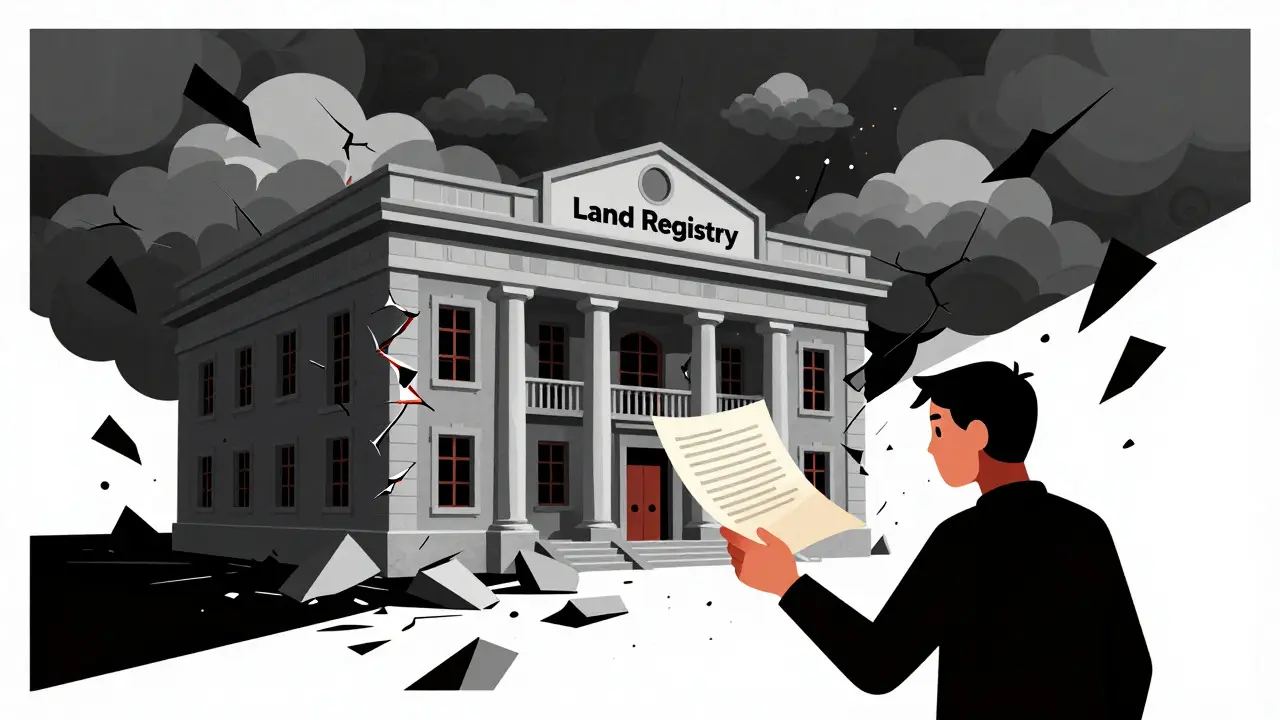
Imagine handing over the keys to your home, only to find out later that the person you bought it from didn’t actually own it. Or worse, imagine a natural disaster wiping out the physical records that prove you own your land at all. This isn’t just a nightmare scenario; it’s a reality for millions of people worldwide. Traditional property title systems are slow, prone to human error, and vulnerable to destruction or fraud. But there is a new way to handle this. Property titles on blockchain offer a secure, transparent, and efficient method for recording ownership that could fundamentally change how we buy, sell, and protect real estate.
What Is a Blocktitle System?
To understand the future of real estate, we first need to define what we are talking about. A blocktitle system is a digital infrastructure that uses distributed ledger technology to verify, transfer, and record property ownership. Unlike traditional paper deeds or centralized digital databases, a blocktitle system lives on a network of computers. When a property transaction happens, the agreement is executed on the blockchain and authenticated by network nodes. Each change in ownership becomes a "block" in an unbreakable chain, creating a permanent, tamper-proof history of who owned the property and when.
This concept didn't appear overnight. It traces its roots back to the 2008 Bitcoin whitepaper by Satoshi Nakamoto, which introduced the world to decentralized ledgers. However, the practical application for real estate gained traction around 2015-2016. The theoretical groundwork was laid much earlier by economist Hernando de Soto in his 2001 book, *The Mystery of Capital*. De Soto highlighted how weak property rights in developing nations stifled economic growth. Blockchain offers a technical solution to these systemic issues by providing a reliable, accessible record of ownership where traditional bureaucracies fail.
Why Traditional Title Systems Are Failing
Before we can appreciate the innovation, we have to look at why the current system is broken. Traditional land registries rely on either physical paper or centralized digital servers. Both have critical weaknesses.
- Vulnerability to Disaster: Physical records can be destroyed. In 2010, the Haiti earthquake wiped out sixty years of land-registry archives. Over a million people were left unhoused because they had no documented proof of their property rights.
- Susceptibility to Hacking: Centralized digital databases are single points of failure. If a government server is hacked, criminals can alter records, steal identities, or forge deeds.
- Inefficiency and Cost: Title searches can take weeks. Escrow services, lawyers, and title insurance companies add layers of cost and delay to simple transactions.
- Fraud Risk: Property title fraud is a growing problem. Scammers can forge signatures on deeds and sell properties they don’t own, leaving legitimate owners fighting legal battles to reclaim their homes.
Blockchain addresses each of these pain points directly. By distributing the ledger across many nodes, there is no single point of failure. If one computer goes down, the others hold the complete copy of the data. This makes the system resilient against both natural disasters and cyberattacks.
How Blockchain Secures Property Ownership
The magic of blockchain lies in its cryptographic security and consensus mechanisms. Here is how it works in practice:
- Cryptographic Hashing: Every property title is assigned a unique digital fingerprint using algorithms like SHA-256. This ensures that the data cannot be altered without detection.
- Distributed Verification: When a transaction occurs, network nodes (computers) verify the legitimacy of the transfer. They check if the seller truly owns the property and if there are any liens or disputes.
- Immutability: Once a block is added to the chain, it is cryptographically linked to the previous one. Changing a past record would require altering every subsequent block on the majority of the network simultaneously-a feat that is computationally nearly impossible.
- Smart Contracts: These are self-executing contracts with the terms of the agreement directly written into code. For example, a smart contract can automatically release funds to the seller and transfer the title to the buyer once specific conditions are met, eliminating the need for escrow agents.
This process removes intermediaries and human error from the equation. As noted by experts at McNees Wallace and Nurick, recording deeds on a blockchain makes the transfer of ownership more transparent and secure because it relies on code rather than manual processing.
Real-World Pilots and Success Stories
This isn't just theory. Several countries have already tested blockchain land registries with promising results.
| Country | Key Achievement | Impact Metric |
|---|---|---|
| Georgia | National Agency of Public Registry implementation | Processing times reduced from days to minutes |
| Sweden | Lantmäteriet pilot program | Transactions completed in <2 weeks instead of 3-4 months |
| Ghana | Ghana Land Administration Project | 70% reduction in title verification time |
In Sweden, the Lantmäteriet pilot showed that property transactions could be cut from three to four months to less than two weeks. Participating real estate agents reported a 92% satisfaction rate with the transparency of the system. In Ghana, rural landowners initially skeptical of digital technology became strong supporters after seeing longstanding boundary disputes resolved through immutable blockchain records. These examples prove that when implemented correctly, blockchain can drastically improve efficiency and trust.
Tokenization and Fractional Ownership
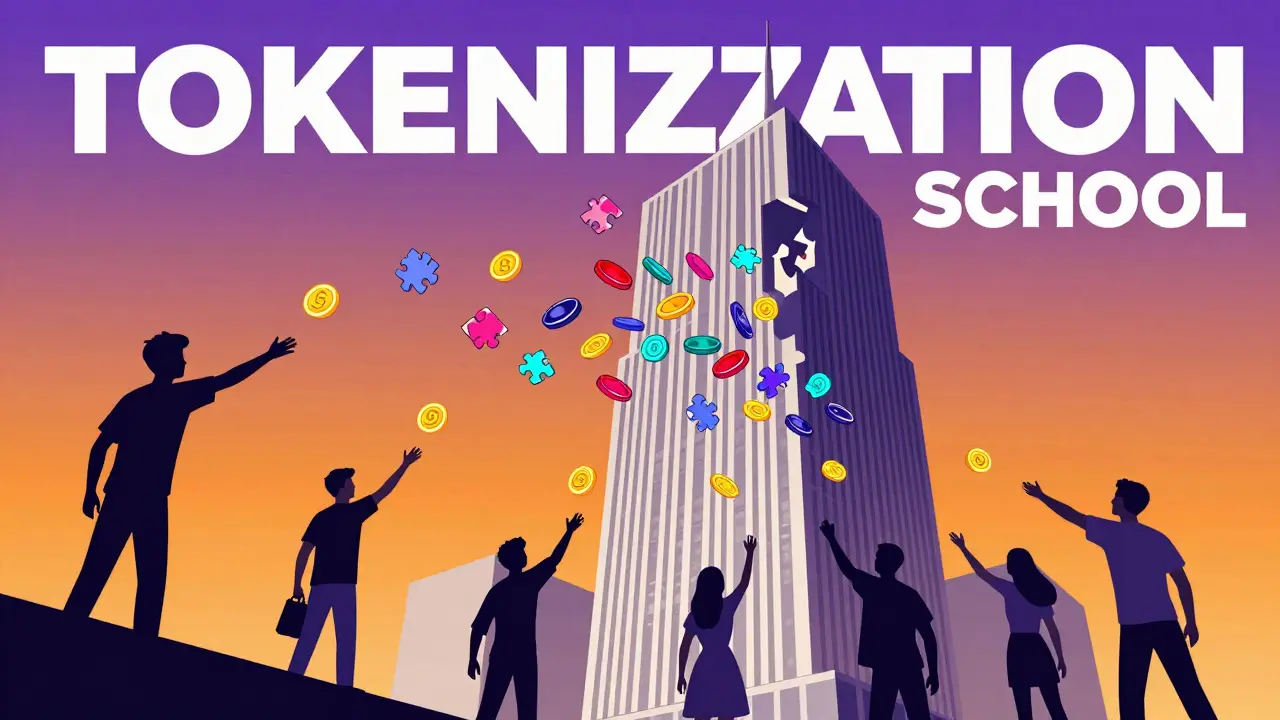
Beyond securing titles, blockchain enables a new financial model called tokenization is the conversion of ownership rights of physical assets into digital tokens stored on a blockchain. This allows for fractional ownership of real estate. Instead of needing hundreds of thousands of dollars to buy a building, investors can purchase tokens representing small shares of the property.
J.P. Morgan highlights that this approach opens real estate investment to a broader audience. Many people avoid real estate due to high upfront capital requirements. Tokenization lowers this barrier, allowing individuals to diversify their portfolios with real estate assets they previously couldn't afford. This liquidity boost could transform the commercial real estate market, making it more dynamic and accessible.
Challenges and Limitations
Despite the benefits, widespread adoption faces significant hurdles. It’s not as simple as flipping a switch.
- Legal Recognition: For blockchain records to be valid, governments must pass laws recognizing them. As of 2025, only 19 countries explicitly recognize blockchain records as legally valid for property titles. Vermont passed the Blockchain Land Records Act in 2016, and Wyoming followed in 2019, but most jurisdictions still lag behind.
- Onboarding Legacy Data: Migrating decades of paper records to a digital format is complex and expensive. Ensuring the initial data entered onto the blockchain is accurate is crucial; if garbage goes in, garbage stays in forever.
- Digital Literacy: Not everyone is tech-savvy. In Sweden’s pilot, 37% of participants struggled with the verification process initially. Elderly property owners and those in rural areas may face steep learning curves.
- Industry Resistance: Title insurance companies, lawyers, and escrow agents may resist change because their services could become obsolete. Their influence can slow down regulatory progress.
Furthermore, interoperability between different blockchain platforms remains a challenge. Without standardized protocols, national systems might struggle to communicate with each other. The International Organization for Standardization (ISO/TC 268) launched a standardized protocol in October 2025 to address this, which is a positive step toward global compatibility.
The Future of Property Titles
Where do we go from here? The market context suggests steady growth. The global property technology market was valued at $18.5 billion in 2023 and is projected to reach $34.2 billion by 2027. Blockchain-based title management represents an estimated 8.7% of this market. Industry analysts predict that blockchain will achieve 35% global adoption in commercial real estate transactions by 2030.
Future developments include integrating Internet of Things (IoT) sensors for automatic boundary verification and using artificial intelligence for anomaly detection in title chains. These technologies will further enhance security and accuracy. While complete replacement of traditional systems is unlikely before 2040 due to institutional inertia, the trend is clear. Blockchain is moving from pilot projects to production systems, offering a safer, faster, and more inclusive way to manage property ownership.
Is blockchain property title legally binding?
It depends on the jurisdiction. As of 2025, only 19 countries explicitly recognize blockchain records as legally valid for property titles. In places like Georgia and Sweden, pilots have shown legal acceptance, but in many other regions, traditional paper deeds still hold primary legal weight until specific legislation is passed.
Can blockchain prevent property title fraud?
Yes, significantly. Blockchain's immutability and cryptographic security make it extremely difficult for fraudsters to alter records or forge deeds. Once a title is recorded on the blockchain, any attempt to change it requires consensus from the network, making undetected fraud nearly impossible. Nasdaq has identified blockchain as the ultimate defense against property title fraud.
What is tokenization in real estate?
Tokenization is the process of converting ownership rights of a physical property into digital tokens on a blockchain. This allows for fractional ownership, meaning multiple people can own small shares of a property. It reduces the capital required to invest in real estate and increases liquidity, allowing owners to sell their shares easily.
How long does it take to transfer property on blockchain?
In traditional systems, transfers can take weeks or months. In blockchain pilots, such as in Georgia, processing times have been reduced from days to minutes. Sweden’s pilot reduced transaction times from 3-4 months to less than two weeks. The speed depends on the specific platform and legal verification steps involved.
Are there risks associated with blockchain land registries?
Yes. Key risks include the accuracy of initial data entry (if wrong data is uploaded, it stays wrong), lack of legal recognition in some areas, and the digital divide where non-tech-savvy users struggle with the interface. Additionally, private keys used to access wallets must be kept secure; losing them could mean losing access to your property records.
Carl Michaud
August 7, 2026 AT 06:20the whole premise is flawed because it assumes the initial data entry is clean which it never is in a system designed to obscure wealth accumulation by the elite. they want you to believe in this immutable ledger but what happens when the government decides to rewrite the genesis block? its just another layer of surveillance capitalism wrapped in crypto-bro jargon to distract from the fact that property rights are already a social construct enforced by violence. dont fall for the tech solutionism trap.
Prudence Flemming
August 9, 2026 AT 03:01we must consider the ontological shift occurring here where ownership ceases to be a physical relationship and becomes purely informational. the epistemological crisis arises when the map replaces the territory entirely. if the code says you own it do you truly possess it or merely hold a cryptographic claim against a decentralized consensus mechanism? this mirrors the philosophical debates on simulation theory where reality is secondary to the underlying data structure governing it.
Matt Kay
August 10, 2026 AT 01:26boring read. too much hype not enough substance. i still trust paper cause at least i can burn it if im mad. also why does everyone think blockchain fixes human stupidity it doesnt. just another way for devs to make money off regular folks who dont understand smart contracts. meh.
Dave Kjendal
August 11, 2026 AT 01:49look most people arent ready for this level of complexity. you take away the lawyer and the title company and you put all the burden on the individual to secure their private keys. one mistake and your house is gone forever into the digital void. its not progress its just shifting risk onto the little guy who cant afford to hire a crypto auditor. keep it simple stupid.
Kat Bennett
August 11, 2026 AT 03:50i actually find the idea of fractional ownership through tokenization incredibly empowering for young people like myself who have been priced out of the housing market for years. imagine being able to invest in a small piece of a commercial building in georgia or sweden without needing a massive down payment or dealing with predatory loan sharks. it feels like we are finally moving towards a more inclusive economic model where wealth isn't hoarded by the top one percent but distributed among many participants who can collectively benefit from asset appreciation over time.
Candice Cornett
August 11, 2026 AT 18:46you people are so naive thinking technology solves moral decay. the problem isnt the record keeping its the greed driving the transactions. whether its on paper or a blockchain scammers will still find a way to exploit the system because human nature remains unchanged regardless of the medium used to document our sins. stop worshipping the machine and start looking at the heart.