Crypto Asset Exchange: How to Choose, Avoid Scams, and Use Exchanges Safely
When you use a crypto asset exchange, a platform where you buy, sell, or trade digital currencies like Bitcoin, Ethereum, or niche tokens. Also known as cryptocurrency exchange, it’s the bridge between your wallet and the market. But not all exchanges are trustworthy—some vanish overnight, fake trading volumes, or lock your funds without warning. You need to know what to look for before you deposit even a dollar.
A real decentralized exchange, a platform that lets you trade directly without a middleman, often without KYC like OneDex works differently than centralized ones like EQONEX, which shut down after going bankrupt. Decentralized exchanges give you control but come with risks: no customer support, no chargebacks, and no safety net if you send funds to the wrong address. Meanwhile, unregulated crypto exchange, a platform operating without oversight from financial authorities like LocalTrade or PayCash Swap often show fake volume, disappear after collecting deposits, or run recovery scams to trick you into paying more. These aren’t glitches—they’re business models.
Some exchanges are built for specific chains or use cases. Others, like the ones tied to dead coins such as Bitstar or UniWorld, exist only to inflate prices before vanishing. Even big names can fail: EQONEX’s collapse wasn’t an accident—it was the result of poor management and lack of transparency. If an exchange doesn’t list clear security details, has zero third-party audits, or hides its team, walk away. Real exchanges publish their licenses, reserve proofs, and incident reports. They don’t rely on hype.
And don’t assume that because an exchange supports a popular coin like Bitcoin, it’s safe. Many platforms list fake tokens like DDM or BCZERO, pretending they’re real assets to attract traders. These aren’t just bad investments—they’re traps. The same goes for airdrops tied to exchanges: if it sounds too easy, it’s likely a phishing site pretending to be a legitimate platform.
What you’ll find below isn’t a list of top exchanges. It’s a collection of real stories—platforms that worked, platforms that lied, and platforms that disappeared with people’s life savings. You’ll see how regulations in Canada and Angola shaped exchange access, how Iran turned to crypto because banking shut down, and why using multiple exchanges to bypass rules can land you in legal trouble. You’ll learn what makes a crypto exchange worth your trust—and what makes it a ticking time bomb.
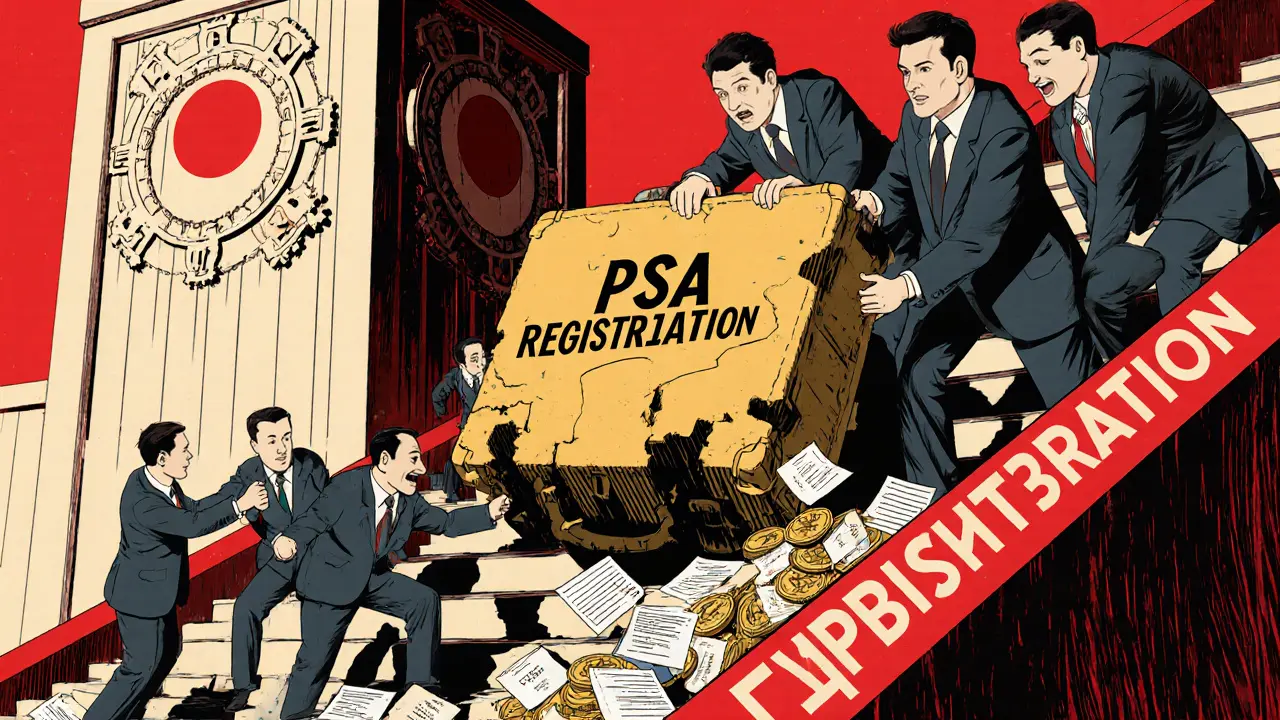
PSA Registration Requirements for Crypto Exchanges in Japan
Japan's PSA registration for crypto exchanges demands strict compliance: minimum JPY 10M capital, 95% cold storage, Japanese subsidiaries for foreign firms, and detailed compliance systems. Only registered entities can legally operate.
Read More