Crypto Payments: How Real-World Use Cases Are Changing Money
When you think of crypto payments, the use of digital currencies like Bitcoin or Ethereum to buy goods or services instead of cash or cards. Also known as digital currency transactions, it’s not just about buying Bitcoin and hoping it goes up—it’s about replacing broken financial systems with something faster, cheaper, and harder to control. In places like Iran, where banks are cut off by global sanctions, crypto payments are the only way millions pay for medicine, food, and internet access. In Ukraine, people use crypto to send money across borders without waiting days for bank transfers. This isn’t theory. It’s survival.
But not all crypto payments are created equal. Some projects pretend to be payment solutions, like Deutsche Mark (DDM), a fake stablecoin with zero real supply and no backing, while others, like STON.fi, a fast, low-fee decentralized exchange on the TON blockchain, actually let users swap tokens instantly with no middlemen. The difference? Real utility. If a crypto can’t be used to pay for something real—like a meal, a bill, or a service—it’s just a number on a screen. And in places like Angola, where mining was banned to save electricity, or Pakistan, where the government gave 2,000 MW of power to mining farms, it’s clear that crypto payments are being shaped by energy policy, not just tech hype.
Regulations play a huge role too. Canada doesn’t ban crypto payments, but each province handles taxes and exchanges differently. Meanwhile, unregulated platforms like LocalTrade or PayCash Swap claim to offer easy payments—but they’re scams that vanish with your money. The real winners? Exchanges and tools that work within the law, like OneDex for MultiversX users or STON.fi for Telegram’s 800 million users. These aren’t just wallets—they’re payment networks built on open protocols, not corporate control.
What you’ll find below isn’t a list of price predictions or get-rich-quick schemes. It’s a raw look at what’s actually happening with crypto payments around the world: how people use it to bypass bans, why some tokens die overnight, and which platforms actually move real value. Some posts expose scams pretending to be payment coins. Others show how governments are forced to adapt—or crack down. If you’ve ever wondered if crypto payments are just a fad, the answers here won’t sugarcoat it. They’ll show you where it’s working, where it’s failing, and who’s really in control.
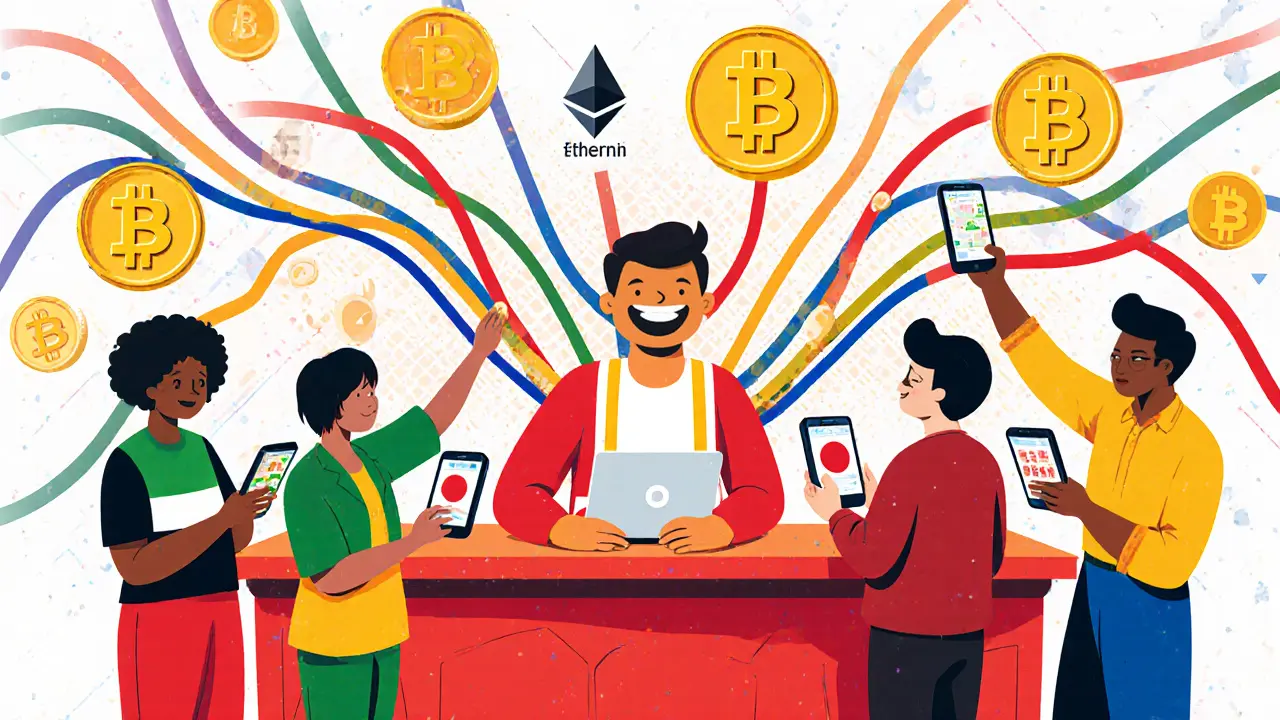
Why More Merchants Are Accepting Cryptocurrency Payments in 2025
More merchants are accepting crypto payments in 2025 because stablecoins offer fast, low-cost, borderless transactions without volatility. Learn who's adopting, how it works, and why it's becoming essential for online businesses.
Read More