Crypto Scams: How to Spot Fake Coins, Fake Exchanges, and Exit Scams
When you hear about a new cryptocurrency promising 1000% returns, it’s not magic—it’s usually a crypto scam, a fraudulent scheme designed to steal your money by pretending to be a legitimate investment. Also known as crypto fraud, these scams thrive on hype, fake trading volume, and lies about team members who don’t exist. They don’t care if you make money—they just want you to send your crypto before they disappear.
Most fake crypto coins, tokens with no real use, no team, and no trading activity. Also known as zombie cryptocurrencies, they often have names that sound official—like Deutsche Mark or UniWorld—but zero actual value. These tokens show up on sketchy websites with fake price charts and fake social media accounts. Some even claim to be stablecoins or backed by real assets. They’re not. They’re just code with no purpose. Then there are scam exchanges, platforms that look real but are built to steal deposits and block withdrawals. Also known as rug pull platforms, they often promise low fees and no KYC—but the moment you deposit, your funds vanish. LocalTrade, PayCash Swap, and EQONEX are real examples. All gone. All with user money still locked.
Exit scams are the most common. A team launches a token, pumps it with fake volume, gets people to buy in, then pulls the plug. No updates. No communication. Just silence. And suddenly, the price drops to zero. You didn’t lose money because the market crashed—you lost it because someone lied to you. The same thing happens with fake airdrops. Someone sends you a link that says "Claim your free MDX tokens"—but it’s not from Mdex. It’s a phishing site. One click, and your wallet is drained.
It’s not just about avoiding bad coins. It’s about recognizing the patterns. No team? Red flag. Zero trading volume? Red flag. Fake reviews? Red flag. A project that’s been dead for two years but still shows up on price trackers? That’s not a mistake—that’s a scam trying to trick new people. And if a token is tied to a game or a metaverse but has no players, no updates, and no community? It’s not a project. It’s a ghost.
What you’ll find below isn’t just a list of bad projects. It’s a collection of real cases—each one showing how the scam worked, who got hurt, and what signs you missed. From a mining ban in Angola to a dead coin called Bitstar, these aren’t hypotheticals. These are stories of real people who lost money because they didn’t know what to look for. You don’t need to be an expert to protect yourself. You just need to know the red flags—and what to do when you see them.
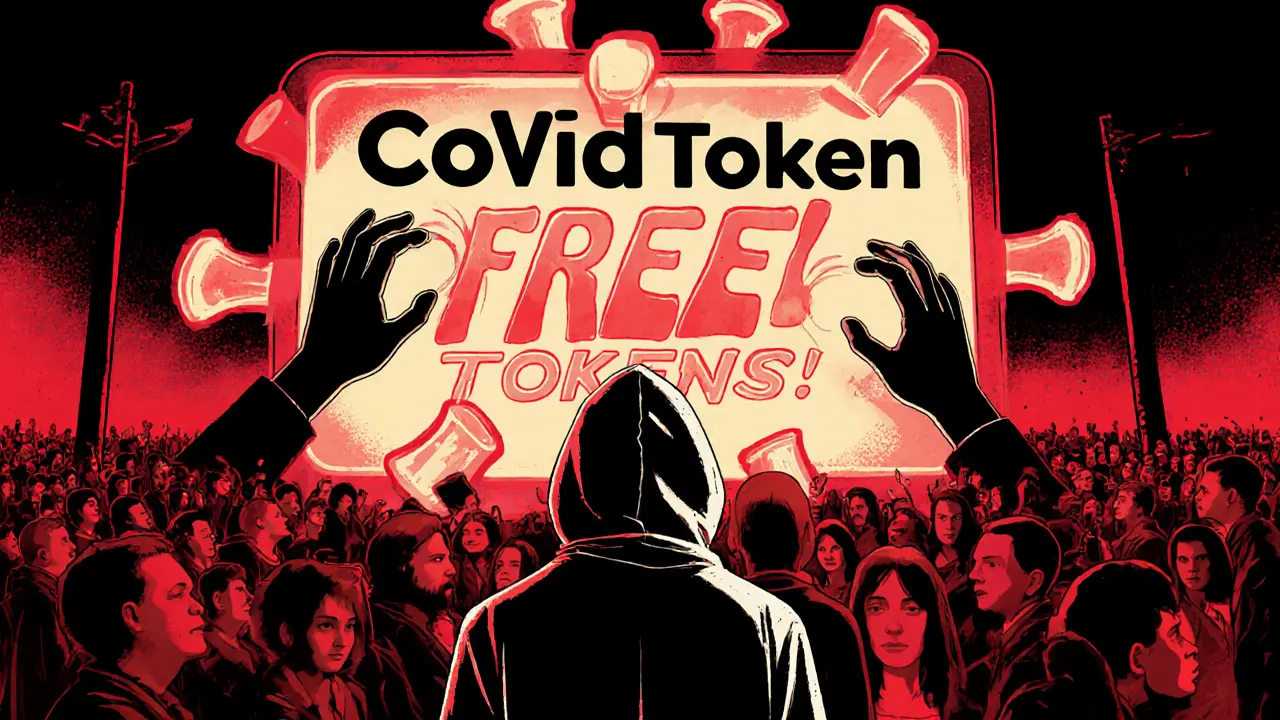
CovidToken Airdrop: What You Need to Know (And Why It Might Be a Scam)
CovidToken airdrop is a scam. No such project exists. Learn how these fake crypto schemes work, how to spot them, and which real airdrops to watch in 2025 instead.
Read More