Cryptocurrency Power Usage: How Crypto Mining Drains Energy and Where It's Heading
When you hear about cryptocurrency power usage, the total amount of electricity consumed by blockchain networks, especially through mining operations. Also known as crypto energy consumption, it's not just a tech issue—it's a global energy debate. Bitcoin alone uses more electricity each year than Argentina or the Netherlands. That’s not a guess. It’s based on real data from the Cambridge Centre for Alternative Finance. And it’s not slowing down—miners are chasing cheap power wherever they can find it.
This isn’t just about Bitcoin. crypto mining energy, the electricity burned to validate transactions on proof-of-work blockchains is what keeps networks like Bitcoin and Litecoin running. But it’s also what’s getting governments worried. In Angola, they banned mining outright because it was overloading the national grid. In Pakistan, they’re giving miners 2,000 megawatts of surplus power—because they have too much and no one else is using it. Meanwhile, places like Texas and Kazakhstan are becoming mining hubs not because they’re crypto fans, but because they’ve got cheap, abundant electricity.
Here’s the twist: not all crypto needs that much power. Proof of Stake, a consensus method that replaces mining with staking, slashing energy use by over 99% is now the standard for Ethereum, Solana, and Cardano. That’s why the shift from proof-of-work to proof-of-stake isn’t just a technical upgrade—it’s a survival move. When the energy bill gets too high, networks either adapt or get crushed by regulation, public pressure, or cost.
And it’s not just about the numbers. It’s about perception. If people think crypto is a climate disaster, they’ll avoid it. That’s why exchanges, wallets, and even miners are starting to talk about renewable energy. Some now run on solar or wind. Others offset their footprint. But the truth? Most mining still runs on fossil fuels, especially in countries with weak oversight.
What you’ll find in these posts isn’t hype. It’s the real stories behind the numbers: how Angola shut down mining with prison sentences, how Pakistan’s 2,000 MW allocation could shift global mining economics, and why a dead coin like Bitstar still uses zero power—because it’s not running at all. You’ll see how energy policies are shaping where crypto lives, who profits, and who gets left behind. No theory. No fluff. Just what’s happening on the ground, in the grid, and in the code.
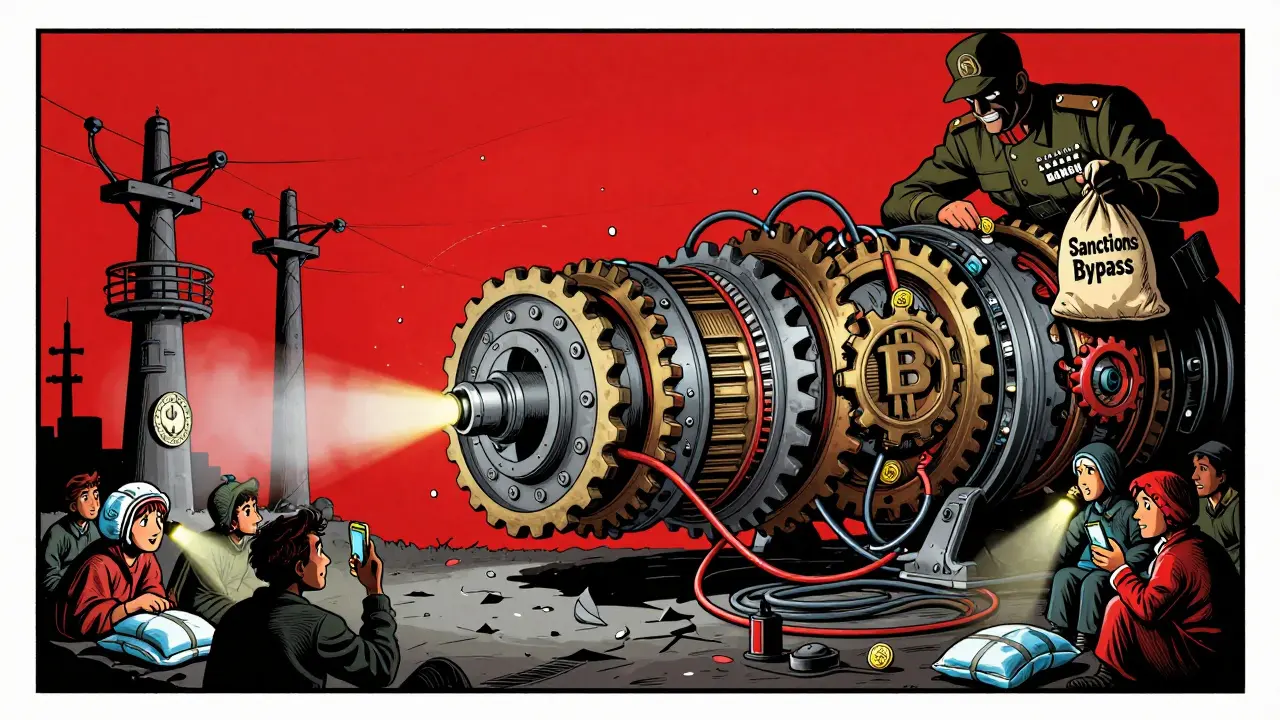
Iranian Energy Subsidies for Crypto Mining: How Cheap Power Fuels a National Crisis
Iran uses heavily subsidized electricity to fuel cryptocurrency mining, earning billions in foreign currency while millions of citizens suffer daily blackouts. The policy prioritizes sanctions evasion over public welfare.
Read More