Decentralized Exchanges: What They Are and Why They Matter in Crypto
When you trade crypto on a decentralized exchange, a platform that lets users trade directly with each other without a central company controlling the funds. Also known as DEX, it removes the need for banks, brokers, or middlemen—giving you full control over your coins. That’s the whole point. No one holds your keys. No one freezes your account. No one decides if you can withdraw. It’s just you, your wallet, and the blockchain.
That’s why DeFi, a system of financial tools built on open blockchains without traditional intermediaries grew so fast. Decentralized exchanges are the backbone of DeFi. Platforms like STON.fi, a fast, low-fee DEX on the TON blockchain with deep integration into Telegram’s 800 million users let you swap tokens instantly, without KYC. You don’t need to sign up. You don’t need to prove who you are. You just connect your wallet and trade. That’s freedom. But it’s also risk. Some DEXs host tokens with zero liquidity, fake volume, or no team behind them—like the ghost projects we’ve seen in Bitstar, UniWorld, and Buggyra Coin Zero. They look real. They flash fake prices. But they’re dead. And if you trade on a DEX that lists them, you’re just throwing money into a black hole.
Not all DEXs are the same. Some, like OneDex, a niche exchange built for the MultiversX blockchain that offers fast, low-cost WEGLD trading with no KYC, are made for experienced users who know exactly what they’re doing. Others, like the ones linked to scams like LocalTrade or PayCash Swap, are designed to steal. The difference? Transparency. Real DEXs show their code, their liquidity pools, their fees. Scams hide behind fake websites and cloned logos. And with no central authority to call, if you lose funds, you’re out of luck.
That’s why understanding how decentralized exchanges work isn’t just technical—it’s survival. You need to know how to spot a dead token, how to check if a DEX is legit, and why governance tokens like MKR matter when you’re voting on protocol changes. You need to know how sidechains like Polygon or Liquid Network help DEXs run faster and cheaper. And you need to understand that while DEXs are the future, they’re not magic. They’re tools. And like any tool, they can build or break you—depending on how you use them.
Below, you’ll find real reviews, deep dives, and straight-up warnings about the DEXs, tokens, and scams shaping today’s crypto landscape. No fluff. No hype. Just what’s actually happening.
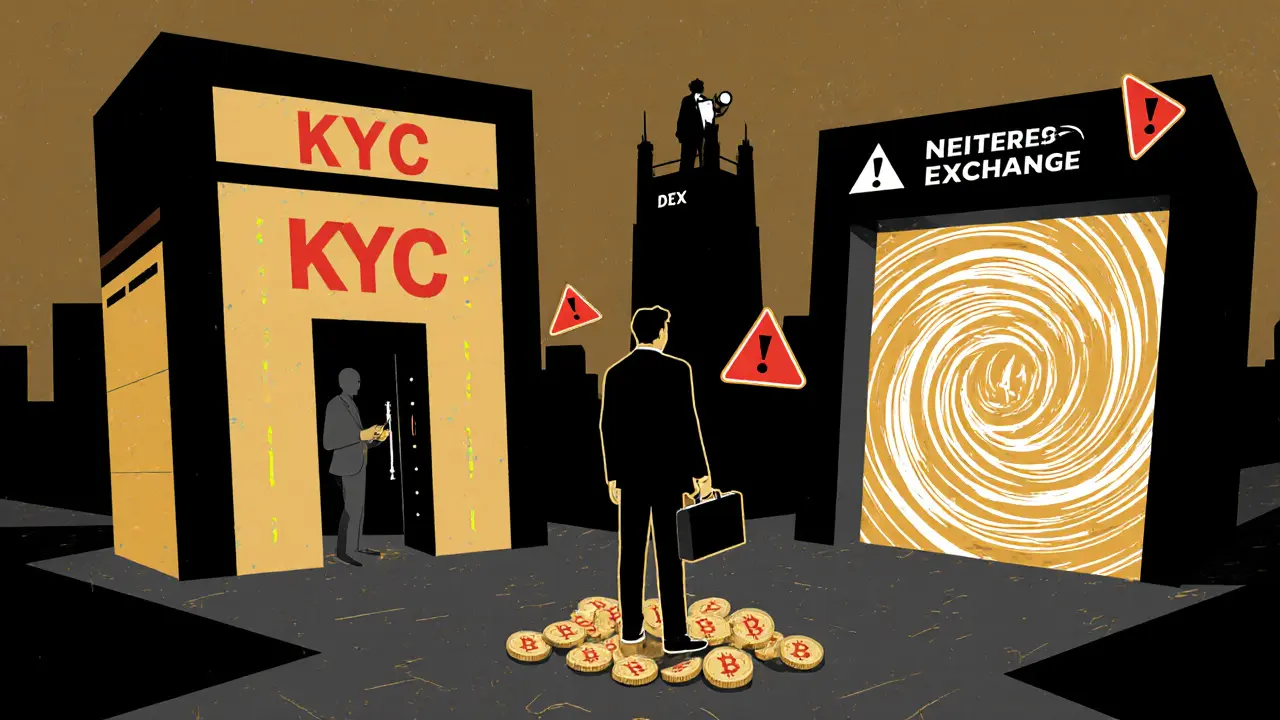
Using Multiple Crypto Exchanges to Avoid Restrictions: Risks, Methods, and Real-World Consequences
Using multiple crypto exchanges to avoid restrictions may seem smart, but it often crosses into illegal territory. Learn how regulators track evasion, why nested exchanges are dangerous, and what legal alternatives actually work.
Read More