Mexican fintech rules: What you need to know about crypto and digital finance in Mexico
When it comes to Mexican fintech rules, the legal framework governing digital financial services in Mexico, including crypto exchanges, digital wallets, and payment processors. Also known as Ley Fintech, it was passed in 2018 to bring transparency to fintech operations and protect consumers from unregulated platforms. This law didn’t ban crypto — it just made it clear: if you’re running a crypto exchange or offering digital asset services in Mexico, you need a license from the Bank of Mexico and the National Banking and Securities Commission (CNBV). No license? You’re operating illegally.
That’s why most Mexican crypto users stick to global platforms like Binance or Kraken — they’re not licensed locally, but they’re still accessible. Meanwhile, local startups like Bitso, Mexico’s largest crypto exchange, which became the first to receive full regulatory approval under the Fintech Law had to overhaul their entire system to comply. Bitso now handles KYC, transaction reporting, and anti-money laundering checks like a bank. Other players, like Coinsmart, a Canadian exchange that expanded into Mexico, had to shut down its local services because they couldn’t meet the strict capital and audit requirements. The rules aren’t just about control — they’re about forcing companies to prove they’re real, not just another anonymous website.
What does this mean for everyday users? If you’re sending remittances, trading crypto, or using a digital wallet, you’re still free to do it — but you’re more likely to use a regulated app now. The government pushed for this because Mexico sends over $60 billion in remittances every year, mostly from the U.S. They wanted to cut out the middlemen and make those transfers faster and cheaper. That’s why digital pesos and blockchain-based payment rails are getting attention. But here’s the catch: while the law allows crypto trading, it doesn’t recognize crypto as legal tender. You can’t pay for your tortillas with Bitcoin — not legally, anyway. And if you try to mine crypto at home using cheap power? You’re walking a thin line. Some states have started cracking down on high-energy use, especially in areas with rolling blackouts.
What you’ll find below isn’t just a list of articles — it’s a real-world look at how these rules play out. From how Iran’s sanctions forced crypto adoption (a warning for Mexico if things tighten), to how Angola banned mining to save its grid, to how Canada’s patchwork laws show what happens when regulation isn’t uniform — these stories all tie back to the same question: When governments try to control digital money, who wins? You’ll see scams that thrive in gray areas, exchanges that vanish overnight, and everyday people finding workarounds. This isn’t theory. It’s happening right now — and Mexico’s rules are shaping the next chapter.
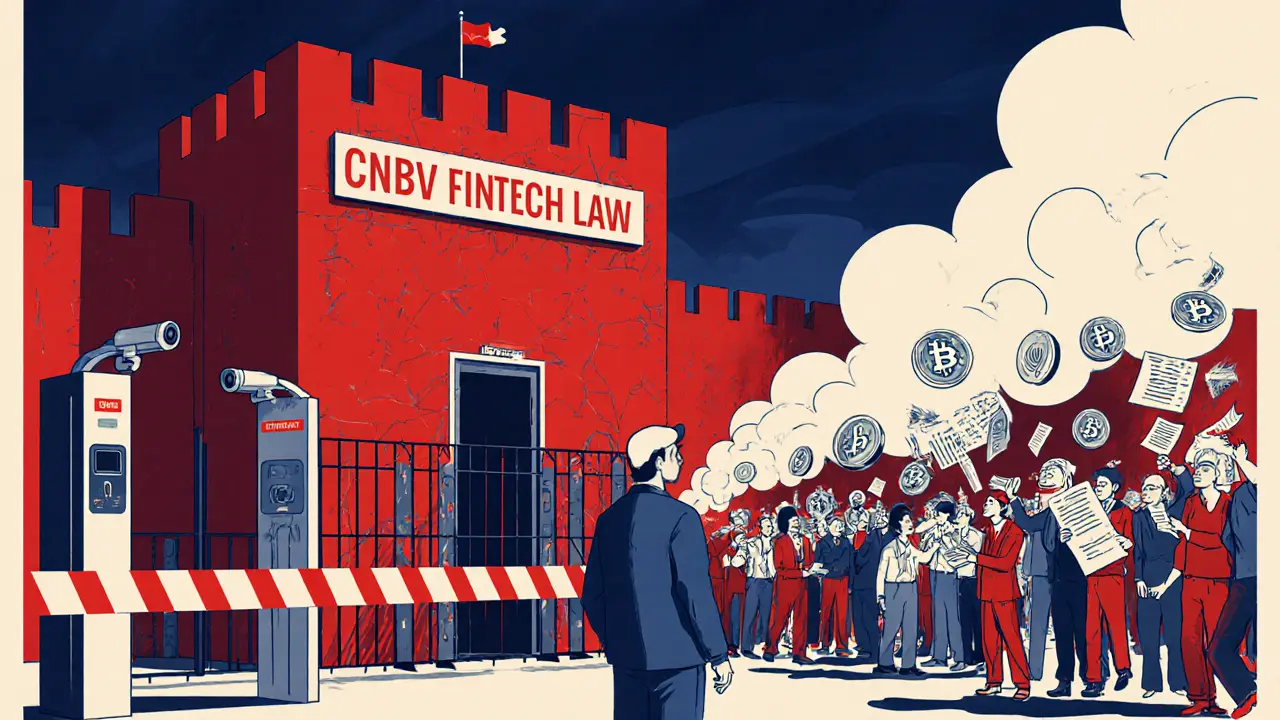
FinTech Law and Cryptocurrency in Mexico: What You Need to Know in 2025
Mexico's FinTech Law regulates digital finance strictly but leaves cryptocurrency in legal limbo. Learn how crypto use is allowed for individuals but blocked for banks, and why startups struggle under heavy compliance rules in 2025.
Read More