Nested Exchanges: What They Are and Why They Matter in Crypto
When you trade on a nested exchange, a crypto platform that operates by piggybacking on another exchange’s infrastructure, often without direct liquidity or regulatory oversight. Also known as aggregator platforms, it lets users trade without holding assets directly—but that convenience hides serious risks. These platforms don’t hold your coins. They don’t even have their own order books. Instead, they route your trades through bigger exchanges like Binance or Kraken, hiding behind fake interfaces, misleading fees, and zero transparency.
Nested exchanges thrive in gray zones. You’ll find them linked to airdrops, meme coins, or obscure tokens with no real market presence—like LocalTrade, a platform flagged for fake volume and user fund losses, or PayCash Swap, a platform with no reviews, no security info, and every red flag imaginable. They’re not always scams, but they’re rarely safe. Many users don’t realize their trades are being routed through third parties, and when things go wrong—like stuck transactions or frozen withdrawals—they have no recourse. Unlike regulated exchanges, nested platforms rarely have customer support, insurance, or even a physical address.
Why do they exist? Because they’re cheap to run and easy to hide. A developer can spin up a fake interface in days, connect it to a public API, and start collecting trading fees without ever touching user funds. Some even pretend to be decentralized exchanges—like OneDex, a real DEX built for MultiversX, but often confused with fake clones—but the copycats have no code audit, no community, and no future. The result? You’re trusting a middleman who doesn’t answer to anyone.
And it’s not just about losing money. Nested exchanges often feed into larger problems: they inflate trading volume for fake tokens like DDM or BCZERO, make it harder to track real market trends, and create confusion around what’s legitimate. When Angola banned mining or Pakistan allocated 2,000 MW for crypto, they weren’t dealing with nested platforms—they were shaping real infrastructure. But millions of users still get lured into these shadow systems, thinking they’re getting an edge.
What you’ll find below isn’t a list of recommendations. It’s a warning label. We’ve pulled together real cases—platforms that vanished, tokens that died, and exchanges that stole funds—so you can spot the patterns before you click "Connect Wallet" or enter your seed phrase. This isn’t theory. These are the exact platforms people lost money on last year. And if you’re trading on something that doesn’t show up on CoinGecko or CoinMarketCap, you’re already in the danger zone.
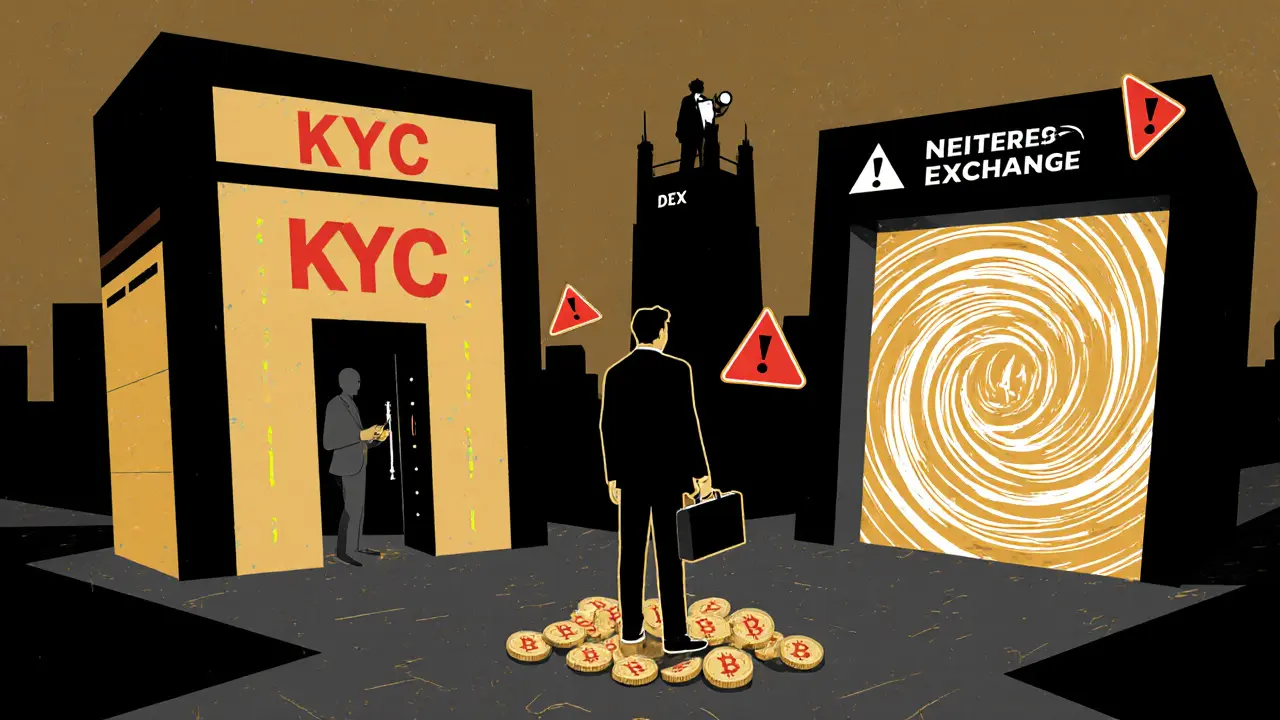
Using Multiple Crypto Exchanges to Avoid Restrictions: Risks, Methods, and Real-World Consequences
Using multiple crypto exchanges to avoid restrictions may seem smart, but it often crosses into illegal territory. Learn how regulators track evasion, why nested exchanges are dangerous, and what legal alternatives actually work.
Read More