Taiwan Selective Banking Crypto Restrictions: How to Trade Without a Bank
 Sep, 23 2026
Imagine trying to buy your morning coffee with Bitcoin in Taipei. You can do it, but your bank might not like it. In fact, if you try to use a credit card for that transaction, the system will likely block it before the coffee even cools down. This isn't a glitch; it is a deliberate design choice by Taiwan's Financial Supervisory Commission (FSC), which has carved out a unique space where cryptocurrency is legal to own and trade, but heavily restricted from integrating with traditional banking services. If you are a resident, an expat, or an investor looking at this market, understanding these selective banking restrictions is the only way to navigate the ecosystem without getting your funds frozen.
The Core Rule: Banks Stay Out, Exchanges Step Up
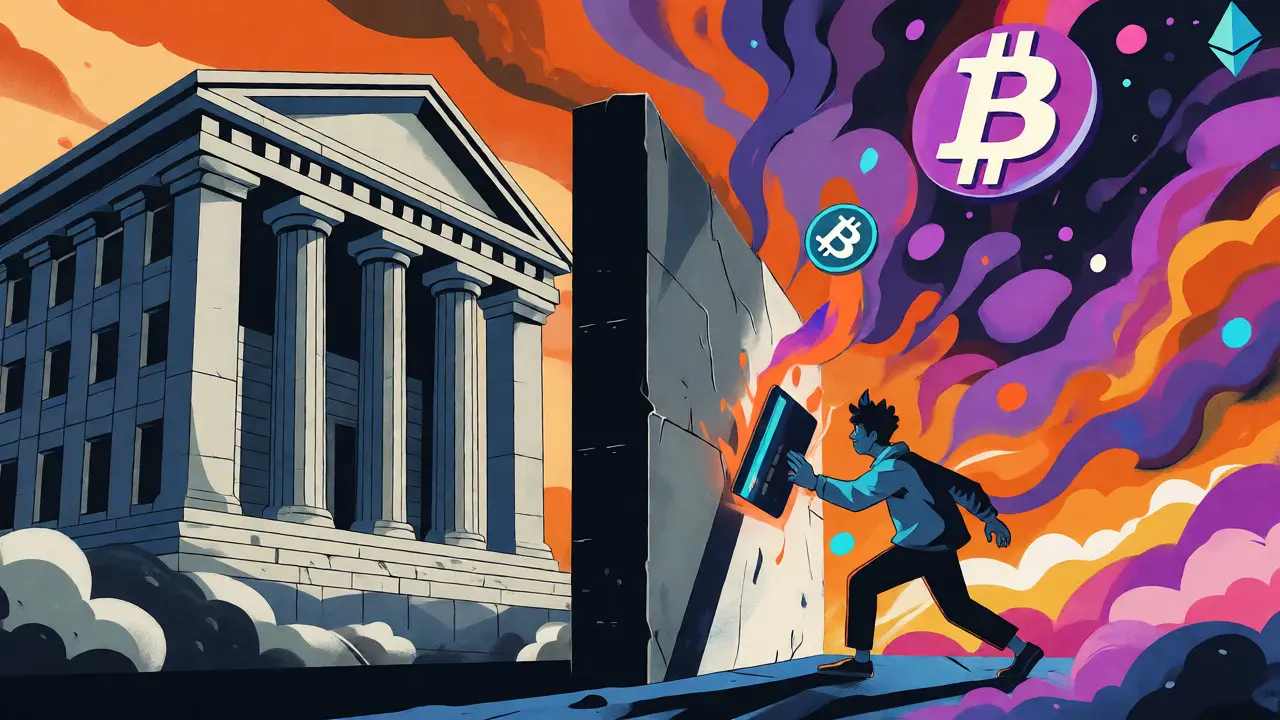
Here is the fundamental tension in Taiwan’s crypto landscape. The government doesn’t ban crypto. They don’t tax you just for holding it. But they have erected a high wall between traditional banks and digital assets. Since a directive in 2014, local banks were prohibited from accepting Bitcoin or offering exchange services. This wasn't just about avoiding volatility; it was about protecting the stability of the traditional financial system. Fast forward to July 2022, and the FSC tightened the screws further. They instructed credit card acquirers to stop processing payments for crypto purchases. Think of it like online gambling or futures trading-categories that banks traditionally avoid because of their speculative nature. Now, buying Ethereum with a Visa card issued by a Taiwanese bank is effectively dead in the water.
This creates a specific job-to-be-done for every user: how do you get fiat currency into the crypto ecosystem? You can’t just wire money from your CTBC or E.SUN account directly to Binance or Coinbase as easily as you might in other jurisdictions. Instead, the burden shifts entirely to registered Virtual Asset Service Providers (VASPs). These are the licensed exchanges that act as the sole bridge between the New Taiwan Dollar (TWD) and the blockchain world. If you aren't using a registered VASP, you are operating in a gray zone that carries significant risk.
VASP Registration: The Gatekeepers of the Market
If you are planning to start a business here or simply want to know who is safe to trust, look for the license. As of January 1, 2025, mandatory registration for VASPs replaced the earlier voluntary measures. This wasn't a suggestion; it was a hard line. Non-compliant entities face fines up to NT$5 million ($155,900) and potential jail time of up to two years. Why so strict? The goal is Anti-Money Laundering (AML) compliance. By forcing all exchanges to register, the FSC ensures they know exactly who is moving money on-chain.
Currently, there are exactly 23 registered VASPs. Among them, MaiCoin stands out as the giant, handling roughly $70 million in daily volume. It’s the go-to platform for many locals because it has navigated the regulatory maze better than most. Other international players exist, but they must operate under this same framework. For users, this means fewer options than in global markets, but higher security standards. When you deposit TWD, you are interacting with a regulated entity that segregates customer assets and adheres to strict cybersecurity protocols.
| Feature | Traditional Banks | Registered VASPs |
|---|---|---|
| Crypto Trading Services | Prohibited (Directly) | Permitted (With License) |
| Credit Card Purchases | Blocked for Crypto | Bank Transfers Only |
| Regulatory Oversight | Central Bank / FSC | FSC AML Compliance |
| User Access Method | N/A for direct trading | Bank Transfer to Exchange Wallet |
The Workarounds: How Locals Actually Buy Crypto
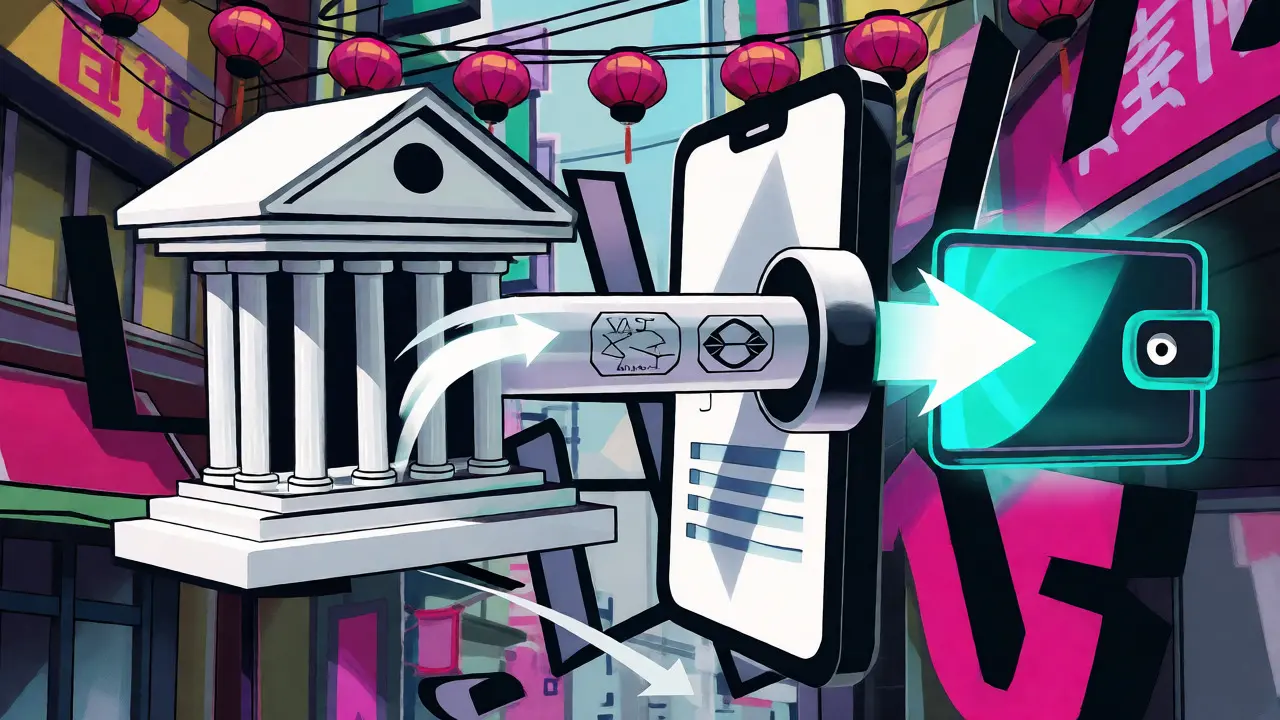
So, if banks won't touch it, how do 2.3 million Taiwanese citizens-roughly 10% of the population-own crypto? They adapt. The primary method is the bank transfer. You log into your regular bank app, send TWD via wire transfer to your MaiCoin or Bitmax account, and then trade. It adds a step compared to instant credit card buys in the US or Europe, but it works. Peer-to-peer (P2P) trading also remains popular, especially among younger demographics who prefer direct control over their transactions. However, P2P carries its own risks, including fraud and slower settlement times.
There is a noticeable friction point here. International platforms often score higher on functionality (around 4.2/5 on review sites) compared to some local-only interfaces (MaiCoin averages 3.8/5 due to limited banking integration). Users report that while the restriction is annoying, it hasn't stopped adoption. Daily trading volume across registered platforms hits approximately $200 million, with Bitcoin and Ethereum making up 65% of that activity. The market is active, but it flows through narrow, regulated pipes rather than the open floodgates of traditional banking.
Stablecoins and the Future: Is the Wall Crumbling?
Things might be changing, but slowly. Starting June 2025, Taiwan plans to introduce a new regulatory framework specifically for stablecoins pegged to the New Taiwan Dollar. This is a big deal. Currently, unregulated stablecoins like USDC and USDT dominate. The FSC intends to allow regulated financial institutions to issue government-backed stablecoins. This could soften the current restrictions. Imagine a scenario where a bank-issued TWD stablecoin allows for seamless transfers between traditional accounts and crypto wallets, bypassing the old prohibition on direct crypto-bank links.
Additionally, the Central Bank completed a feasibility study for a Central Bank Digital Currency (CBDC) in late 2023. Prototype testing began in early 2025. If successful, a CBDC could eventually integrate more deeply with the banking sector, potentially relaxing restrictions for government-supervised digital assets while keeping speculative cryptocurrencies at arm's length. Experts predict any relaxation will be incremental. Don't expect banks to suddenly offer Bitcoin debit cards next month. The separation between "speculative commodity" and "regulated digital cash" will likely remain sharp.

What This Means for Investors and Businesses
If you are running a crypto startup in Taipei, budget for complexity. Setting up compliance infrastructure costs between NT$2-5 million, and navigating the registration process takes 3-6 months. The Taiwan Virtual Asset Service Provider Association, established in mid-2024, helps standardize practices, but finding a bank willing to handle payroll for a crypto firm is still a challenge. Many firms rely on third-party payment processors or hold operations accounts abroad to keep things moving.
For individual investors, the takeaway is clear: stick to registered VASPs. The risk of using an unregistered offshore exchange is that your withdrawals could get flagged or delayed if the FSC cracks down harder. Also, keep records. With AML laws tightening, proving the source of your funds is crucial. While the restrictions limit innovation speed, they provide a level of consumer protection that many chaotic global markets lack. Your assets are segregated, and the platform is accountable to a regulator.
Frequently Asked Questions
Can I buy cryptocurrency with a credit card in Taiwan?
Generally, no. Since July 2022, the Financial Supervisory Commission (FSC) has instructed credit card acquirers to prohibit credit card services for crypto-asset purchases. Transactions are typically treated similarly to banned categories like online gambling or futures. Most users must fund their exchange accounts via bank transfers instead.
Is cryptocurrency legal in Taiwan?
Yes, owning and trading cryptocurrency is legal. However, it is classified as a virtual commodity rather than legal tender. The main restrictions apply to the banking sector's involvement, not the individual's right to hold or trade digital assets through registered platforms.
Which crypto exchanges are licensed in Taiwan?
As of late 2024, there are 23 registered Virtual Asset Service Providers (VASPs). MaiCoin is the largest local player, followed by others like Bitmax and various international exchanges that have secured local compliance. Always verify a platform's registration status with the FSC before depositing large sums.
Why are banks restricted from dealing with crypto?
The restrictions aim to mitigate systemic risk and prevent money laundering. By separating traditional banking from volatile digital assets, regulators protect the stability of the traditional financial system. Banks are prohibited from offering direct exchange services or facilitating credit card payments for crypto to maintain this firewall.
Are there taxes on crypto in Taiwan?
Taxation is complex and evolving. Generally, profits from selling crypto may be subject to income tax depending on frequency and intent (investment vs. trading). There is currently no capital gains tax specifically labeled as such for occasional holders, but active traders should consult a local tax professional, as regulations are being refined alongside the VASP framework.