Unlicensed Crypto Mining in Iran: How the IRGC Runs a State-Backed Bitcoin Cartel
 Aug, 23 2026
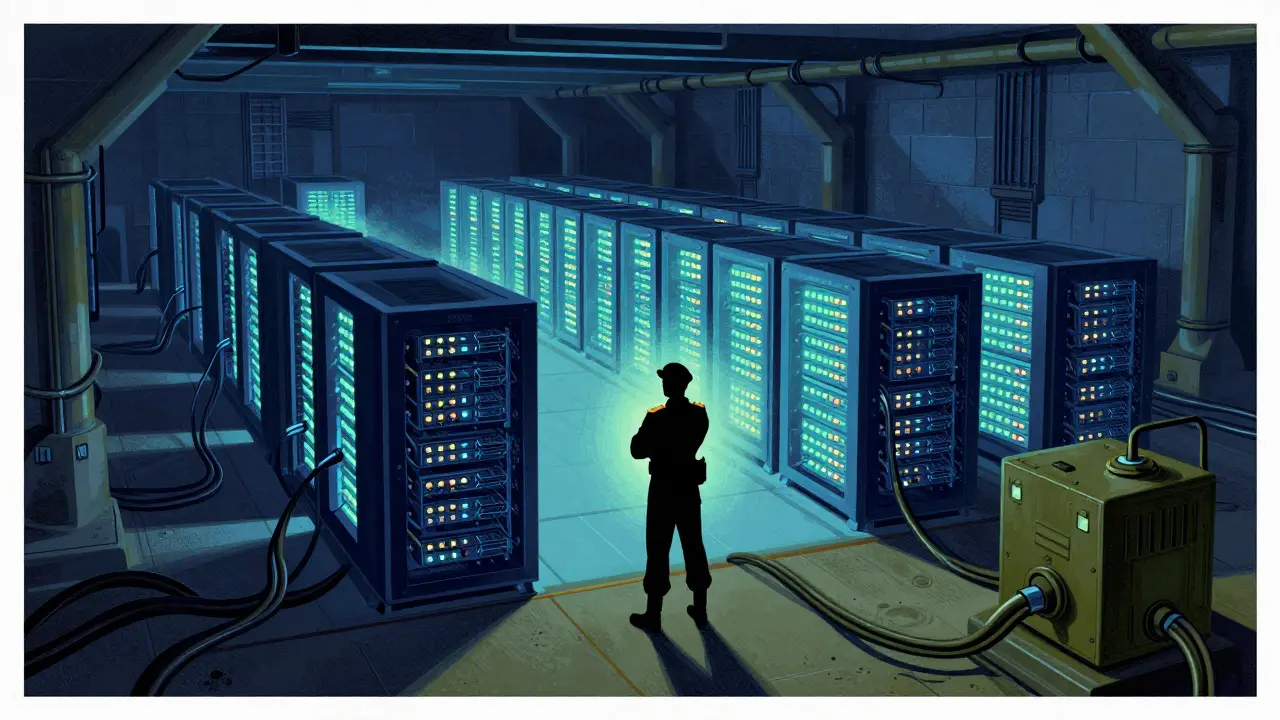
Imagine living in a city where the power cuts out for hours every day, not because of grid failure, but because half the electricity is being siphoned off to run silent, humming server rooms hidden inside military bases. This is the reality for millions of Iranians today. While the government officially legalized Cryptocurrency Mining is the process of using computer hardware to validate blockchain transactions and earn digital rewards in 2019, the true scale of the industry has been captured by an unlikely player: the Islamic Revolutionary Guard Corps (IRGC). What began as a strategic move to bypass international sanctions has evolved into a massive, unlicensed operation that investigators now call a "crypto cartel." It’s a story of state power, stolen energy, and a two-tiered system where ordinary citizens pay the price for the regime’s financial survival.
The Birth of a State-Run Crypto Empire
To understand how we got here, you have to look at the timeline. By 2019 and 2020, international sanctions were squeezing Iran’s dollar channels dry. The Supreme Leader’s office needed a new way to move money without leaving a paper trail. Enter the IRGC. Reports indicate that Tehran’s most influential power group received direct orders to enter the cryptocurrency sector. They didn’t just dip their toes in; they built infrastructure. A prime example is the 175-megawatt Bitcoin mining farm established in Rafsanjan, Kerman Province. On paper, it looked like a joint venture between an IRGC-affiliated enterprise and foreign investors, likely Chinese partners attracted by rock-bottom electricity prices. In reality, it was a strategic asset for the state, located in special economic zones or military bases where civilian oversight is virtually non-existent.
Scale of Operations: Who Really Owns the Miners?
The numbers are staggering. Current estimates suggest there are approximately 180,000 active mining devices across Iran. Of these, only about 80,000 are in private hands. That leaves a massive gap-potentially up to 100,000 units-under the direct control of state or quasi-state organizations. This isn't just a few rogue officers with spare cash; this is institutionalized extraction. Entities like Astan Quds Razavi is a massive religious foundation and charitable trust under the direct supervision of the Supreme Leader of Iran have formed a de facto monopoly group. These organizations profit by systematically plundering national electricity resources, operating with a semblance of legitimacy while commandeering a vast share of the country's energy grid.
| Feature | Private Miners | IRGC / State-Affiliated Miners |
|---|---|---|
| Estimated Active Devices | ~80,000 | ~100,000 | Electricity Cost | High tariffs + mandatory sales to Central Bank | Subsidized or free (often unpaid bills) | Legal Status | Licensed but heavily restricted | Unlicensed/Gray area with political protection | Location | Industrial zones or homes | Military bases, special economic zones | Oversight | Ministry of Industry, Mines, and Trade | Minimal civilian oversight; armed protection |
The Energy Crisis Connection
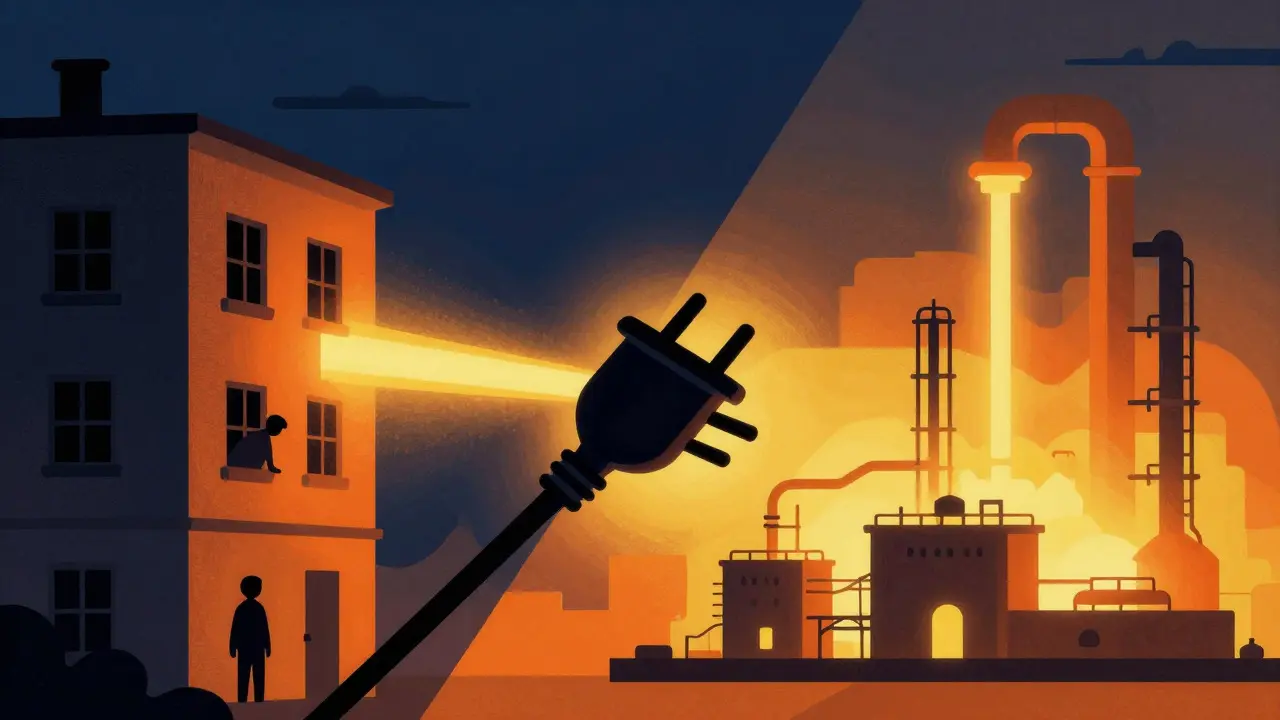
Why does this matter to the average person? Because every kilowatt-hour used by those ASIC miners is one less available for your home or factory. In 2022, the Iranian parliament quietly passed legislation allowing the military to establish private power plants and transmission lines. This legal loophole enabled the IRGC to directly access subsidized electricity and even redirect public power resources intended for cities toward their secret mining farms. The result? Debilitating power outages. Homes and factories experience blackouts for hours or days at a time. Energy Minister Ali Abadi, who is himself a former IRGC commander, acknowledged the crisis by likening unauthorized crypto mining to "putting a hand in others' pockets" and calling it "an ugly and unpleasant theft." Yet, given his background, many question how aggressively the government will crack down on operations run by his former organization.
Sanctions Evasion and Global Reach
Beyond the local energy drain, these mines serve a geopolitical purpose. Cryptocurrency offers two key features that traditional banking lacks: direct, intermediary-free transactions and relative anonymity. Unlike bank transfers that leave clear audit trails, crypto exchanges occur directly between digital wallets. Blockchain analytics firms have identified Iran as one of the world's major Bitcoin producers, largely due to this state-backed effort. Both the U.S. Treasury Department and Israeli intelligence have specifically targeted Bitcoin wallets tied to IRGC operations. These funds are reportedly used to finance proxy groups involved in regional conflicts. It’s a sophisticated method of moving wealth outside the reach of global financial controls.
Regulatory Cat-and-Mouse Game
The regulatory landscape in Iran is confusing, often designed to consolidate control rather than create fair competition. Licensed miners face high energy tariffs and must sell their digital assets directly to the Central Bank of Iran (CBI). This makes mining financially unsustainable for many legitimate operators, pushing them underground or out of business entirely. Meanwhile, the IRGC operates in a gray area. Recent moves by the CBI highlight this tension. On December 27, 2024, the central bank blocked all Iranian cryptocurrency-to-rial payments through domestic websites. But by January 2025, they began selectively unblocking specific trader exchanges using a government API that provides full access to user data. The goal isn't to stop crypto; it's to monitor and control it. Many Iranians circumvent these restrictions using Virtual Private Networks (VPNs) to access foreign exchanges, avoiding local scrutiny and maintaining some degree of financial independence.

What This Means for the Future
The combination of political protection, armed enforcement, and direct access to subsidized electricity ensures that IRGC mining operations remain largely immune to the pressures applied to private miners. As long as sanctions persist, the incentive for the state to maintain this parallel economy remains strong. For ordinary Iranians, the situation means continued energy instability and limited access to the same sanctions-evasion benefits enjoyed by the elite. The "crypto cartel" model shows how state power can distort a decentralized technology, turning a tool of financial freedom into an instrument of state control and resource extraction.
Frequently Asked Questions
Is cryptocurrency mining legal in Iran?
Yes, it was officially recognized as a legal industry in 2019. However, licensing is managed by the Ministry of Industry, Mines, and Trade, with strict conditions such as high energy tariffs and mandatory sales to the Central Bank. This has made it difficult for private miners, leading to a large unlicensed sector dominated by state-affiliated entities.
How much of Iran's mining hardware is controlled by the state?
Estimates suggest that well over half of all mining hardware in Iran is operated by state-related entities. With approximately 180,000 total devices, around 100,000 are believed to be under the direct control of the IRGC or other quasi-state organizations, compared to roughly 80,000 in private hands.
Why do IRGC mining farms cause power outages?
These farms consume electricity on an industrial scale. Since 2022, legislation has allowed the military to build its own power infrastructure, enabling them to redirect subsidized public electricity away from cities and industries to fuel their mining operations. This diversion contributes significantly to widespread blackouts for civilians.
How does the IRGC use mined Bitcoin?
The primary use is sanctions evasion. Bitcoin allows for direct, anonymous transactions that bypass traditional banking systems. Intelligence agencies believe these funds are used to compensate for losses in dollar channels and to finance proxy groups in regional conflicts, keeping the money outside the reach of international financial monitoring.
Can ordinary Iranians still trade crypto?
Yes, but with increasing difficulty. The Central Bank has implemented programs to block domestic crypto-to-fiat payments and monitor exchanges via government APIs. Many citizens use VPNs to access foreign exchanges like Nobitex or international platforms to avoid local restrictions and maintain privacy.
OLIVER CHRISTIAN
August 25, 2026 AT 01:02This is a fascinating case study in how state power distorts decentralized technology. The key takeaway here isn't just the energy theft, but the structural advantage the IRGC holds. By operating outside the standard licensing framework that burdens private miners with high tariffs and mandatory sales to the Central Bank, they create an asymmetric market.
It’s similar to what we see in other sanctioned economies where the state captures the most profitable segments of informal trade. The mention of the 175-megawatt farm in Rafsanjan is particularly telling; that scale requires significant capital and political protection, which only a quasi-state entity can secure. For anyone studying geopolitical crypto flows, this is a prime example of 'state-backed arbitrage.'
The use of Bitcoin for proxy financing also highlights the dual nature of the asset: it’s both a store of value and a tool for sanctions evasion. It’s not really about 'mining' in the traditional sense anymore; it’s about creating a parallel financial infrastructure that exists in the shadows of international banking norms.
Niall O'Rourke
August 25, 2026 AT 11:05yeah sure its bad for them but honestly who cares about their grid
the real story is how they are moving money around without us knowing
its like the old days when everyone was smuggling gold but now its bits and bytes
i dont trust any government to run a fair game anyway
so why should we be surprised they cheat
Jillian Groskreutz
August 26, 2026 AT 13:51You’re missing the point entirely, Niall! Who cares is exactly the wrong question to ask if you have any semblance of global economic awareness!
We care because this creates a precedent for state-sponsored resource extraction in the digital age! If the IRGC can siphon off 100,000 units of mining hardware with zero civilian oversight, imagine what happens when other autocracies follow suit! This isn’t just about Iran’s blackouts; it’s about the integrity of the global energy grid and the potential for cryptocurrency to become a tool for authoritarian consolidation rather than liberation!
And don’t give me that 'who cares' attitude again! It’s intellectually lazy and frankly, a bit embarrassing for someone claiming to be a contrarian!
Niall O'Rourke
August 26, 2026 AT 22:20shut up Jillian nobody asked for your lecture
you sound like a textbook that got angry at itself
just read the post instead of typing paragraphs no one wants to read
keep your opinions to yourself maybe then you will sleep better at night
Jade Brown
August 28, 2026 AT 07:42Let's talk about the asymmetric leverage here, shall we?
The IRGC isn't just mining; they're executing a shadow balance sheet expansion. By bypassing the Central Bank's mandatory buyback program, they retain full custody of the BTC, allowing for OTC (Over-The-Counter) liquidity events that never touch the regulated exchange rails. This is pure capital flight via hash rate.
Think about the energy arbitrage: subsidized industrial rates vs. commercial residential tariffs. That delta is effectively a state subsidy for a private military-industrial complex. It’s a classic rent-seeking behavior wrapped in a tech jacket. And let's not forget the geopolitical hedging aspect. Using BTC to fund proxies is essentially creating a parallel currency reserve that is immune to SWIFT cuts. It’s messy, it’s opaque, and it’s brilliant from a regime survival standpoint. The 'cartel' label is apt because they control the supply side (hardware/electricity) and the demand side (sanctions evasion needs).
Stephanie Millar
August 28, 2026 AT 21:16It is quite remarkable, isn't it, how the narrative shifts from 'decentralized freedom' to 'state-controlled cartel' so quickly?
In my experience, when governments get involved in crypto, it rarely ends well for the common citizen. The mention of the Energy Minister being a former IRGC commander really does highlight the conflict of interest. It feels very much like a closed loop where the regulators are also the primary offenders.
I wonder if the average Iranian miner even realizes they are competing against a state actor with unlimited access to cheap power? It must be incredibly frustrating to try to build a business on such unstable ground.
Leah Humphrey
August 30, 2026 AT 08:48another day another country using crypto to hide money from auditors
the tech doesn't change the human element
just more jargon for corruption
SHIV SHANKAR KANTA
August 31, 2026 AT 13:08this is the tragedy of our time
we built a machine to free people from kings
but the kings just learned to code
they take the light from your house to power their secret vaults
it hurts to see truth hidden behind layers of complexity
the pain of the powerless is always ignored by those who hold the keys
we are all just watching the screen while the world burns in the background
why do we accept this silence
where is the anger
where is the fire
the system eats itself and calls it progress
we are ghosts in a machine that was never ours to begin with
it is a dark mirror reflecting our own complacency
the bitcoin they mine is mined from our future
a debt paid in darkness and stolen volts
do not look away from the hum of those servers
for they are the heartbeat of a dying hope
the end is written in the block chain of history
and it reads: surrender
remember this when the lights go out again
they were never yours to keep