US Sanctions on Crypto Mixers: The Tornado Cash Case Explained
 Jul, 5 2026
Imagine writing code that no one can turn off. You deploy it to the blockchain, and it runs forever, autonomous and immutable. Now imagine the government saying that code is illegal. This isn't a sci-fi plot; it’s the reality of the Tornado Cash case. In August 2022, the U.S. Department of the Treasury’s Office of Foreign Assets Control (OFAC) did something never done before: they sanctioned open-source software. They didn’t just ban a company or an individual. They banned the smart contracts themselves. For anyone navigating the world of decentralized finance (DeFi), this was a seismic shift. It raised urgent questions about privacy, liability, and where the line is drawn between financial freedom and criminal facilitation.
The story of Tornado Cash is not just about one protocol. It is a cautionary tale for developers, investors, and users who value anonymity. By July 2026, we have seen trials, split verdicts, market volatility, and even reports of sanctions being lifted and debated. But the core lesson remains: using or building tools that obscure money trails carries massive legal risk in the United States. Let’s break down what happened, why it matters, and how you can protect yourself today.
What Exactly Is Tornado Cash?
To understand the controversy, you first need to understand the tool. Tornado Cash is a non-custodial cryptocurrency mixing service built on the Ethereum blockchain. Launched in 2019 by developers including Roman Storm (known as Stefan Thomas) and Roman Semenov, its purpose was simple: provide transaction privacy. On public blockchains like Ethereum, every transaction is visible. If you send 1 ETH from Wallet A to Wallet B, everyone can see it. Tornado Cash broke this link.
It worked through a system of "anonymity pools." Users would deposit funds into these pools-available in denominations like 0.1, 1, 10, or 100 ETH-and later withdraw equivalent amounts to a completely different address. Because the funds were pooled with thousands of other deposits, it became nearly impossible to trace which withdrawal corresponded to which deposit. The technology relied on zero-knowledge proofs, a cryptographic method that allows verification without revealing underlying data. Crucially, the protocol was non-custodial. Tornado Cash never held your funds. The smart contracts did. And once deployed, those contracts could not be altered or shut down by any central authority.
This design made it attractive for legitimate users seeking financial privacy, but also for bad actors. According to the U.S. Treasury, over $7 billion in digital assets passed through Tornado Cash since its inception. Of that, more than $455 million was linked to North Korea’s Lazarus Group, a state-sponsored hacking organization. Specific incidents included laundering proceeds from the Harmony Bridge Heist ($96 million) and the Nomad Heist ($7.8 million). This volume of illicit activity is what triggered the regulatory hammer.
The Unprecedented Sanction: Banning Code
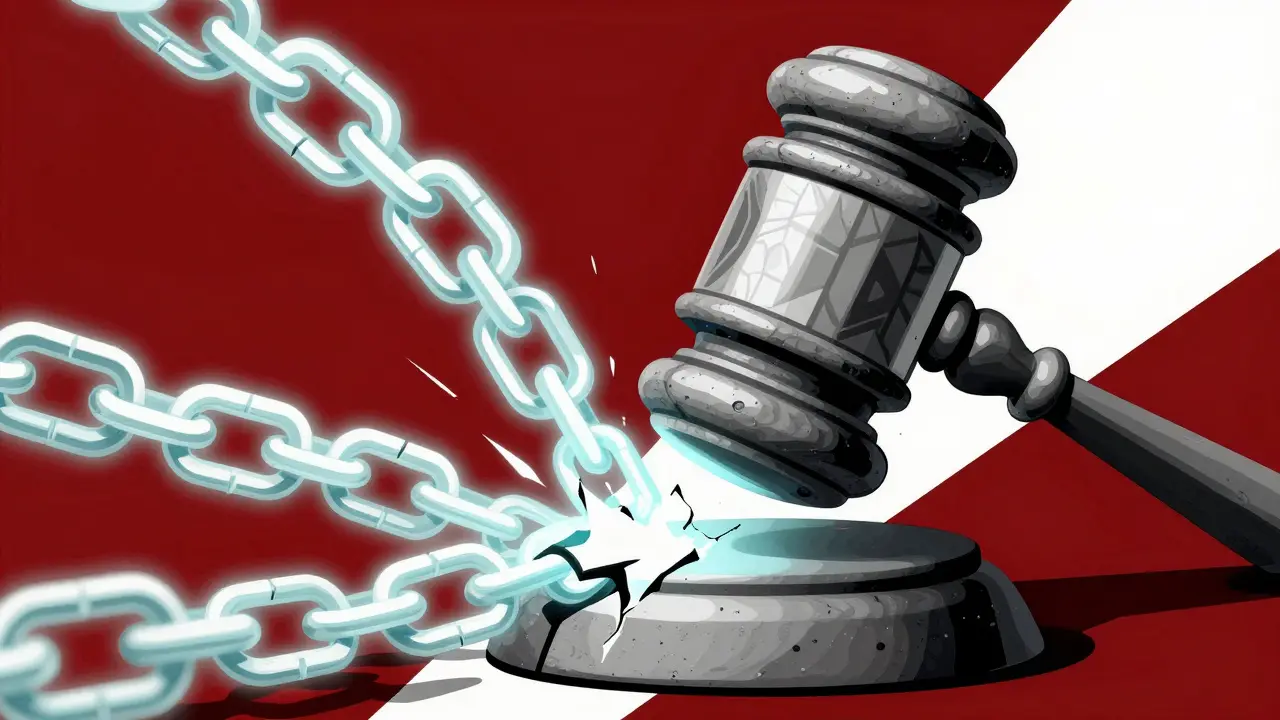
On August 8, 2022, OFAC added Tornado Cash to its Specially Designated Nationals (SDN) list. This is the same list used for terrorists, drug traffickers, and rogue states. The sanction prohibited all U.S. persons and entities from interacting with the platform. More importantly, it froze all assets under U.S. jurisdiction related to the mixer. But here is the twist: OFAC didn’t just sanction the website or the team. They sanctioned the specific Ethereum addresses of the smart contracts.
This created a legal paradox. Smart contracts are immutable. They run automatically based on code. You cannot "comply" with a sanction against code if the code continues to execute transactions regardless of your intent. Under Secretary of the Treasury Brian E. Nelson stated that Tornado Cash had "repeatedly failed to impose effective controls designed to stop it from laundering funds." But critics argued that you cannot impose controls on autonomous code. This distinction became the battleground for subsequent lawsuits and criminal trials.
The implications were immediate. Exchanges like Coinbase, Binance, and Kraken scrambled to block transactions involving Tornado Cash addresses. Developers working on similar privacy tools faced existential threats. The message was clear: if your tool can be used for money laundering, you might be liable, even if you don’t control the end-user behavior.
The Trial of Roman Storm: A Split Verdict
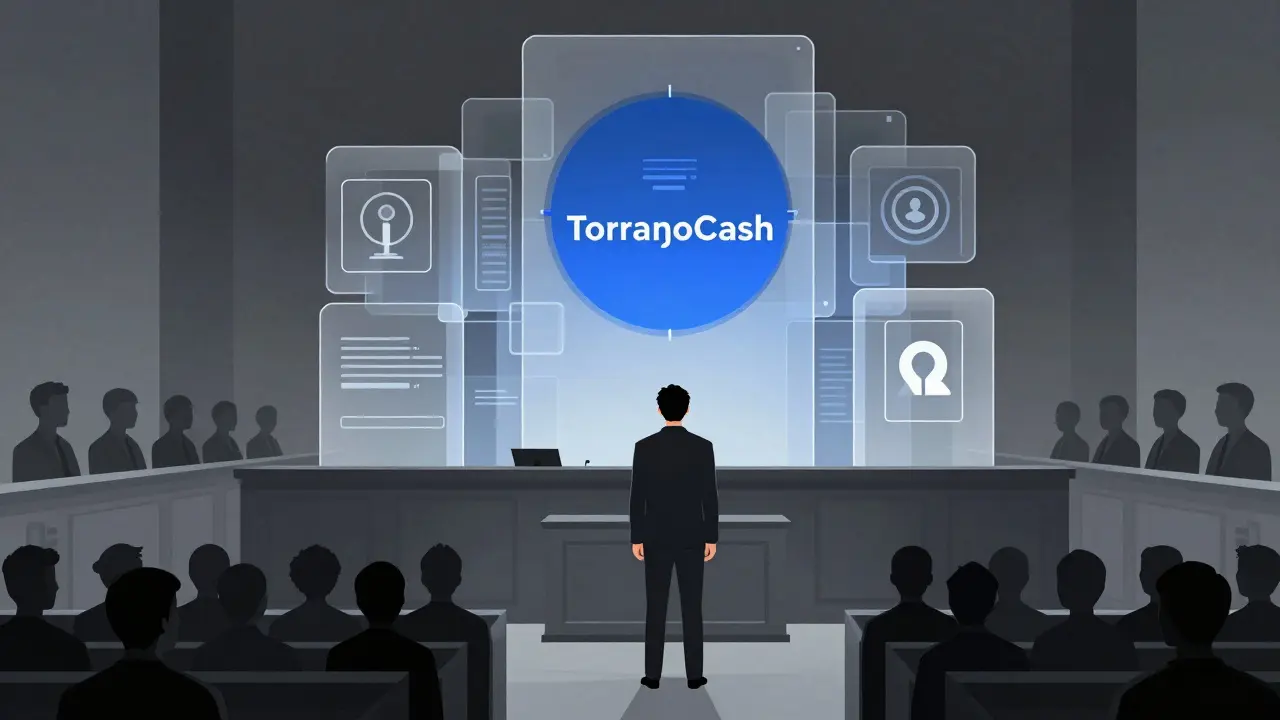
The human cost of this regulatory shift came to a head in the Southern District of New York. Roman Storm, a co-founder of Tornado Cash, stood trial. He was charged with conspiracy to operate an unlicensed money transmitting business, conspiracy to commit money laundering, and conspiracy to violate sanctions. His defense argued that he merely created open-source software, similar to how someone might create a VPN or encryption tool, and that he could not control how others used it.
The jury’s verdict, delivered on August 6, 2025, was mixed. Storm was convicted on one count: conspiracy to operate an unlicensed money transmitting business. However, the jury deadlocked on the more serious charges of money laundering and sanctions violations. This split outcome is significant. It suggests that while the government succeeded in proving some level of financial regulatory violation, the broader argument about whether creating privacy tools equals facilitating crime remains legally complex. The deadlock on sanctions charges highlights the difficulty of applying traditional anti-money laundering (AML) frameworks to decentralized technologies.
For the industry, this verdict offers both warning and nuance. It confirms that developers can be held accountable for the financial infrastructure they build, but it does not establish a blanket rule that all privacy tech is inherently criminal. The case is likely to set precedents for years to come, influencing how prosecutors approach future DeFi projects.
Market Reaction and the 2025 Developments
Crypto markets react sharply to regulatory news. When the initial sanctions hit in 2022, the price of TORN, Tornado Cash’s governance token, plummeted. But the story didn’t end there. In March 2025, reports emerged that sanctions on Tornado Cash were being lifted or reconsidered, leading to a surge in the TORN token price from approximately $8 to $15. While the full legal status remains fluid due to ongoing civil litigation and appeals, these fluctuations show how sensitive the ecosystem is to regulatory clarity.
However, lifting sanctions doesn’t erase the past. The precedent has been set. Other jurisdictions are watching closely. Some countries have followed suit with restrictive measures, while others are exploring nuanced approaches that balance privacy rights with AML concerns. The key takeaway for investors is that regulatory risk is now a permanent factor in valuing privacy-focused protocols. Volatility will remain high until a stable legal framework emerges.

Impact on DeFi and Privacy Tools
The Tornado Cash case has reshaped the decentralized finance landscape. Before 2022, many developers assumed that decentralization offered immunity from regulation. That assumption is gone. Today, builders must consider compliance from day one. This has led to a rise in "compliance-friendly" privacy solutions. These newer protocols often incorporate features like allowlists, geoblocking, or integration with identity verification systems to mitigate regulatory risk.
For users, the era of effortless anonymity is over. Major exchanges now screen for interactions with sanctioned addresses. If you’ve ever used Tornado Cash, your account on a centralized exchange could be frozen. This creates a chilling effect. Legitimate users who simply want to hide their spending habits from prying eyes find themselves treated as suspects. Privacy advocates argue this sets a dangerous precedent for surveillance capitalism and state overreach. Law enforcement counters that unrestricted mixing services are essential tools for criminals, and restricting them is necessary for public safety.
The technical reality complicates enforcement further. Since the smart contracts still exist on the Ethereum blockchain, determined users can still interact with them via front-end alternatives or direct contract calls. Analysis suggests that sanctions have had negligible influence on exploiters’ use of the platform for laundering funds. Bad actors adapt. They find new ways to obfuscate trails, pushing regulators into a constant game of cat and mouse.
| Aspect | Pre-August 2022 | Post-August 2022 (Current) |
|---|---|---|
| Legal Status | Unclear gray area | Explicitly sanctioned (Tornado Cash); high risk for others |
| Developer Liability | Low perceived risk | High criminal/civil risk |
| Exchange Support | Generally allowed | Blocked/frozen accounts for interaction |
| User Access | Easy via official UI | Requires technical workarounds/front-ends |
| Regulatory Focus | Minimal | Primary target of OFAC/FBI |
How to Protect Yourself in 2026
If you are a user, developer, or investor, you need a strategy. The law is not static, and ignorance is not a defense. Here is what you should do:
- Avoid Sanctioned Addresses: Do not interact with known Tornado Cash smart contract addresses. Use wallet scanners to check if your history includes flagged transactions. Many exchanges will freeze your account if they detect such links.
- Understand Your Jurisdiction: U.S. persons are strictly prohibited from using sanctioned entities. If you live outside the U.S., the rules may differ, but global exchanges often apply U.S. standards to avoid secondary sanctions.
- Choose Compliant Privacy Tools: Look for newer protocols that offer transparency or compliance features. Avoid "black box" mixers with no clear ownership or legal structure.
- Document Your Intent: If you are a developer, keep detailed records of your code’s purpose, security audits, and efforts to prevent misuse. This documentation can be crucial in legal defenses.
- Stay Updated: Regulatory landscapes change rapidly. Follow updates from OFAC and legal experts specializing in crypto law. The situation around Tornado Cash and similar tools is still evolving.
The Tornado Cash case is a landmark moment. It proved that code is not speech in the eyes of financial regulators. It showed that decentralization does not mean deregulation. As we move further into 2026, expect more scrutiny on privacy tools, clearer guidelines on developer liability, and continued tension between innovation and enforcement. Stay informed, stay compliant, and prioritize security over secrecy when possible.
Is it illegal to use Tornado Cash in 2026?
For U.S. persons and entities, yes. Interacting with Tornado Cash smart contracts violates OFAC sanctions. Even if sanctions are partially lifted or debated, engaging with previously sanctioned addresses carries significant legal and financial risk, including frozen bank accounts and potential prosecution. Non-U.S. residents should consult local laws, but most major global exchanges block these interactions regardless of location.
What happened to Roman Storm?
Roman Storm, a co-founder of Tornado Cash, was convicted in August 2025 of conspiracy to operate an unlicensed money transmitting business. However, the jury deadlocked on charges related to money laundering and sanctions violations. This split verdict highlights the legal complexity of holding developers responsible for decentralized code. He faces sentencing for the conviction, while the deadlocked charges may lead to retrials or plea negotiations.
Why did the US sanction Tornado Cash?
The U.S. Treasury sanctioned Tornado Cash because it was used to launder billions of dollars, including over $455 million stolen by North Korea’s Lazarus Group. Regulators argued that the platform facilitated illicit activity without implementing adequate anti-money laundering (AML) controls. The sanction aimed to cut off access to these funds and deter future use of mixing services for criminal purposes.
Can I still use crypto mixers safely?
Using any crypto mixer carries inherent risks. While Tornado Cash is explicitly sanctioned, other mixers may face similar scrutiny. To minimize risk, avoid mixers with no clear legal entity, ensure you are not violating local laws, and be aware that exchanges may flag your account for using any mixing service. Privacy comes with trade-offs in the current regulatory environment.
Did the sanctions stop criminals from using Tornado Cash?
Analysis suggests that sanctions had negligible influence on exploiters' use of the platform. Since the smart contracts remain operational on the Ethereum blockchain, determined bad actors found alternative front-ends and methods to interact with the code. This highlights the challenge of regulating immutable decentralized technology.
What is the difference between Tornado Cash and a regular exchange?
Regular exchanges require Know Your Customer (KYC) verification, linking your identity to your transactions. Tornado Cash is non-custodial and anonymous; it does not ask for personal information. Instead, it uses cryptographic proofs to break the link between deposit and withdrawal addresses. This anonymity is what made it attractive for privacy but also for illicit activities.