What is Idle Network (IDLE) Crypto? Tokenomics, Risks & AI Pivot
 Oct, 16 2026
Imagine buying a stock because you think it’s a tech giant, only to realize the ticker symbol matches a completely different company. That’s the current reality for Idle Network. The ticker IDLE is currently used by at least three distinct assets with vastly different supplies and purposes. If you are looking into this coin, you aren’t just researching a token; you’re navigating a minefield of identity confusion that could cost you real money.
This article cuts through the noise. We’ll clarify exactly what Idle Network is today, how it differs from the legacy Idle Finance protocol, why the ticker collision matters more than the price chart right now, and whether the new pivot toward artificial intelligence holds water. By the end, you’ll know exactly which contract address to trust and what risks you’re actually taking on.
The Identity Crisis: Three Coins, One Ticker
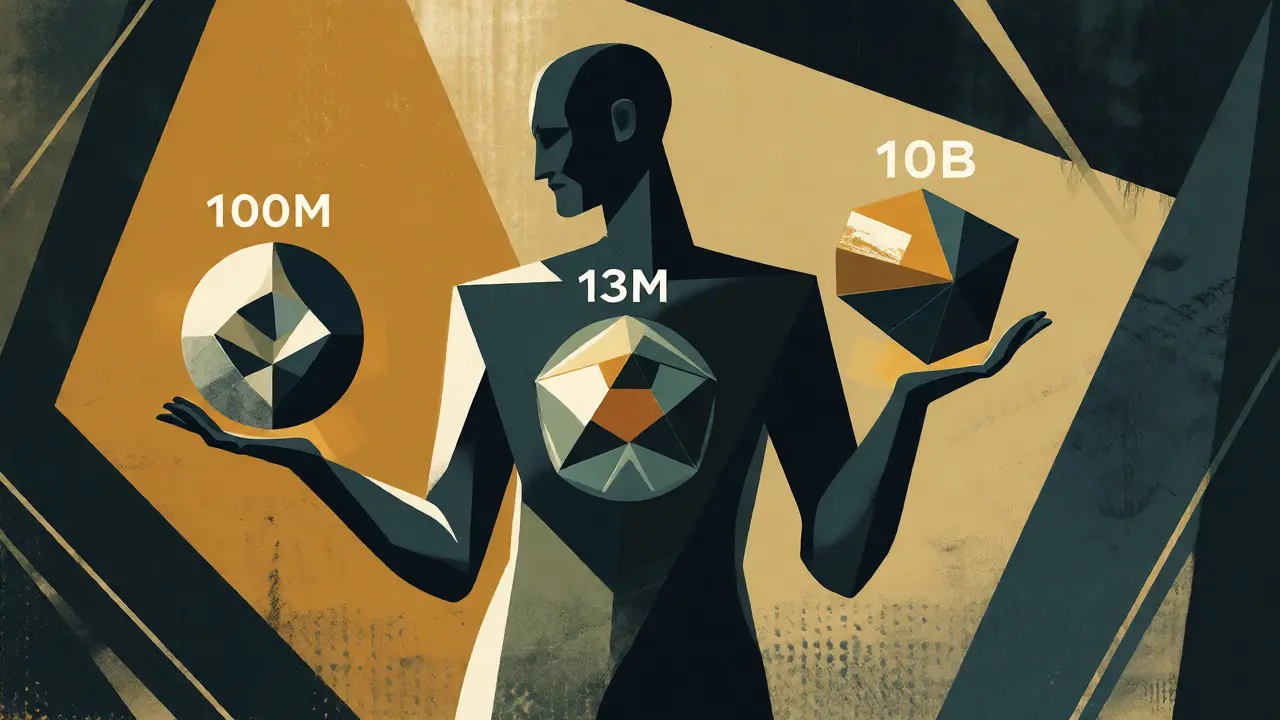
Before we talk about technology or potential, we have to solve the naming problem. Search engines and exchanges often lump these together, but they are not the same asset. CoinMarketCap data highlights a critical distinction: Idle Network completed a 1:1 migration from an old contract to a new one. It boasts a maximum supply of 100,000,000 tokens.
Compare this to the legacy Idle Finance token, which has a maximum supply of only 13,000,000. Then there’s Idle Protocol and IdleMine, listed on CoinGecko with supplies of 1 billion and 10 billion respectively. Buying the wrong one isn’t a minor inconvenience; it’s a total loss of capital if you expected exposure to the AI-focused network but ended up holding a defunct governance token or a low-liquidity altcoin.
| Asset Name | Max Supply | Primary Focus | Status |
|---|---|---|---|
| Idle Network | 100,000,000 | On-chain AI & Robotics Infrastructure | New Contract (Migrated) |
| Idle Finance | 13,000,000 | DeFi Yield Optimization | Legacy/Evolving |
| Idle Protocol | 1,000,000,000 | Various Unrelated Projects | Low Liquidity/Risk |
| IdleMine | 10,000,000,000 | Mining/Gaming | Separate Entity |
From Yield Aggregator to AI Infrastructure
To understand where Idle Network is going, you have to look at where it came from. The original project, launched in August 2019, was a decentralized finance (DeFi) play. It wasn’t trying to be the next Bitcoin; it was trying to be a smarter bank account. Users deposited stablecoins like DAI or USDC, and the protocol automatically moved those funds between lending platforms like Aave and Compound to find the highest interest rate.
The core product, Best Yield, issued ERC-20 idleTokens representing your claim on the pooled assets. As interest accrued, the exchange rate of these tokens increased. This was non-custodial automation: you didn’t give up your keys, but you did rely on smart contracts to manage your risk. The architecture included wrapper contracts like IdleCompound and IdleAave, plus an automated rebalancer that watched market rates and shifted capital accordingly.
Now, the narrative has shifted. The new documentation for Idle Network positions the token as the fuel for an ecosystem serving on-chain artificial intelligence and robotics applications. Instead of just optimizing yield, the goal is value capture. Fees generated from "Meta-Vaults" and omniplatform rewards are converted into IDLE. These tokens are then burned, redistributed to stakers, or held in the treasury based on governance votes. It’s a move from passive yield farming to active infrastructure participation.

Tokenomics: Scarcity, Staking, and Governance
The economic model of the new Idle Network relies on hard caps and deflationary pressure. Unlike proof-of-work coins that emit new tokens forever, Idle Network has a fixed maximum supply of 100 million. There are no continuous emissions. This scarcity is designed to protect holders from inflation, assuming demand grows alongside the AI sector.
Governance is direct: one IDLE equals one vote. But voting power can be amplified. The documentation states that staking can provide a yield multiplier of up to 2.5 times. This means long-term holders who lock their tokens gain disproportionate influence over protocol decisions compared to short-term traders. This incentivizes stability and discourages "vampire attacks" where whales dump tokens after voting.
However, don’t confuse this with guaranteed returns. The older Idle Finance documentation explicitly recorded that the DAO voted in June 2023 to pause IDLE buybacks and distributions to stakers. While the new Network docs describe buybacks and burns as available mechanisms, the history of the legacy token shows that governance can-and does-change the rules mid-game. Always check the current on-chain status before assuming staking rewards are flowing.
Security Audits and Risk Frameworks
In crypto, code is law, but bugs are inevitable. Idle Finance has a multi-year track record, having operated since 2019 without a major protocol exploit identified in independent reviews. The project underwent audits from reputable firms like Quantstamp, CertiK, and ConsenSys Diligence. They also maintain a $100,000 bug bounty program, which acts as a safety net for white-hat hackers finding vulnerabilities.
Their risk framework is surprisingly transparent. It separates systemic risks (like regulatory changes or blockchain failures) from idiosyncratic risks (like smart-contract bugs or oracle errors). Independent reviews from DeFi Safety and Exponential contribute to this assessment. Yet, audits are snapshots in time. They prove the code was secure when audited, not that it remains secure after every update, bridge integration, or migration. With the recent contract migration to the new Idle Network, users must verify that the new contracts have been properly vetted.

Community Sentiment and Market Reality
If you dig into Reddit threads from 2019 and 2020, early adopters described Idle as "solid" and praised its ability to combine Fulcrum and Compound strategies. It was seen as a reliable tool for earning interest on stablecoins. However, community evidence for the new AI-focused Idle Network is thinner. Most discussions still revolve around the legacy DeFi product.
Third-party estimates suggest the legacy protocol had a Total Value Locked (TVL) of around $680 million at its peak, though this figure fluctuates wildly with market conditions. For the new Network, reliable current price, market cap, and trading volume data are harder to pin down. The lack of consistent, high-volume trading across major exchanges suggests the market is still forming. You’re likely dealing with lower liquidity, which means larger slippage when buying or selling significant amounts.
Who Should Buy IDLE?
This token isn’t for everyone. It’s best suited for technically competent DeFi users who understand smart-contract risk, liquidity pools, and governance mechanics. If you’re looking for a simple, bank-like yield guarantee, Idle Network might be too complex and volatile. The yield depends entirely on external money markets and the success of the new AI integrations.
Conversely, if you believe in the convergence of DeFi and AI, and you’re comfortable verifying contract addresses manually, the upside could be significant. The shift to a 100-million supply cap creates a tighter economy than many competitors. But remember: the ticker collision is a material operational risk. Never buy based on the name alone. Always copy-paste the contract address from official documentation.
Is Idle Network the same as Idle Finance?
They share historical roots and branding, but they are distinct entities with different contract addresses and supply caps. Idle Network represents the new 100 million supply AI-focused infrastructure, while Idle Finance refers to the legacy 13 million supply DeFi yield aggregator. Always verify the contract address before trading.
Why is the IDLE ticker confusing?
Multiple unrelated projects use the IDLE ticker, including Idle Protocol and IdleMine, with supplies ranging from 1 billion to 10 billion tokens. This causes search engine ambiguity and potential purchase errors. Investors must distinguish between the 100M supply Network, the 13M supply Finance token, and other high-supply variants.
Does IDLE have a fixed supply?
Yes, the new Idle Network has a hard maximum supply of 100,000,000 tokens with no continuous emissions. This contrasts with proof-of-work coins or inflationary models. The supply is managed through burn mechanisms and treasury retention rather than mining rewards.
What are the main risks of holding IDLE?
Key risks include smart-contract vulnerabilities despite audits, liquidity issues due to lower trading volumes, governance uncertainty (as seen in past buyback pauses), and the complexity of the AI pivot. Additionally, the risk of buying the wrong token due to ticker collision is significant.
How do I verify the correct IDLE contract?
Always cross-reference the contract address on multiple sources like Etherscan, CoinMarketCap, and the official project website. Ensure the chain (e.g., Ethereum, Polygon) matches your wallet settings. Do not rely solely on the ticker symbol when searching on exchanges.