What is Pixels (PIXEL) Crypto Coin? A Complete Guide to the Web3 Gaming Token
 Jun, 4 2026
Remember when playing a game meant just having fun? Those days are shifting. Now, you can farm virtual land, raise pixelated pets, and actually own the assets you earn. That’s the promise of Pixels, a browser-based farming and crafting game that has become one of the most popular entry points into blockchain gaming. But here’s the catch: none of this works without its native currency, the PIXEL token.
If you’ve seen PIXEL mentioned in crypto circles or noticed it trending on exchanges, you’re probably wondering what it actually does. Is it just another meme coin with a cute logo? Or is there real utility behind the pixels? The short answer is yes, there is utility. PIXEL isn’t just for speculation; it’s the fuel that keeps the entire Pixels ecosystem running, from buying premium land to voting on how the community treasury is spent.
The Core Identity of the PIXEL Token
To understand PIXEL, you first have to understand where it lives. It operates on the Ronin Network, a blockchain specifically built for gaming by Sky Mavis, the creators of Axie Infinity. This is a crucial detail. Unlike Ethereum, which can be slow and expensive during peak times, Ronin offers fast transactions and near-zero fees. This makes it perfect for micro-transactions like trading crops or pet items in-game.
Originally, Pixels launched on the Polygon network in 2021. However, in 2023, the team migrated to Ronin to better serve the gaming community. The PIXEL token itself started as an ERC-20 token on Ethereum but now primarily exists on Ronin, though it remains compatible with Ethereum for broader accessibility.
So, what exactly is PIXEL? It serves two main purposes:
- Utility Currency: You use PIXEL to buy premium farmland, access special events, purchase cosmetics, and trade in the in-game marketplace.
- Governance Token: Holders can vote on proposals regarding the development of the game and the allocation of the community treasury.
This dual role means that PIXEL isn’t just a store of value; it’s an active tool within the game. If you want to progress faster or customize your experience, you’ll likely need PIXEL.
From BERRY to PIXEL: The Great Migration
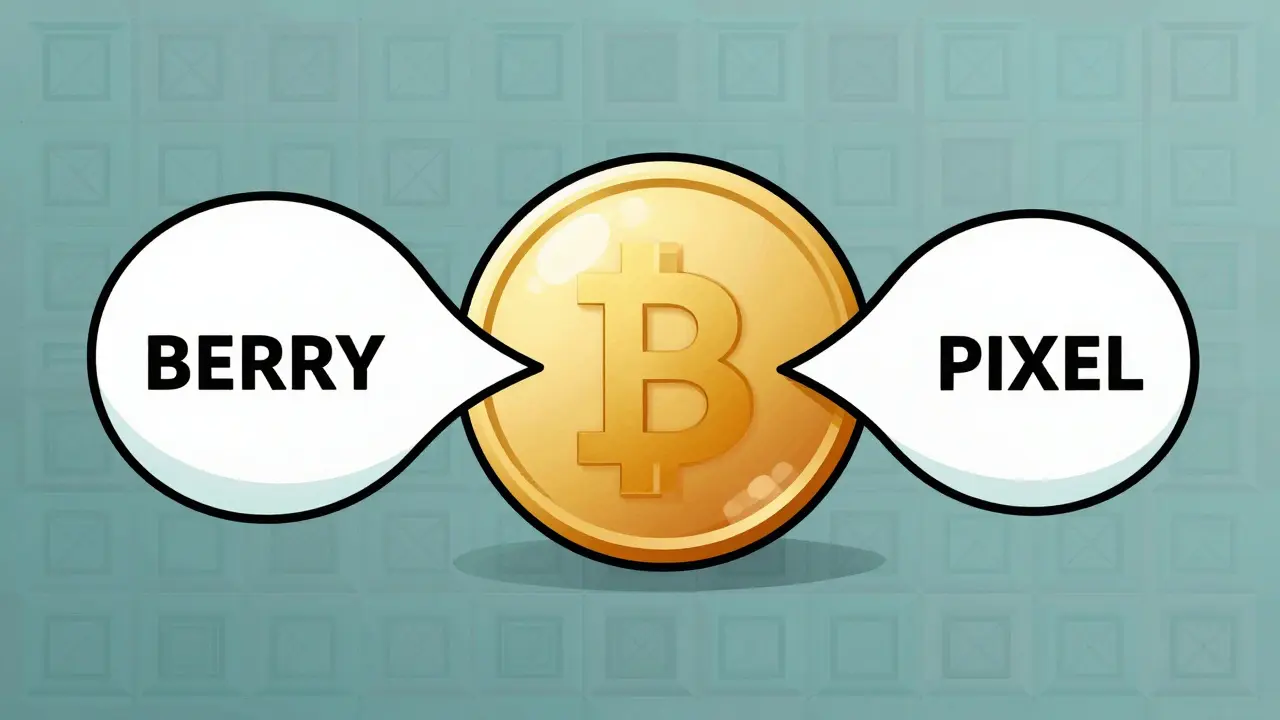
If you’ve been following Pixels since its early days, you might remember a different token called BERRY. For a long time, Pixels operated on a dual-token system. BERRY was the common in-game currency earned through daily tasks, while PIXEL was the premium asset used for high-value transactions and governance.
This setup caused confusion. Players had to manage two wallets, track two prices, and understand complex exchange rates. In February 2024, the Pixels team made a bold move: they retired BERRY entirely.
Here’s how it worked. All BERRY tokens in players’ accounts were automatically converted to PIXEL at a fixed rate of 1,000 BERRY for 7.6175 PIXEL. After this migration, PIXEL became the sole primary token of the network. This simplification was a strategic win. It reduced friction for new users who no longer needed to understand dual-economy mechanics. Instead of juggling two currencies, players now focus on one: PIXEL.
| Feature | Pre-February 2024 | Post-February 2024 |
|---|---|---|
| In-Game Currency | BERRY (common) + PIXEL (premium) | PIXEL (sole currency) |
| User Complexity | High (dual wallet management) | Low (single token focus) |
| Governance Rights | PIXEL holders only | PIXEL holders only |
| Market Clarity | Fractioned liquidity | Consolidated liquidity |
Tokenomics: Supply, Demand, and Distribution
Understanding the supply dynamics of PIXEL is essential for evaluating its long-term potential. The total maximum supply is capped at 5 billion tokens. As of mid-2024, approximately 771 million PIXEL tokens were in circulation, representing about 15.4% of the total supply. This means there is significant room for inflation as more tokens are released over time.
How are these tokens distributed? The allocation model prioritizes user engagement:
- Ecosystem Rewards (34%): This large chunk is reserved for players who complete in-game tasks, participate in events, and contribute to the community. This aligns the team’s incentives with player retention.
- Development Team (12.5%): Reserved for the core team building the platform, subject to vesting schedules to ensure long-term commitment.
- Liquidity and Reserves: The remaining portion supports market liquidity, partnerships, and future ecosystem growth.
The heavy emphasis on ecosystem rewards suggests that PIXEL is designed to be earned, not just bought. This creates a natural demand driver: as more players join and engage, they receive PIXEL, which they may then spend in-game or sell on exchanges, creating a continuous cycle of utility and trading volume.
The PixelVerse: More Than Just Farming
Pixels isn’t just a single game; it’s part of a larger ecosystem called the PixelVerse. This umbrella term covers three interconnected components that expand the utility of PIXEL beyond simple farming:
- PixelBuild: A toolkit for creating multimedia NFTs. Users can design their own assets, characters, or items and mint them as NFTs.
- PixelClout: A platform for verified creators to showcase their work and build a following. Think of it as a social media layer for digital artists within the blockchain space.
- PixelLaunch: A launchpad for new NFT collections and projects. Creators can use PIXEL to fundraise and distribute their creations to the community.
This structure transforms Pixels from a casual farming simulator into a creative hub. PIXEL becomes the currency for creativity, enabling artists and developers to monetize their skills directly. For investors, this diversification reduces reliance on a single game mechanic. If farming trends fade, the creator economy tools within PixelVerse can sustain interest.
How to Get Started with PIXEL
Getting involved with Pixels doesn’t require a high-end gaming PC. Since it’s browser-based, you can play on desktop or mobile devices with standard internet connectivity. However, you do need to set up a few things first:
Step 1: Set Up a Wallet
Unlike traditional games, Pixels doesn’t have an integrated wallet. You’ll need an external wallet compatible with the Ronin Network. Popular options include the Ronin Wallet or MetaMask configured for Ronin. This adds a slight learning curve for newcomers, but it gives you full control over your assets.
Step 2: Acquire PIXEL Tokens
You can buy PIXEL on major cryptocurrency exchanges like Bitget, KuCoin, or Binance. Once purchased, transfer the tokens to your Ronin-compatible wallet. Alternatively, you can earn PIXEL by playing the game and completing daily quests, though this takes time.
Step 3: Connect to Pixels.xyz
Visit the official Pixels website and connect your wallet. From there, you can start playing, buy NFT Farmland from the Mavis Marketplace, or explore the PixelVerse features.
Pro Tip: Start small. Buy a small amount of PIXEL to test the waters. Understand how gas fees work on Ronin (they’re negligible) and how to safely store your tokens before committing significant funds.

Risks and Volatility: What You Need to Know
No crypto investment is without risk, and PIXEL is no exception. One of the biggest challenges facing gaming tokens is volatility. PIXEL’s price is heavily tied to the adoption and success of the Pixels game. If player numbers drop, demand for PIXEL decreases, leading to price declines.
Data from mid-2024 shows mixed signals. While some periods saw impressive growth-such as a 22% increase over one month-other weeks saw sharp drops, including a 14.6% decline in seven days compared to a 2% drop in the broader market. This higher volatility indicates that PIXEL is more sensitive to news and sentiment than established coins like Bitcoin.
Additionally, regulatory uncertainty looms over all cryptocurrencies. While PIXEL is primarily a utility token, changes in global crypto regulations could impact its trading availability or tax treatment. Always do your own research and never invest more than you can afford to lose.
Why PIXEL Stands Out in the Gaming Sector
The blockchain gaming space is crowded. Competitors like Gala Games (GALA), The Sandbox (SAND), and Enjin (ENJ) offer similar play-to-earn models. So, why choose PIXEL?
First, accessibility. Many blockchain games require complex setups or expensive hardware. Pixels runs smoothly in a browser, lowering the barrier to entry. Second, the simplified token economy. By retiring BERRY, Pixels removed a major pain point for users. Third, the integration with Ronin ensures smooth gameplay without transaction delays.
Finally, the focus on community governance. PIXEL holders have a say in the platform’s future, fostering a sense of ownership that pure speculative tokens lack. This combination of ease of use, clear utility, and community involvement makes PIXEL a compelling option for both gamers and crypto enthusiasts.
Is Pixels free to play?
Yes, Pixels is free to play. You can create an account and start farming immediately without spending any money. However, purchasing PIXEL tokens or NFT Farmland enhances your experience, allowing for faster progression and access to premium features.
Where can I buy PIXEL tokens?
You can buy PIXEL on several major cryptocurrency exchanges, including Bitget, KuCoin, and Binance. After purchasing, you’ll need to transfer the tokens to a Ronin-compatible wallet to use them in the game.
What happened to the BERRY token?
The BERRY token was retired in February 2024. All existing BERRY balances were automatically converted to PIXEL at a fixed rate of 1,000 BERRY for 7.6175 PIXEL. PIXEL is now the sole primary token of the Pixels ecosystem.
Does Pixels run on Ethereum?
Originally, Pixels launched on Polygon. It later migrated to the Ronin Network in 2023 for better performance. While PIXEL maintains compatibility with Ethereum for broader accessibility, the primary game operations and transactions occur on Ronin.
Is PIXEL a good investment?
PIXEL carries high volatility due to its dependence on game adoption. While it offers utility and governance rights, its price can fluctuate significantly based on player activity and market sentiment. It should be viewed as a high-risk asset suitable only for those who understand the gaming crypto sector.
Yogendra Dwivedi
June 5, 2026 AT 02:26It is interesting to see how the migration from BERRY to PIXEL simplifies the user experience. The dual-token system was always a bit confusing for newcomers, so consolidating it makes sense. I wonder if this will actually increase retention rates among casual players who found the wallet management too tedious before.
verna kennedy
June 5, 2026 AT 17:36Let's be real here. Most of these gaming tokens are just hype cycles waiting to crash. The fact that they retired BERRY doesn't magically fix the underlying volatility issues. People need to stop treating utility tokens like lottery tickets and realize that without consistent active daily users, the price goes nowhere but down. It is basic economics.
Kelly Tenney
June 6, 2026 AT 23:31I think there is genuine potential in the PixelVerse ecosystem beyond just farming. The creator tools like PixelBuild could really open up new avenues for digital artists. It is exciting to see a platform trying to bridge the gap between casual gaming and serious NFT creation. We should support projects that try to innovate rather than just copying the same play-to-earn model over and over.
Caralee Robertson
June 7, 2026 AT 18:14honestly i tried setting up the ronin wallet and it was such a headache lol. why cant they just make it as easy as logging in with google? the tech is cool but the barrier to entry is still way too high for my grandma or anyone who isnt tech savvy. maybe they need to work on smoother onboarding flows instead of just focusing on tokenomics.
Greg Lewis
June 9, 2026 AT 09:59the concept of ownership in digital spaces is fundamentally flawed if it relies on speculative value. you are not owning land you are renting attention from other users who might leave tomorrow. the pixelated pets are cute sure but do they hold intrinsic value? no. we are building castles on sand while pretending the tide wont come in. think about what real scarcity looks like.
Dr Lynea LaVoy
June 10, 2026 AT 11:30While the speculation aspect is risky, the governance component offers a unique opportunity for community-driven development. If holders actively participate in voting for treasury allocations, it creates a more resilient ecosystem compared to centralized game studios. The key is education; players need to understand that their vote matters more than the short-term price action. This shift towards decentralized decision-making is where the real long-term value lies.