What is Qawalla (QWLA) Crypto Coin? A Realistic Look at the ETFT
 Jul, 29 2026
You’ve probably heard of Bitcoin or Ethereum. Maybe you even dabble in some altcoins. But have you come across Qawalla? It’s a name that pops up in niche crypto circles, often labeled as an "Exchange Traded Fund Token" (ETFT). On paper, it sounds like the holy grail for small investors: a way to own a diversified basket of cryptocurrencies with a single click, bypassing the headache of managing multiple wallets and paying high gas fees for every tiny transaction.
But here’s the catch. The crypto world is full of promises that sound great until you look at the numbers. So, what is Qawalla really? Is it a revolutionary tool for retail investors, or just another micro-cap token struggling to find its footing? Let’s peel back the layers and look at the facts, not just the hype.
The Core Concept: What Exactly is QWLA?
Qawalla (QWLA) is a decentralized exchange-traded fund token built on the Ethereum blockchain. It operates as an ERC20 token, which means it lives on the same network as many other popular tokens like USDT or UNI. The big idea behind QWLA is simple: diversification without the friction.
Traditionally, if you wanted to invest in five different altcoins, you’d need to buy each one separately. That means five separate transactions, five sets of gas fees, and five times the hassle. For someone investing $50 or $100, those fees can eat up a huge chunk of your capital. QWLA tries to solve this by bundling several assets into one token. When you buy QWLA, you’re essentially buying a slice of a managed portfolio.
The project was founded by a team based in the Pacific Northwest, aiming to lower the barrier to entry for community ownership over crypto funds. They launched with a total supply of 100,000,000 tokens. The goal was to let holders vote on what goes into the fund, giving them control rather than leaving it to faceless fund managers.
How Does the Governance Work?
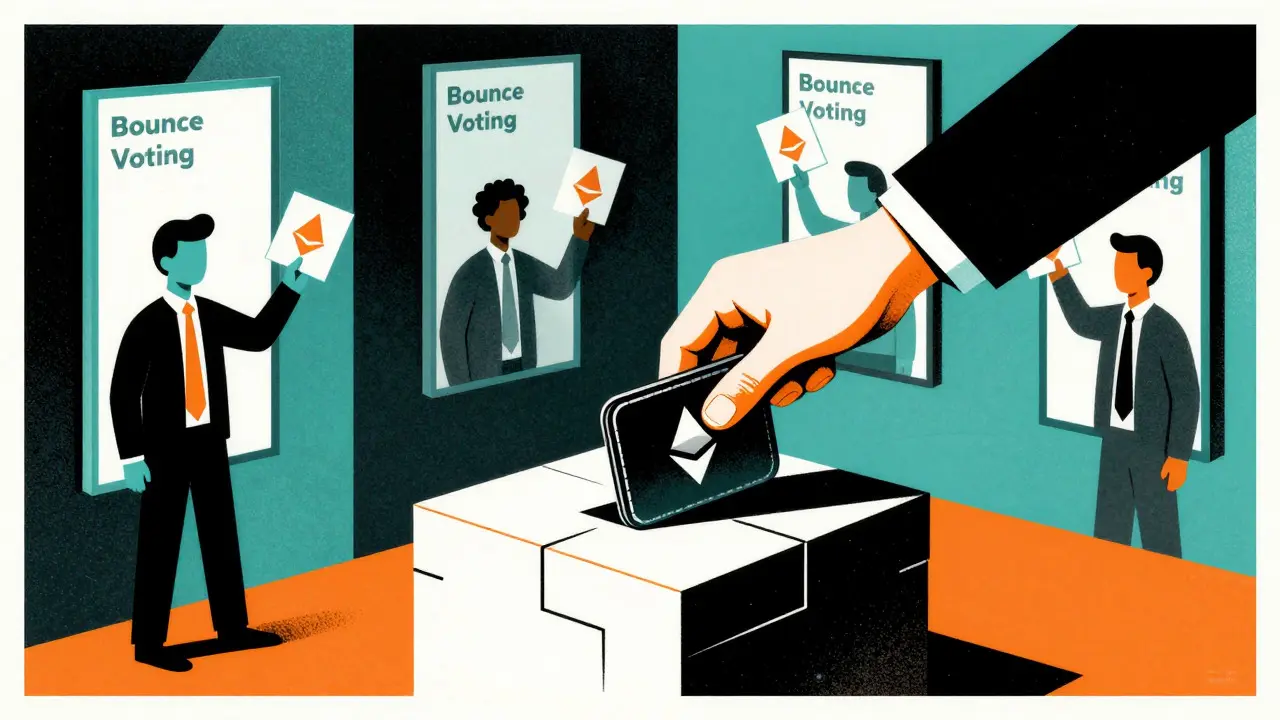
One of the selling points of QWLA is its governance model, called "Bounce Voting." This isn’t just a fancy term; it’s the mechanism that lets you have a say in how your money is invested. Here’s how it works:
- Connect Your Wallet: You link your Ethereum-compatible wallet (like MetaMask) to the QWLA.io platform.
- Vote on Assets: Token holders vote on which cryptocurrencies should be included in the fund’s portfolio.
- No Duplicate Voting: The system is designed to prevent anyone from voting multiple times with the same stake, ensuring fairness.
This decentralized approach is supposed to make the fund more transparent and aligned with what the community actually wants. Instead of a manager deciding to put all eggs in one volatile basket, the crowd decides. However, for this to work, people actually need to participate. And that brings us to a critical question: are people using it?
Market Reality: Price, Supply, and Liquidity
Let’s talk numbers, because they tell a very different story than the marketing brochures. As of early 2026, QWLA has seen significant changes since its launch.
| Metric | Value |
|---|---|
| Current Price | $0.4470 USD |
| All-Time High | $1.25 (November 2022) |
| Market Cap | $22.13 million |
| Circulating Supply | 49.5 million QWLA |
| Total Supply | 100 million QWLA |
| 24-Hour Volume | $0 (Reported) |
| Market Rank | #7117 |
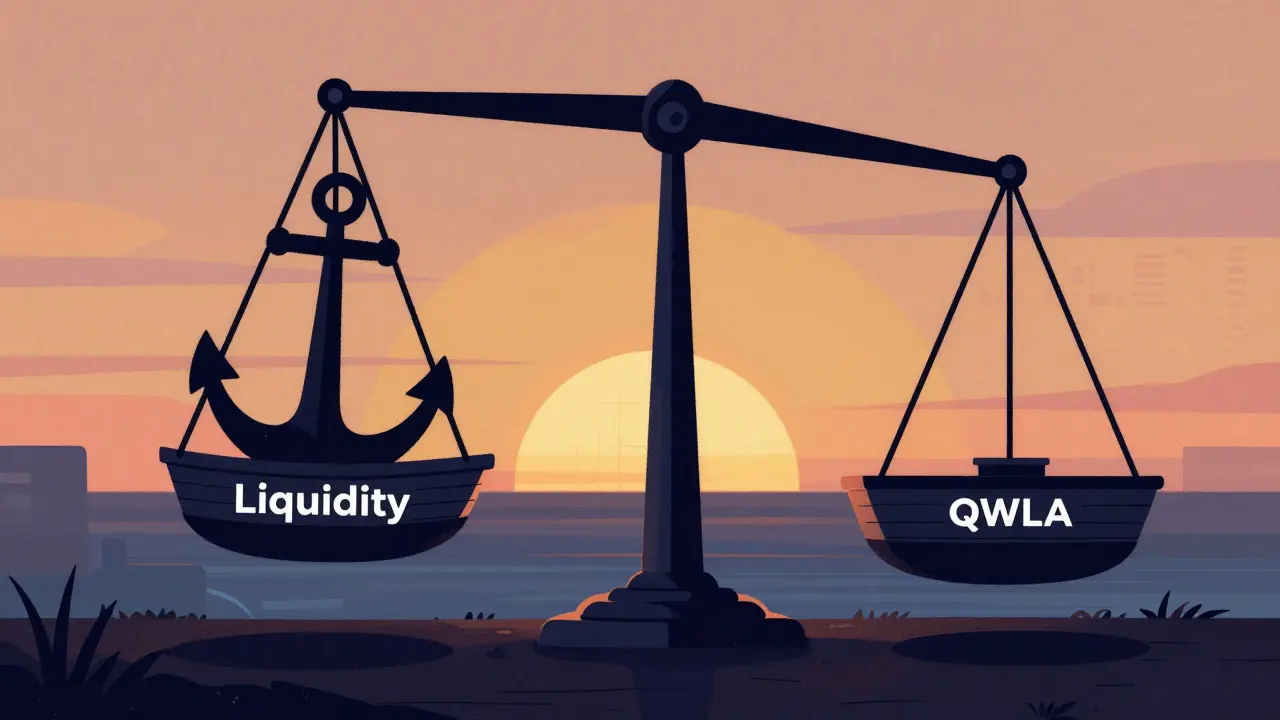
Notice the 24-hour volume? It’s reported as zero. That’s a red flag for any investor. Liquidity is the lifeblood of a cryptocurrency. If there’s no one trading, it’s hard to sell your tokens when you want to exit. A market cap of $22 million sounds decent, but compared to giants like Bitcoin or even mid-tier DeFi projects, it’s tiny. And being ranked #7117 means you’re deep in the weeds of the crypto market.
The price drop from $1.25 to $0.44 is steep-a decline of over 64%. This suggests that early enthusiasm has faded, or perhaps the project hasn’t delivered on its initial promises. With nearly half the supply still offline (51.5% kept in secure storage to prevent attacks), the circulating supply is limited, which can artificially inflate the price if demand were higher. But without buyers, that scarcity doesn’t help much.
Security and Technical Architecture
From a technical standpoint, QWLA is built on Ethereum, which provides a robust security layer. The contract address is verified, meaning you can check its code on Etherscan. One of their key security features is the offline storage of the majority of the token supply. By keeping 51.5% of tokens cold, they aim to prevent 51% attacks, where a malicious actor gains control of the network by holding the majority of the stake.
They also claim to audit any token added to the fund. This is crucial because if the fund invests in a scam coin, your QWLA tokens lose value. However, audits only go so far. In the fast-moving world of DeFi, new vulnerabilities pop up daily. Relying solely on pre-investment audits is risky.
Another point of contention is the lack of a token burn mechanism. Many modern utility tokens use burns to reduce supply and potentially increase value. QWLA has a fixed supply with no planned burns. Some analysts see this as stable; others see it as a missed opportunity to create deflationary pressure.
Who Should Consider QWLA? (And Who Should Avoid It)
Not every crypto project is for everyone. Here’s a breakdown of who might benefit from QWLA and who should probably steer clear.
Best For:
- Speculative Investors: If you enjoy high-risk, high-reward bets on micro-cap tokens, QWLA fits the profile. You’re betting on a turnaround or a sudden surge in adoption.
- DeFi Enthusiasts: Those interested in experimenting with decentralized governance models might find the Bounce Voting system interesting to study, even if they don’t invest heavily.
Avoid If:
- You Need Liquidity: If you think you’ll need to sell your investment quickly, the near-zero trading volume could leave you stuck.
- You Want Stability: With a 64% drop from its peak and high volatility, this is not a safe haven asset.
- You’re New to Crypto: The complexity of managing ERC20 tokens, gas fees, and voting mechanisms can be overwhelming for beginners.
Comparison: QWLA vs. Traditional ETFs and Other DeFi Funds
To understand where QWLA stands, we need to compare it to alternatives. How does it stack up against traditional Exchange Traded Funds (ETFs) and other decentralized finance (DeFi) products?
| Feature | Traditional ETF | QWLA (Decentralized ETFT) | Other DeFi Index Funds (e.g., PieDAO) |
|---|---|---|---|
| Governance | Centralized (Fund Manager) | Decentralized (Token Holders) | Varies (Often Hybrid) |
| Entry Cost | High (Brokerage Fees) | Low (Gas Fees Only) | Medium (Platform Fees) |
| Liquidity | Very High | Very Low | Medium to High |
| Regulation | Strict (SEC Regulated) | Unclear (Potential Security Risk) | Unclear |
| Transparency | Quarterly Reports | Real-time (On-Chain) | Real-time (On-Chain) |
While QWLA offers real-time transparency and decentralized control, it lacks the liquidity and regulatory safety net of traditional ETFs. Compared to other DeFi index funds, it struggles with adoption and volume. Projects like PieDAO have larger communities and better-established track records. QWLA’s unique angle is its focus on solving the "small investor" problem via single-transaction diversification, but the execution has yet to prove scalable.
Future Outlook: Is There Hope?
The future of QWLA looks uncertain. Industry analysts suggest that micro-cap tokens ranked below #5000 have a low survival probability over five-year horizons. Without major partnerships, exchange listings, or a surge in user adoption, QWLA risks becoming irrelevant.
The broader trend in crypto is moving toward lower-cost networks like Solana or Polygon. These chains offer cheaper transactions than Ethereum, which undermines QWLA’s core argument that high gas fees prevent small investors from diversifying. If you can buy ten different coins on Solana for less than one transaction on Ethereum, why bundle them into a single token?
However, the project isn’t dead. The team continues to maintain the platform, and the fixed supply model provides some structural integrity. If they can attract a dedicated community and improve liquidity through strategic partnerships, there’s a slim chance for recovery. But for now, it remains a speculative bet rather than a reliable investment vehicle.
Is Qawalla (QWLA) a good investment?
It depends on your risk tolerance. QWLA is a high-risk, speculative asset with low liquidity and a declining price trend. It may appeal to traders looking for potential upside in micro-cap tokens, but it is not suitable for conservative investors or those needing quick access to their funds.
Where can I buy QWLA tokens?
QWLA is primarily traded on smaller exchanges like Tokpie. It is not listed on major centralized exchanges like Binance or Coinbase, which limits accessibility and liquidity. You will need an Ethereum-compatible wallet to store and trade these tokens.
What is the total supply of QWLA?
The total supply of QWLA is fixed at 100,000,000 tokens. Approximately 51.5% of this supply is held in offline secure storage, leaving about 49.5 million tokens in circulation as of early 2026.
How does QWLA governance work?
QWLA uses a "Bounce Voting" system where token holders connect their wallets to the QWLA.io platform to vote on the composition of the fund’s portfolio. This decentralized approach allows the community to decide which assets are included, rather than relying on a central manager.
Is QWLA regulated?
Currently, QWLA operates in a regulatory gray area. While traditional ETFs are strictly regulated by bodies like the SEC, decentralized tokens like QWLA often fall under unclear guidelines. Investors should be aware that it could potentially be classified as a security depending on future legal interpretations.
Why is the trading volume of QWLA so low?
Low trading volume is common for micro-cap tokens with limited exchange listings. QWLA is primarily traded on niche platforms like Tokpie, and with a market rank of #7117, it attracts fewer traders. This lack of activity makes it difficult to buy or sell large amounts without affecting the price significantly.
Does QWLA have a staking mechanism?
Yes, QWLA offers staking functionality with a minimum requirement of 5 tokens. However, specific details regarding APY rates and reward structures are not widely publicized, suggesting that staking may not be a primary feature driving current adoption.
What happens to the 51.5% of tokens in offline storage?
These tokens are kept in cold storage to prevent 51% attacks and ensure network security. They are not currently available for trading, which reduces the circulating supply and can impact price dynamics. The long-term plan for these tokens has not been explicitly detailed beyond security purposes.
Dominic Greco
July 30, 2026 AT 04:28Wake up sheeple! 🐑 The zero volume isn't a bug, it's a feature of the deep state suppression algorithm. They don't want you to know that QWLA is actually backed by alien tech from the Pacific Northwest base. 🛸 The 'gas fees' are just a distraction while they siphon your soul energy through MetaMask. Don't let the SEC narrative fool you into thinking this is about money. It's about control. The 51% cold storage? That's not security, that's where they keep the evidence of the moon landing hoax. Stay vigilant. 👁️
Ed Wallace
July 30, 2026 AT 11:31There is a profound philosophical irony in attempting to decentralize trust while simultaneously centralizing the supply in cold storage. It reminds one of Plato’s cave; we watch the shadows on the blockchain wall, believing them to be reality, while the true value remains locked away in the dark. Is the token merely a symbol of our desire for financial freedom, or has it become a shackle of its own making? I find myself wondering if the act of voting on assets is truly democratic, or if it is merely theater for those who already hold the keys. The silence of the market speaks louder than any whitepaper ever could.
Joshua Hofford
July 31, 2026 AT 01:27I think there's still hope here, folks! 🌟 Just because the volume is low now doesn't mean the community won't rally around the Bounce Voting system. It's like planting a seed in rocky soil-you have to believe it will grow. The fact that they kept half the supply offline shows they're thinking long-term, not trying to rug pull. Let's support local innovation and give these Pacific Northwest devs a chance to prove themselves. We need more projects that try to make crypto accessible to the little guy. Keep the faith! ✨
Marcia Albert
August 1, 2026 AT 05:46Just vibing with the idea of bundling coins but honestly the chart looks like a flatline heart monitor. 💀
Emma Smith
August 1, 2026 AT 10:14u/2769 you are missing the paradigm shift entirely. the liquidity void is not empty it is pregnant with potential. when you look at the smart contract code you see the truth bleeding through the ether. it is not about the price action right now it is about the governance structure which is a beautiful tapestry of decentralized decision making. stop looking at the metrics and start feeling the vibe of the network. the cold storage is a womb not a tomb. embrace the uncertainty.
Ed Mitchell
August 1, 2026 AT 18:45The audacity of this project to claim decentralization while hiding behind a veil of opaque storage mechanisms is nothing short of insulting to the intelligence of the average investor. One must question the motives of a team that relies on such convoluted narratives to justify their existence. It is highly probable that the entire 'Bounce Voting' system is a facade designed to extract data from retail participants. Do not be fooled by the colorful jargon. This is a classic pump-and-dump scheme dressed up in the clothing of innovation. Proceed with extreme caution, or better yet, stay away entirely.
Michael Mostyn
August 3, 2026 AT 16:10It is interesting to observe the dichotomy between the theoretical benefits of an ETFT and the practical realities of market adoption. The argument regarding gas fees is valid in theory, yet the emergence of Layer 2 solutions and alternative chains like Solana has arguably rendered the Ethereum-based bundling model obsolete before it could truly mature. One must consider whether the technological solution addresses a problem that no longer exists in its original form. The lack of regulatory clarity further compounds the risk, creating an environment where speculation outweighs utility. A thorough analysis suggests that the project may struggle to find relevance in an increasingly fragmented landscape.