What is Z (Z) Crypto Coin on Solana? The Truth About This Placeholder Token
 May, 27 2026
Have you stumbled upon a listing for a cryptocurrency simply called Z or (Z) and wondered what it does? You are not alone. In the fast-moving world of crypto, new tokens pop up every day, often with single-letter names that sound mysterious or futuristic. But when it comes to "Z" on the Solana blockchain, the answer might surprise you: there is likely no actual project behind it.
If you are looking to buy, trade, or invest in Z (Z), you need to pause. As of May 2026, extensive research reveals that "Z" is not a live, functioning cryptocurrency with a team, a roadmap, or a market price. Instead, it appears to be a placeholder entry on certain aggregator sites like CoinSwitch. Understanding why this matters is crucial for protecting your funds and avoiding common pitfalls in the crypto space.
The Reality Behind the Listing
The only place where you will find a specific mention of "(Z) on Solana" is on generic aggregator pages. For instance, CoinSwitch lists an entry titled "(Z) on Solana." The description provided is vague and generic, stating that it is a "Web3 coin built on the fast and scalable Solana blockchain." It highlights high-speed and low-cost transactions-features inherited from the Solana network itself, not unique to any specific token.
However, if you dig deeper, the page falls apart. There is no market price. There is no trading volume. The boxes for market cap, circulating supply, and max supply are empty or marked with dashes. Most importantly, there is no contract address. In the world of blockchain, the contract address is the token's DNA. Without it, you cannot verify the token, send it to a wallet, or check its history. The absence of this critical data point is a massive red flag.
Why do aggregators list non-existent tokens?
Aggregators often use automated systems to create placeholder pages for requested or potential tokens. These pages serve as templates to demonstrate infrastructure or to capture search traffic before a token actually launches. They are not endorsements or confirmations of a live asset.
Distinguishing Z from Real Projects
Confusion often arises because several legitimate cryptocurrencies have names starting with "Z." It is vital to distinguish the phantom "Z" token from these established projects:
- Zcash (ZEC): A privacy-focused cryptocurrency launched in 2016 by the Electric Coin Company. It uses zero-knowledge proofs (zk-SNARKs) to shield transaction details. Zcash has a clear team, a whitepaper, and is listed on major exchanges like Binance and Coinbase.
- ZigZag (ZZ): A decentralized exchange token originally deployed on zkSync and Ethereum. It has a defined market cap and liquidity pools, though it is unrelated to Solana.
- Firo (formerly Zcoin): Another privacy coin that rebranded in 2020. It runs its own Layer 1 blockchain and has a documented history and community.
None of these projects are associated with a token simply called "Z" on Solana. If you see a ticker "Z" on Solana, it is not Zcash, ZigZag, or Firo. It is likely a hollow shell.

Technical Implications of a Solana Token
If a token named Z were to exist on Solana, it would technically be an SPL token (Solana Program Library). This means it would rely entirely on Solana’s infrastructure. Solana is known for its speed, capable of processing thousands of transactions per second with fees often under $0.01. Any SPL token inherits these characteristics.
However, being an SPL token does not make a coin valuable or safe. To function, an SPL token needs a mint authority, a fixed or defined supply, and integration with decentralized exchanges (DEXs) like Raydium or Orca. Searches across Solana explorers like Solscan and Jupiter Aggregator reveal no active liquidity pools for a token named "Z." There are no pairs like Z/SOL or Z/USDC. Without liquidity, a token cannot be traded, meaning it has no market value.
Red Flags and Risks
Investing in a token with no verifiable information is extremely risky. Here are the key red flags associated with the "Z" listing:
- No Contract Address: You cannot inspect the code for vulnerabilities or backdoors.
- No Team or Whitepaper: There is no accountability. If the project disappears, you have no one to contact.
- No Community Footprint: Searches on Reddit, Twitter/X, and GitHub yield no organic discussion about a "Z" coin on Solana. Real projects build communities; placeholders do not.
- Generic Descriptions: The language used on listing pages is boilerplate marketing copy that could apply to any Solana token.
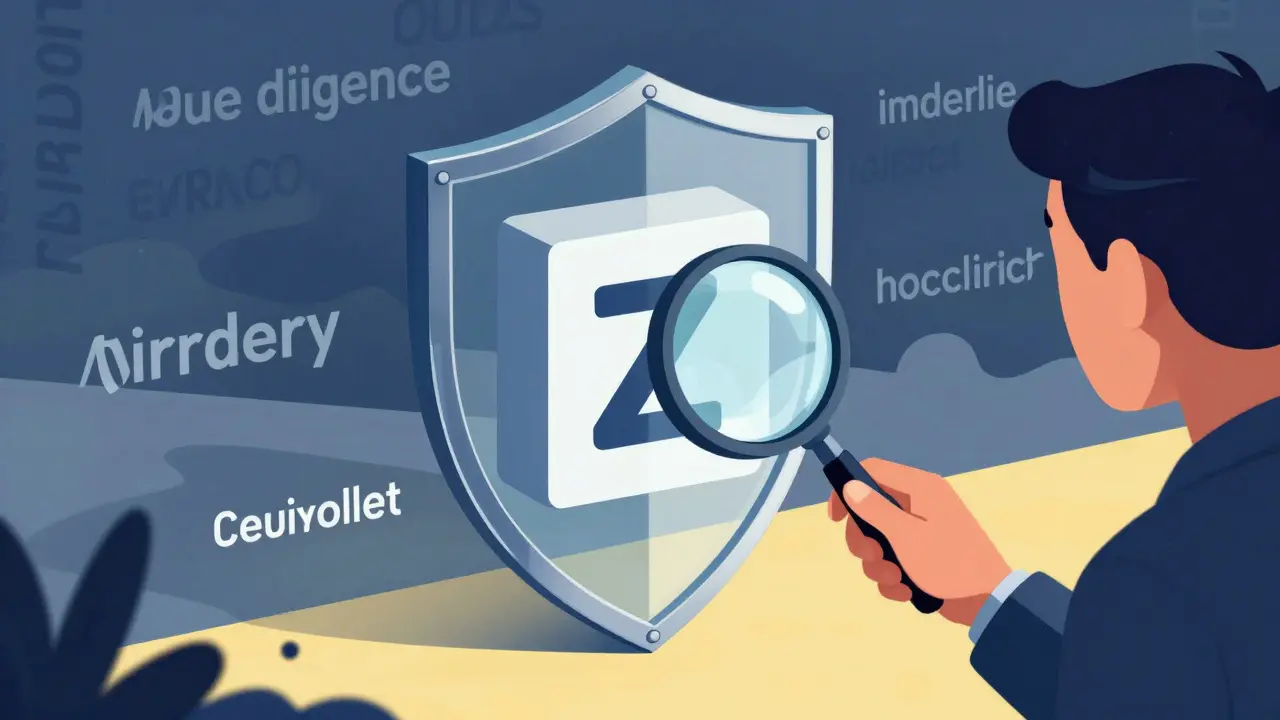
Regulatory bodies like the U.S. SEC emphasize thorough due diligence. A token that fails even basic checks-like having a website or a social media presence-should be avoided. The risk of a "rug pull," where developers abandon the project and take investors' money, is high for anonymous tokens.
How to Verify Future Updates
CoinSwitch’s FAQ mentions that data for (Z) "will be updated in the future." This suggests the possibility of a future launch. If you are interested in monitoring this, here is how to stay informed safely:
- Check Official Sources: Wait for an official announcement from a recognized entity, not just a price update on an aggregator.
- Verify the Contract: Once a contract address is published, verify it on multiple independent sources before interacting with it.
- Look for Liquidity: Ensure the token is listed on reputable DEXs with locked liquidity to prevent immediate drains.
- Join Community Channels: Legitimate projects have active Discord or Telegram groups with verified admins.
Conclusion
In summary, "Z (Z) crypto coin" on Solana is currently a placeholder, not a viable investment. It lacks the fundamental components of a real cryptocurrency: a team, a product, a community, and a market. While the Solana blockchain itself is robust and widely used, not every token listed on it is legitimate. Always prioritize transparency and verification over curiosity. If a project cannot provide basic information, it is best to look elsewhere.
Is Z (Z) on Solana a scam?
While we cannot definitively label it a scam without proof of malicious intent, it exhibits all the characteristics of a high-risk or non-existent asset. The lack of verifiable data makes it unsafe for investment.
Where can I buy Z (Z) token?
You cannot currently buy Z (Z) on any major centralized or decentralized exchange. No liquidity pools exist for this token, meaning there is no market to purchase it.
Is Z (Z) the same as Zcash?
No. Zcash (ZEC) is a separate, well-established privacy coin on its own blockchain. Z (Z) on Solana is a distinct, unverified placeholder with no connection to Zcash.
Will Z (Z) ever go live?
It is possible, as aggregators sometimes list tokens in anticipation of a launch. However, until official documentation, a contract address, and liquidity are provided, it remains speculative.
How do I check if a Solana token is real?
Use tools like Solscan or RugCheck.xyz to analyze the token's contract. Look for a verified creator, locked liquidity, and a reasonable supply distribution. Avoid tokens with unknown mint authorities.