When is the Next Bitcoin Halving? 2028 Date & Price Predictions
 Oct, 30 2026
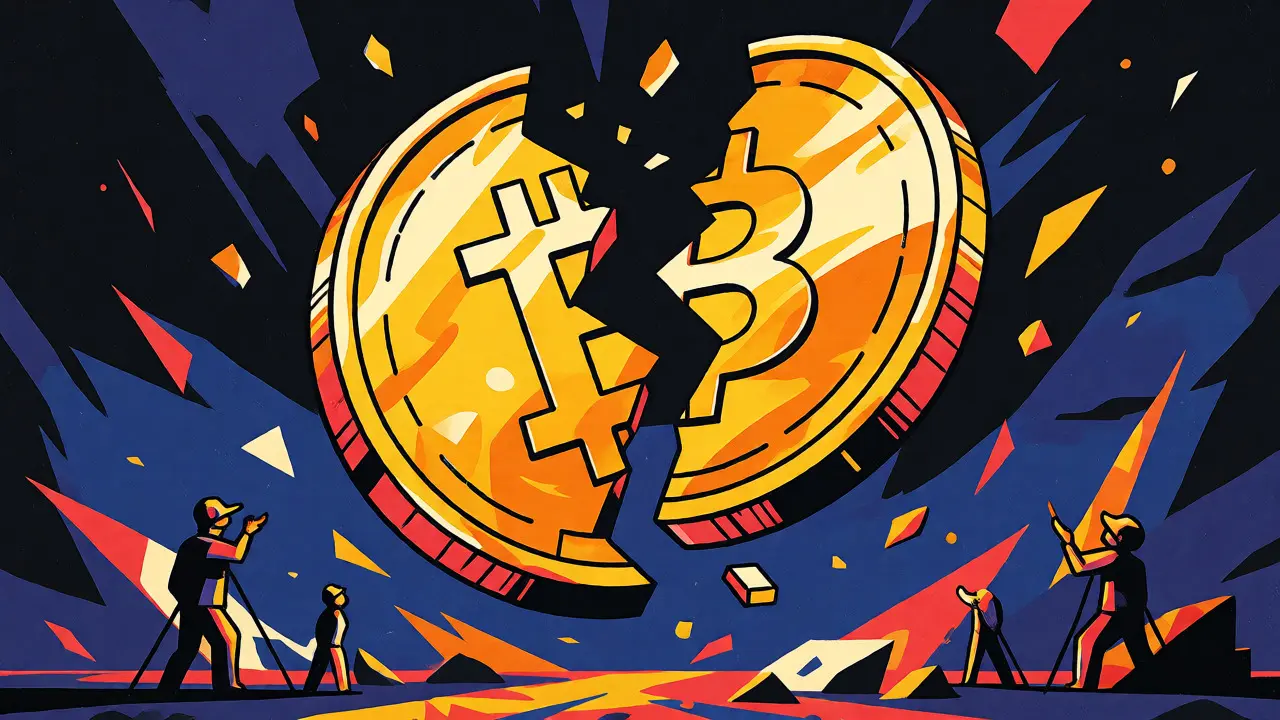
You’re probably staring at your portfolio or just curious about the big countdown ticking away in the background of every Bitcoin discussion. It’s a valid question. The next major event that shakes up the crypto world isn’t some random announcement from a CEO; it’s coded into the DNA of the network itself. We are talking about the Bitcoin halving, a scheduled reduction in the rewards miners get for securing the network.
If you want the short answer: the next Bitcoin halving is projected to happen in early 2028. Most trackers point to January 23, 2028, as the likely date, though this can shift by a few days depending on how fast blocks are mined. But knowing the date is only half the battle. You need to understand why this matters, how it impacts your wallet, and whether history will actually repeat itself this time around. Let’s break down what’s happening under the hood without getting lost in jargon.
The Short Answer: When Does It Happen?
Unlike stock earnings reports or Fed meetings, the Bitcoin halving doesn’t rely on human schedules. It relies on math. Specifically, it happens every 210,000 blocks. Since the last halving occurred at block 840,000 in April 2024, the next one triggers at block 1,050,000.
Because Bitcoin aims for a new block every 10 minutes, but actual times vary based on global mining power and difficulty adjustments, we can’t pin down an exact calendar date years in advance. However, current data suggests:
- Estimated Date: January 23, 2028 (at approximately 06:54 UTC).
- Block Height: 1,050,000.
- New Block Reward: Drops from 3.125 BTC to 1.5625 BTC per block.
Keep in mind that if miners speed up slightly, the date moves earlier. If they slow down, it pushes back. By late 2027, these estimates will tighten up significantly. For now, mark your calendar for Q1 2028, but don’t expect it to hit exactly at midnight on New Year’s Day.
Why Does Bitcoin Even Have a Halving?
Satoshi Nakamoto didn’t just invent digital money; he invented a scarcity model. Traditional fiat currencies, like the US Dollar, can be printed endlessly by central banks. This often leads to inflation over time. Bitcoin was designed to mimic gold-there’s a finite amount of it, and new units become harder to find as time goes on.
The halving is the mechanism that enforces this scarcity. Every four years (roughly), the rate at which new Bitcoin enters circulation gets cut in half. This isn’t a vote or a policy change; it’s hardcoded into the protocol. There are no off switches. No committee can decide to pause it because the price got too high. It simply happens.
This deflationary pressure is key to Bitcoin’s value proposition. As demand grows-if more people want Bitcoin-the supply of new coins shrinks. Basic economics tells us that when supply drops while demand stays steady or rises, prices tend to go up. That’s the core theory behind why halvings are such a big deal for investors.
A Look Back: How Past Halvings Played Out
History doesn’t always repeat, but it often rhymes. Looking at previous cycles helps set expectations, even if past performance never guarantees future results. Each halving has been followed by a significant bull run, usually peaking 12-18 months later.
| Halving Event | Date | Block Height | Reward Before | Reward After | Price ~6 Months Later |
|---|---|---|---|---|---|
| First Halving | Nov 28, 2012 | 210,000 | 50 BTC | 25 BTC | ~$130 (from $12) |
| Second Halving | Jul 9, 2016 | 420,000 | 25 BTC | 12.5 BTC | ~$2,520 (from $650) |
| Third Halving | May 11, 2020 | 630,000 | 12.5 BTC | 6.25 BTC | ~$17,900 (from $8,600) |
| Fourth Halving | Apr 20, 2024 | 840,000 | 6.25 BTC | 3.125 BTC | ~$90,446 (from $64,013) |
Notice the trend? In each case, the price surged after the supply shock kicked in. The fourth halving saw a 41% increase within six months, which was solid but less explosive than the 122% gain seen after the second halving. Why the difference? Institutional adoption. With the launch of spot Bitcoin ETFs in the US, the market structure has changed. Big players like BlackRock and Fidelity are now involved, smoothing out some of the volatility that retail traders used to create.
What Changes for Miners in 2028?
If you’re not a miner, you might think this doesn’t affect you. But it does. Miners are the backbone of Bitcoin’s security. They spend massive amounts of electricity and hardware costs to solve complex puzzles and add blocks to the chain. In return, they get two things: transaction fees and block rewards.
Right now, miners earn 3.125 BTC per block. In 2028, that drops to 1.5625 BTC. Suddenly, their revenue is cut in half overnight. To survive, miners have two choices:
- Increase Efficiency: Buy better machines that do more work with less power.
- Wait for Price Appreciation: Hope that the reduced supply drives the price of Bitcoin up enough to offset the lower reward.
Often, smaller or less efficient miners drop out during a halving because they can’t cover their electricity bills. This causes a temporary dip in the network’s hash rate (the total computing power securing Bitcoin). Historically, the network recovers quickly as survivors upgrade their gear. This shakeout is healthy-it ensures only the most efficient operations remain.
Will Bitcoin Price Skyrocket in 2028?
This is the million-dollar question. Many analysts use the "Stock-to-Flow" model, which correlates Bitcoin’s scarcity with its price. According to this model, less supply means higher value. But relying solely on this metric ignores other critical factors.
Here’s what could push the price up in 2028:
- ETF Demand: If institutional interest continues to grow, buying pressure could overwhelm the reduced supply.
- Macro Economics: If interest rates drop or inflation rises again, investors may flock to hard assets like Bitcoin.
- Regulatory Clarity: Clearer rules in major economies like the US and EU reduce uncertainty, encouraging entry.
However, there are risks. Regulatory crackdowns, technological breakthroughs in competing chains, or a global recession could dampen enthusiasm. Also, remember that the "buy the rumor, sell the news" phenomenon often plays out. Prices might peak before the actual halving date as traders position themselves early.

How to Track the Countdown Accurately
You don’t need to calculate block heights manually. Several tools provide real-time estimates. Here’s how to stay updated:
- CoinWarz: Uses average block times over recent periods to give a stable projection.
- NiceHash Calculator: Updates dynamically based on current network hash rate and difficulty.
- Blockchain Explorers: Sites like Mempool.space show the current block height, letting you see how close you are to 1,050,000.
Pro tip: Don’t trust any single source blindly. Block times fluctuate. A sudden surge in mining power can speed things up, while technical issues or energy crises can slow them down. Check multiple sources as the date approaches.
Beyond 2028: The Long Road to 2140
The 2028 halving won’t be the last. Bitcoin has a hard cap of 21 million coins. Once all those coins are mined, no new Bitcoin will be created. This process takes a long time because the reward keeps halving.
After 2028, the next halvings will occur roughly every four years until the year 2140. At that point, the block reward becomes negligible, and miners will rely entirely on transaction fees to secure the network. This long-term design ensures that Bitcoin remains scarce forever, unlike fiat currencies that can be debased indefinitely.
For now, focus on the near term. The 2028 event is a milestone, but it’s part of a much larger story about monetary sovereignty and digital scarcity. Whether you’re holding for the long haul or trading the cycles, understanding the mechanics helps you make smarter decisions.
What is the exact date of the next Bitcoin halving?
The next Bitcoin halving is estimated to occur on January 23, 2028, at approximately 06:54 UTC. However, this date is a projection based on current block production speeds. Because block times vary, the actual date could shift by several days or weeks. The event will officially trigger when the network reaches block height 1,050,000.
How many Bitcoin will be mined after the 2028 halving?
After the 2028 halving, the block reward will decrease from 3.125 BTC to 1.5625 BTC per block. This reduction continues the pattern of cutting new supply issuance by 50% every 210,000 blocks, gradually slowing the creation of new coins until the maximum supply of 21 million is reached around the year 2140.
Does the Bitcoin price always go up after a halving?
Historically, Bitcoin prices have risen significantly in the 12-18 months following a halving due to reduced supply and increased demand. However, this is not guaranteed. Market conditions, regulatory changes, macroeconomic factors, and investor sentiment play crucial roles. While past cycles showed strong bull runs, future performance depends on broader adoption and economic environments.
Why does the halving date change?
The halving is tied to block count, not time. Bitcoin aims for a block every 10 minutes, but actual block times fluctuate based on global mining power and difficulty adjustments. If miners produce blocks faster than expected, the halving occurs sooner. If they are slower, it happens later. This variability makes precise long-term date predictions difficult.
What happens to miners during a halving?
Miners' revenue from block rewards is cut in half. This forces less efficient miners to shut down if they cannot cover their electricity and operational costs. Over time, the network's total hash rate may dip temporarily before recovering as surviving miners optimize their operations. Eventually, miners will rely more on transaction fees as block rewards diminish toward zero.