Why Vietnam Ranks #5 in Crypto Adoption Despite Strict Restrictions
 Jun, 7 2026
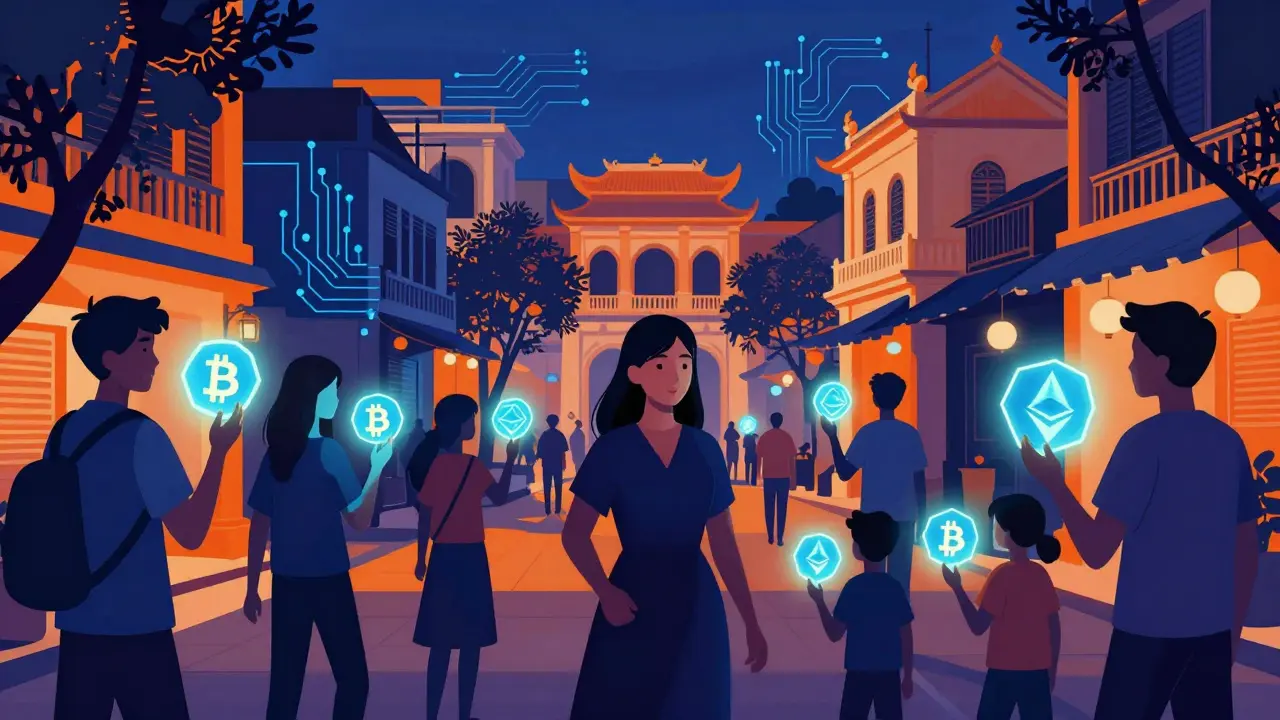
It sounds like a contradiction. How can a country with some of the strictest financial rules in Southeast Asia also be one of the world’s biggest hubs for cryptocurrency? The answer lies in the raw, unfiltered demand of its people. In the latest Chainalysis Global Crypto Adoption Index, which measures how much real money moves through digital assets relative to population size, Vietnam consistently ranks among the top five nations globally. While headlines often flash “#4” or “#6,” the reality is that Vietnam sits firmly in that elite tier, driven by millions of citizens using Bitcoin and other tokens for everyday survival and savings, not just speculation.
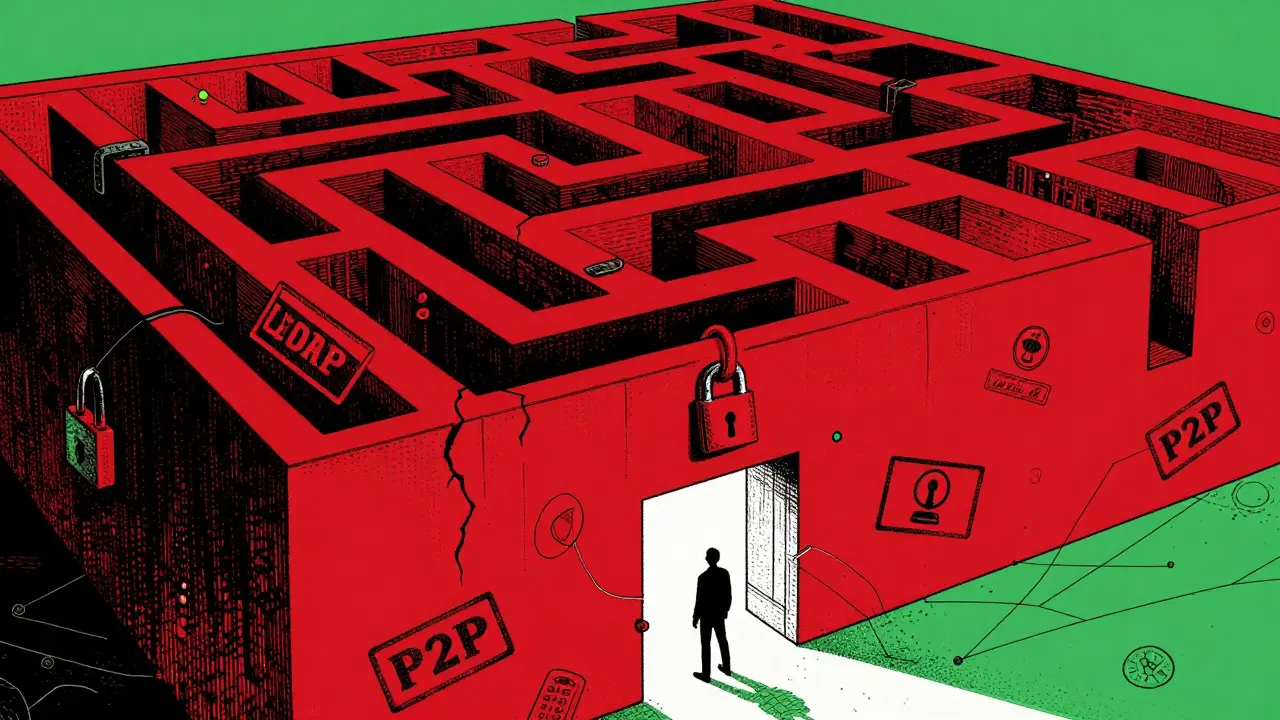
This isn’t about Wall Street-style institutional investing. It’s about regular people navigating economic uncertainty. With inflation fluctuating and the local currency facing pressure, Vietnamese users have turned to crypto as a hedge. But here is the catch: the government hasn’t banned it outright; instead, they’ve built a complex maze of restrictions. Understanding this dynamic requires looking past the hype and into the actual mechanics of how crypto works in Vietnam today.
The Reality Behind the Ranking
First, let’s clear up the confusion around the numbers. You might see different rankings depending on who you ask. The Chainalysisis a blockchain data analytics firm that tracks illicit and legitimate flows across cryptocurrencies publishes an annual index. In their 2025 report, Vietnam ranked #6 in the population-adjusted metric, which is the most accurate way to measure grassroots adoption. Some media outlets reported #4 because they looked at unadjusted total volume, but since India and Pakistan have larger populations, their total volumes are higher even if fewer percentage points of their citizens participate. When you adjust for population, Vietnam’s penetration rate is staggering: roughly 17.2% of the 98.8 million people hold or trade crypto. That translates to about 17 million active users.
Why does this matter? Because high adoption in a restrictive environment signals organic demand. People aren’t doing this because there are easy, legal exchanges handing them out. They are doing it because they need to. The transaction value generated by these users exceeds $100 billion annually. This places Vietnam as a key driver in the Asia-Pacific region, where crypto transaction values jumped 69% year-over-year to $2.36 trillion in 2025. Vietnam alone contributes about 8.5% of that regional volume. This isn’t a niche hobby; it’s a mainstream financial behavior for a significant chunk of the population.
The Regulatory Tightrope: Legalization vs. Restriction
If adoption is so high, why the strict rules? The State Bank of Vietnam (SBV)is the central bank responsible for monetary policy and financial regulation in Vietnam, led by Governor Nguyen Thi Hong, passed the Law on Digital Technology Industry in June 2025. On paper, this legalized cryptocurrencies. But read the fine print, and you’ll see the fences are still high.
The law categorizes crypto into two buckets: virtual assets (tokenized real-world products) and crypto assets like Bitcoin and Ether. However, it explicitly prohibits the issuance of fiat-backed stablecoins. This is a huge deal. Stablecoins like USDT or USDC are the lifeblood of global crypto trading because they provide stability. By banning their issuance within Vietnam, the SBV has made it nearly impossible for local companies to offer seamless, low-risk crypto services. Furthermore, all transactions must be settled in Vietnamese Dong (VND), and only Vietnamese companies can issue crypto assets backed by tangible real-world goods-not cash or securities.
To make matters more complex, any company wanting to operate as a Crypto Asset Service Provider (CASP) needs a minimum capital of 10 trillion VND (about $379 million USD). Let that sink in. Nearly $400 million just to get a license. As of late 2025, zero applications had been submitted for the regulatory sandbox pilot launched in September. Why? Because the barrier to entry is too high for private startups. Professor Nguyen Van Anh from Ho Chi Minh City University of Technology noted that this effectively limits market participation to state-owned enterprises, stifling innovation while trying to control risk.
| Feature | Vietnam | Singapore | Philippines |
|---|---|---|---|
| Stablecoin Issuance | Prohibited (Fiat-backed) | Permitted (Regulated by MAS) | Permitted (With BSP oversight) |
| Institutional Access | Limited (High Capital Req.) | Open (High Institutional Adoption) | Growing (GCrypto Platform) |
| Retail Adoption Rate | ~17.2% | Lower Retail Penetration | High via Super Apps |
| Primary Trading Method | P2P / Offshore Exchanges | Local Licensed Exchanges | Integrated Wallets (GCash) |
This table highlights the stark contrast. Singapore allows regulated stablecoins, leading to a 32% higher institutional adoption rate than Vietnam. The Philippines uses super-apps like GCash to onboard millions easily. Vietnam, meanwhile, forces its users into a gray area.
How Users Actually Trade: The P2P Workaround
So, if local exchanges are hard to launch and stablecoins are banned, how do 17 million people trade? They go offshore. A survey by OneSafe.io covering 5,000 users revealed that 87% rely on international platforms. Binance P2P is the dominant player, used by 63% of Vietnamese traders. Bybit and OKX follow with 21% and 19% respectively.
Peer-to-Peer (P2P) trading is essentially a marketplace where individuals buy and sell crypto directly from each other. In Vietnam, this is the primary on-ramp and off-ramp. You find a seller, agree on a price, transfer VND via bank transfer, and receive crypto in your wallet. It’s decentralized, yes, but it’s also messy. Users face premiums of 3-5% above market rates due to the scarcity of local liquidity. Verification processes are cumbersome, and trust is a constant concern. On Reddit’s r/CryptoVietnam community, users frequently complain about verification hassles and delayed transfers. One user, 'HanoiTrader88', posted about facing daily friction with USDT-VND trades. Another, 'SaigonCryptoMom', lamented that converting profits back to VND takes 3-4 days through informal channels.
This reliance on offshore platforms creates a disconnect. The government wants to bring activity onshore to tax it and monitor it, but the current rules push everything underground. The International Monetary Fund (IMF) warned in October 2025 that 92% of Vietnam’s crypto activity occurs outside formal channels, posing risks to financial integrity. Yet, despite these risks, the utility is undeniable. 74% of users use crypto for cross-border remittances. With Vietnam receiving $19.2 billion in remittances in 2024, crypto offers a cheaper alternative-averaging 1.2% fees compared to 6.8% for traditional banks. For a worker sending money home, saving 5% is life-changing.
The Business Barrier: Cost and Complexity
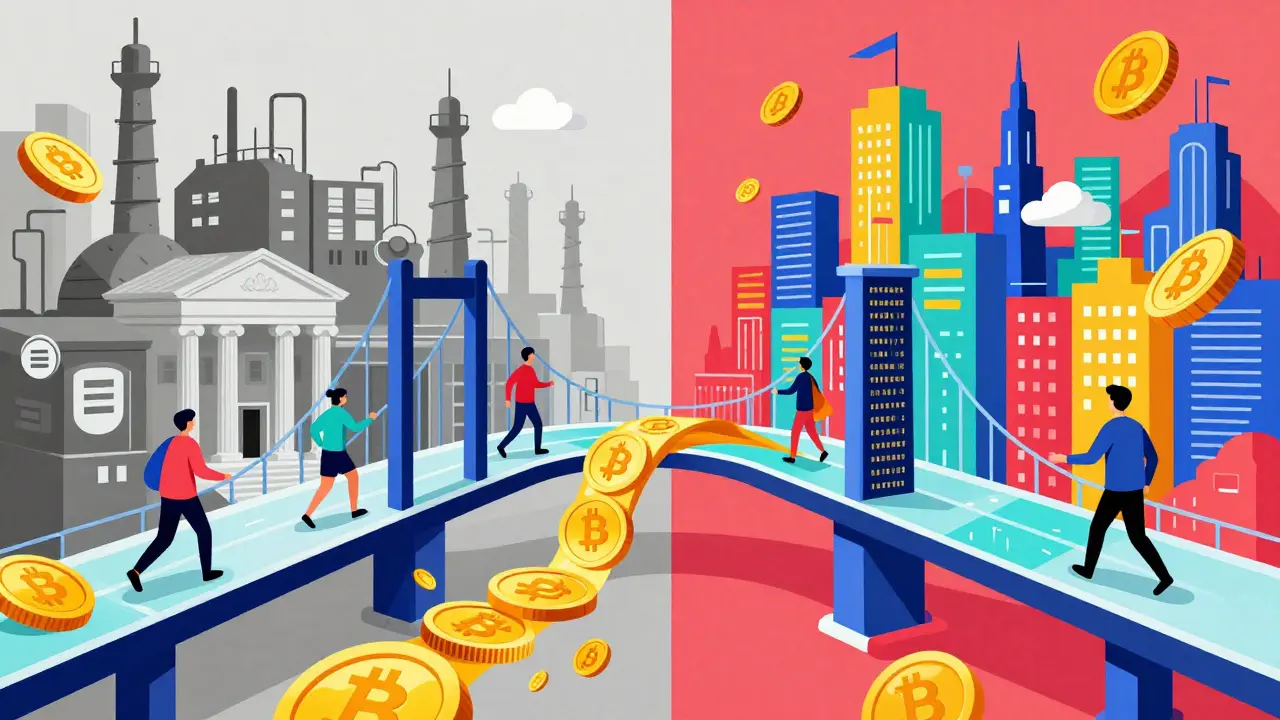
For entrepreneurs, the landscape is even tougher. If you’re a fintech startup wanting to build a compliant crypto service in Vietnam, you’re facing a nightmare of bureaucracy. The regulatory sandbox requires 14 separate compliance certifications. You need real-time transaction monitoring systems capable of processing 5,000+ transactions per second. According to PwC Vietnam, the average cost to achieve full compliance is $2.8 million USD, taking over 11 months. This kills small innovators. Only well-funded entities can survive, which contradicts the goal of fostering a vibrant tech ecosystem. Meanwhile, the country boasts 427 blockchain-related startups, up 37% year-over-year, mostly clustered in Ho Chi Minh City and Hanoi. These companies are building infrastructure, but they are largely serving global markets rather than domestic consumers due to these barriers.
Future Outlook: Will the Rules Relax?
The mood is cautiously optimistic. The Ministry of Finance released Draft Circular 40 in October 2025, proposing a 2% VAT and 0.1% transaction tax on crypto. Taxation implies recognition. If the government plans to tax it, they likely plan to regulate it more formally rather than ban it. Additionally, the SBV announced a digital đồng pilot with 20 commercial banks. While this is a Central Bank Digital Currency (CBDC) and not crypto, it could eventually integrate with existing infrastructure, creating a bridge between traditional finance and digital assets.
Experts like Sarah Liu from Chainalysis argue that Vietnam’s high retail adoption demonstrates genuine demand that should be channeled, not suppressed. Morgan Stanley projects 25-30% annual growth in Vietnam’s crypto market through 2028 if regulations evolve to allow stablecoins. Imagine if Vietnam allowed stablecoins: it could capture 15-20% of the remittance market instantly. The potential is massive. The question is whether the State Bank of Vietnam will prioritize absolute control or economic opportunity. Given the recent credit growth targets and the need to stimulate the economy amid global tariff uncertainties, loosening some reins might be the next logical step. Until then, the Vietnamese people will continue to trade, innovate, and adapt, proving that when the demand is strong enough, no firewall can fully stop it.
Is cryptocurrency legal in Vietnam in 2026?
Yes, but with significant restrictions. The Law on Digital Technology Industry passed in June 2025 legalized cryptocurrencies as digital assets. However, it prohibits the issuance of fiat-backed stablecoins and imposes strict capital requirements (10 trillion VND) for local service providers. Most trading happens via offshore platforms through P2P methods.
Why does Vietnam rank so high in crypto adoption?
Vietnam ranks in the top 5 globally due to high retail participation. Approximately 17.2% of the population uses crypto, driven by needs for remittances, hedging against inflation, and e-commerce payments. The young, tech-savvy demographic and lack of robust traditional investment alternatives fuel this adoption.
Can I use stablecoins like USDT in Vietnam?
You cannot legally issue or trade fiat-backed stablecoins through licensed local exchanges because they are prohibited. However, many users still trade USDT and USDC via Peer-to-Peer (P2P) markets on offshore exchanges like Binance, though this operates in a regulatory gray area.
What are the main risks for crypto users in Vietnam?
The primary risks include regulatory uncertainty, potential future bans, and fraud on P2P platforms. Since 92% of activity is off-channel, users lack consumer protections offered by traditional banking. High transaction fees and premium pricing on P2P trades are also common pain points.
How does Vietnam's crypto regulation compare to Singapore?
Singapore has a much more open framework, allowing regulated stablecoin issuance and attracting significant institutional investment. Vietnam restricts stablecoins and sets high capital barriers for local businesses, resulting in lower institutional adoption but higher grassroots retail usage.
dan kaffeman
June 9, 2026 AT 02:36Typical third-world desperation masquerading as innovation. You think this is impressive? It’s just people trying to escape a failing economy because their government can’t manage basic fiscal policy. In the US, we have robust institutions and actual wealth creation, not some shady P2P hustle on Binance because your local currency is worthless. This isn't 'adoption,' it's a symptom of systemic failure that Americans don't need to worry about. Stay in your lane.
Meg Gran
June 9, 2026 AT 03:56oh wow dan you really think your precious us dollar is safe huh? lol its just paper printed by greedy bankers who dont care about anyone. vietnam is surviving because they are smart enough to use tools that actually work instead of trusting corrupt systems. you sound like a robot programmed to hate anything outside your bubble. maybe try being less angry for once?
Alexander DeVries
June 9, 2026 AT 08:07I must say, the resilience demonstrated by the Vietnamese populace is truly commendable. While Mr. Kaffeman expresses his usual disdain, one cannot ignore the sheer force of will required to navigate such a complex regulatory landscape. The data presented regarding the 17.2% adoption rate is quite staggering when one considers the barriers involved. It serves as a powerful reminder that human ingenuity often outpaces bureaucratic stagnation. We should perhaps look at this not as a failure of statecraft, but as a triumph of decentralized finance principles in action. The contrast with Singapore's institutional approach offers a fascinating case study in economic sociology.
Mark Corpuz
June 10, 2026 AT 02:03The distinction between total volume and population-adjusted metrics is crucial here. Many observers mistakenly conflate the two, leading to inaccurate assessments of grassroots penetration. Vietnam’s ranking highlights the intensity of usage among its citizens rather than just aggregate capital flow. This nuance is often overlooked in mainstream financial reporting, which tends to favor headline-grabbing totals over per-capita analysis. Understanding this difference provides a clearer picture of how digital assets function as a utility for everyday transactions rather than merely speculative instruments.
Steven Jacobowitz
June 11, 2026 AT 01:29So basically, the whole system is built on a foundation of high-friction P2P trades and offshore hacks? That sounds incredibly inefficient for mass adoption. I mean, if you’re paying a 3-5% premium just to move money around, isn’t that eating into the benefits of crypto entirely? Plus, relying on Binance P2P feels like putting all your eggs in one basket that could get banned tomorrow. How sustainable is this model really when the government keeps raising the capital requirements for local players? Seems like a ticking time bomb for retail users.
Yogendra Dwivedi
June 12, 2026 AT 19:23It is interesting to observe how necessity drives technological adaptation. In many developing economies, traditional banking infrastructure does not serve the majority of the population effectively. Cryptocurrency offers an alternative pathway for financial inclusion, even if the regulatory environment is restrictive. The high adoption rate suggests that the demand for accessible financial tools is strong. Perhaps regulators could learn from this organic growth and find ways to integrate these solutions safely rather than pushing them underground.
Sylvia Mossman
June 13, 2026 AT 04:50Everyone here is acting like this is some great revolution, but let's be real-it's just tax evasion with extra steps. The government knows exactly what's happening; they're just letting it slide because they can't stop it without causing chaos. And don't get me started on the 'freedom' angle. If you're trading on black markets or gray areas, you aren't free, you're vulnerable. One day the plug gets pulled, and all those 'innovative' users lose everything. It's not clever, it's reckless.
Alexis Abster
June 13, 2026 AT 13:00There is something deeply inspiring about seeing ordinary people take control of their financial futures despite overwhelming odds! The fact that millions of Vietnamese citizens are using Bitcoin and other tokens for survival and savings shows incredible courage and adaptability. It reminds us that technology can empower individuals in ways that centralized systems never could. I hope this trend continues to grow and inspires other nations to rethink their approaches to digital assets. The future is bright for those who dare to innovate!