Blockchain Democracy: How Decentralized Governance Is Changing Crypto
When we talk about blockchain democracy, a system where token holders vote directly on network rules and upgrades. It’s not just theory—it’s happening right now on networks like Ethereum, Polygon, and TON, where people decide everything from fee structures to treasury spending. Also known as on-chain voting, it replaces top-down decisions with real user power—but only if people show up. This isn’t about politics in the traditional sense. It’s about who controls the code. In a centralized system, a CEO or dev team makes changes. In a blockchain democracy, your tokens give you a vote. The more you hold, the louder your voice. Simple. Fair. Or at least, that’s the idea.
But here’s the catch: most people don’t vote. In fact, over 80% of token holders in major DAOs rarely participate. That means a small group—often whales or well-organized teams—ends up controlling the outcome. This isn’t democracy. It’s plutocracy with a blockchain label. Real blockchain democracy needs active participation, not just the ability to vote. That’s why projects like STON.fi and others are testing new models: quadratic voting, reputation-based weighting, and even off-chain discussions to boost engagement. It’s not perfect, but it’s evolving. And when it works, it changes everything. Imagine a crypto exchange shutting down because users voted to freeze its funds after a security breach. Or a mining network adjusting its difficulty algorithm because the community demanded lower energy use. That’s the power of real governance.
Look at the posts below. You’ll see how blockchain democracy shows up in unexpected places. In Pakistan’s state-backed mining policy, you’ll see how governments react when communities bypass traditional control. In Angola’s mining ban, you’ll see what happens when central authority crushes decentralized activity. In Canada’s provincial rules, you’ll see how legal systems struggle to keep up with user-driven networks. And in the rise of DEXs like OneDex and STON.fi, you’ll see governance tokens in action—where users don’t just trade, they decide. This isn’t about hype. It’s about who really holds the keys. The posts here don’t sugarcoat it. They show you the wins, the scams, the broken systems, and the quiet experiments that might actually work. You’ll find out why some voting systems fail before they launch, why others are quietly reshaping global crypto, and how to tell the difference between real participation and theater.

Online Voting with Blockchain Technology: Can It Really Secure Elections?
Blockchain voting promises secure, transparent elections-but experts warn it doesn't fix the real vulnerabilities. Learn why paper ballots still beat digital systems for democracy.
Read More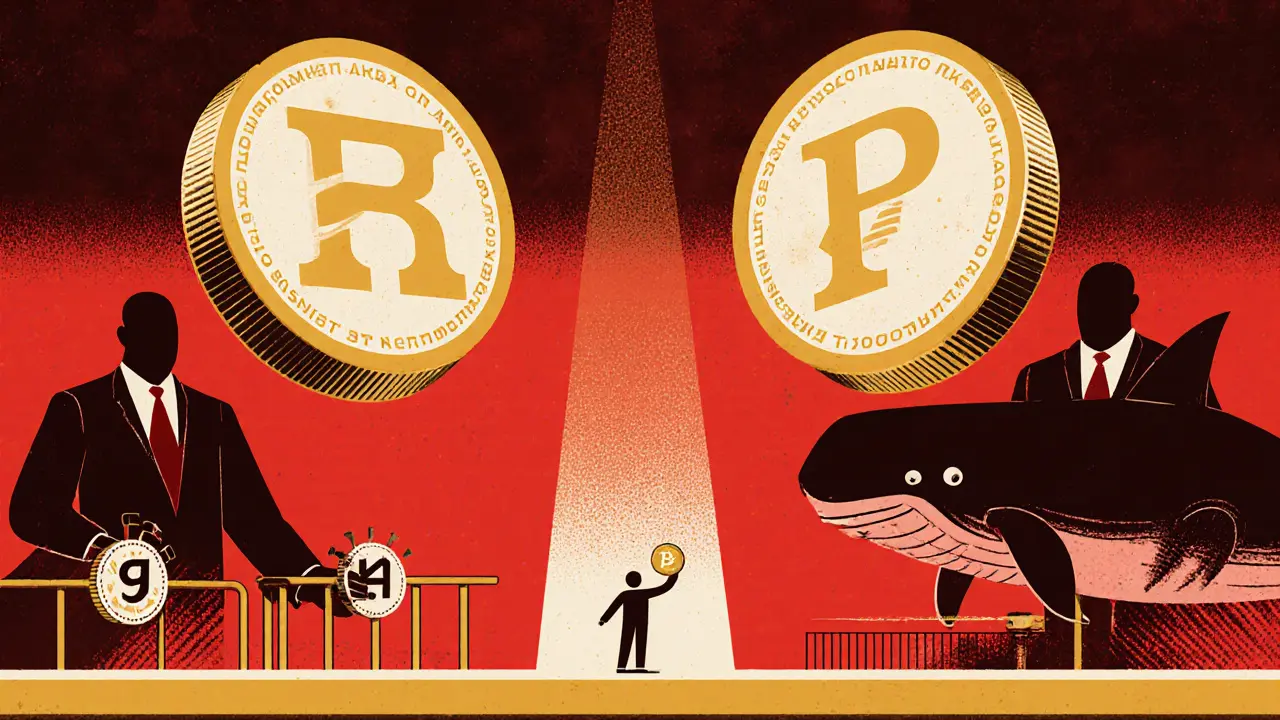
Understanding Governance Token Value: How Voting Rights Drive Decentralized Finance
Governance tokens give holders voting power in decentralized protocols, but their value is often speculative and concentrated in the hands of a few. Learn how they work, why participation matters, and what’s being done to fix broken systems.
Read More