Are Crypto Payments Allowed in India? Legal Status, Tax Rules & Restrictions Explained
 Jun, 30 2026
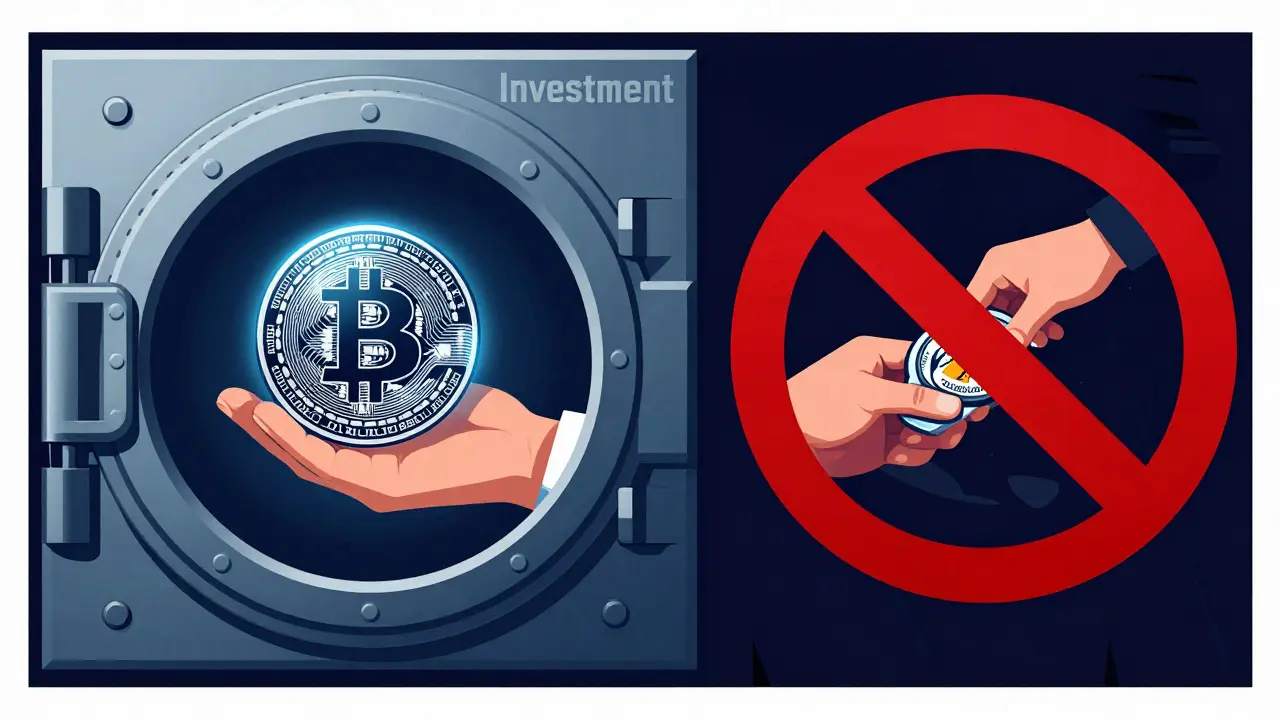
You might be wondering if you can just send Bitcoin to buy groceries or pay for a service in India. The short answer is no. As of 2026, using cryptocurrency as a direct payment method for goods and services is explicitly prohibited in India. While you can own, trade, and invest in these assets, the government draws a hard line at treating them as money.
This distinction creates a unique landscape for Indian users. You aren't breaking the law by holding crypto, but you are breaking regulations if you try to use it like cash. Understanding this boundary is crucial because the penalties for crossing it range from heavy fines to legal scrutiny under anti-money laundering laws. Let’s break down exactly what is allowed, what isn’t, and how the current regulatory framework affects your wallet.
What Is Legally Allowed with Crypto in India?
To understand the restrictions, we first need to look at what is permitted. The Indian government classifies cryptocurrencies as Virtual Digital Assets (VDAs), not currency. This classification was solidified through amendments to the Income Tax Act. Being a VDA means crypto is treated similarly to other collectible assets like gold or art, rather than a medium of exchange like the Indian Rupee (INR).
Here is what you can legally do:
- Buy and Sell: You can purchase cryptocurrencies on registered exchanges.
- Hold and Invest: Keeping crypto in your wallet as an investment is legal.
- Trade: Exchanging one cryptocurrency for another (e.g., swapping USDT for ETH) is permissible.
- Use Registered Platforms: Trading on domestic exchanges or international platforms registered with the Financial Intelligence Unit-India (FIU-IND) is required.
The key takeaway here is intent. If your goal is capital appreciation-buying low and selling high-you are operating within the legal framework. The government views this as speculative investing, similar to trading stocks or commodities, albeit with much stricter reporting requirements.
Why Crypto Payments Are Prohibited
If trading is legal, why is paying for things illegal? The core issue lies in monetary sovereignty and financial stability. The Reserve Bank of India (RBI) has consistently argued that private cryptocurrencies pose a threat to the macroeconomic stability of the country. If people start using Bitcoin instead of the Rupee, it undermines the central bank's ability to control inflation and manage interest rates.
Furthermore, the anonymity often associated with crypto transactions raises concerns about illicit activities. The Prevention of Money Laundering Act (PMLA) requires strict adherence to Know Your Customer (KYC) and Anti-Money Laundering (AML) norms. Using crypto for peer-to-peer payments bypasses traditional banking oversight, making it harder for authorities to track the flow of funds. Consequently, the government has banned the use of VDAs as a mode of payment to prevent money laundering, tax evasion, and financing of illegal activities.
This prohibition applies to all forms of commerce. Whether you are buying a coffee, hiring a freelancer, or purchasing real estate, using crypto directly is not recognized as a valid transaction method. Merchants who accept crypto payments risk having their business licenses revoked or facing legal action.
The Heavy Tax Burden on Crypto Investors
While you can't spend crypto easily, you certainly have to pay taxes on it. In fact, the taxation regime for Virtual Digital Assets in India is among the strictest in the world. Introduced in the 2022 budget and still in effect in 2026, the rules are designed to discourage speculation while ensuring revenue collection.
Here is how the math works:
- Flat Tax Rate: All income from the transfer of VDAs is taxed at a flat rate of 30%.
- No Deductions: Unlike stocks or mutual funds, you cannot offset losses against gains. If you lose ₹1 lakh on Bitcoin but make ₹50,000 on Ethereum, you still pay 30% tax on the ₹50,000 gain. The loss is essentially wiped out for tax purposes.
- Cess: An additional 4% health and education cess is added to the tax amount, bringing the effective tax rate to 31.2%.
- TDS (Tax Deducted at Source): A 1% TDS is deducted on every transaction exceeding ₹50,000. This happens at the source, meaning the exchange deducts it before crediting your account.
- GST on Fees: As of July 2025, an 18% Goods and Services Tax (GST) is levied on platform fees charged by exchanges.
This structure makes long-term holding less attractive compared to traditional equity investments, where long-term capital gains tax is significantly lower and losses can be set off. For many traders, this tax burden erodes profits quickly, forcing them to calculate net returns carefully after accounting for the 30% hit and the 1% TDS.
| Feature | Cryptocurrency (VDA) | Equity Shares |
|---|---|---|
| Tax Rate on Gains | 30% + 4% Cess | 10% - 20% (depending on holding period) |
| Loss Offset | Not Allowed | Allowed (within limits) |
| TDS Threshold | 1% on transactions > ₹50,000 | Varies by dividend/capital gains type |
| Legal Tender Status | Prohibited for payments | N/A (Investment instrument) |

Regulatory Oversight and Enforcement
The regulatory environment in India is not static; it is actively enforced by multiple agencies. The primary watchdog for compliance is the Financial Intelligence Unit-India (FIU-IND). Under the PMLA, all virtual asset service providers (VASPs), including exchanges and wallet providers, must register with the FIU-IND.
Failure to comply has resulted in massive fines. For instance, major global exchanges like Binance and Bybit faced penalties exceeding ₹18 crore and ₹9 crore respectively for non-compliance with AML regulations. These fines were only resolved after the platforms achieved proper registration and implemented strict KYC protocols. This sends a clear message: the government will tolerate crypto trading only if it is fully transparent and traceable.
The Securities and Exchange Board of India (SEBI) also plays a role, particularly when crypto tokens resemble securities. SEBI has warned investors about unregistered platforms offering Initial Coin Offerings (ICOs) that function like public issues. Meanwhile, the Ministry of Finance continues to monitor the sector, with discussions ongoing about more comprehensive legislation that could further restrict or define the boundaries of VDA usage.
The Rise of the Digital Rupee (CBDC)
If the government wants to digitize payments without losing control, they have created their own alternative: the Central Bank Digital Currency (CBDC), known as the Digital Rupee (e₹). Launched in pilot phases starting late 2022, the e₹ is a direct liability of the RBI, just like physical cash. However, it exists only in digital form.
Unlike Bitcoin or Ethereum, the Digital Rupee is centralized, stable, and fully backed by the Indian government. It offers instant settlement, lower transaction costs, and programmability features that private cryptocurrencies cannot match. The RBI views the e₹ as the future of digital payments in India, aiming to enhance financial inclusion and reduce reliance on physical currency.
For consumers, the choice is becoming clearer. If you want fast, secure, and legal digital payments, the Digital Rupee is the preferred path. If you want exposure to volatile digital assets, you stick to trading VDAs but keep them separate from your daily spending. The coexistence of these two systems highlights the government's strategy: embrace digital innovation through state-controlled channels while restricting decentralized private currencies.

Practical Tips for Crypto Users in India
Navigating this complex landscape requires diligence. Here are some practical steps to stay compliant:
- Keep Detailed Records: Maintain logs of all transactions, including dates, amounts, and counterparties. You will need this data for filing Schedule VDA in your Income Tax Return (ITR-2 or ITR-3).
- Use Only Registered Exchanges: Ensure your trading platform is listed on the FIU-IND registry. Unregistered platforms pose high risks of shutdown and fund seizure.
- Do Not Mix Personal and Business Funds: Avoid using personal wallets for business transactions. Use bank transfers for commercial dealings to maintain a clear audit trail.
- File Taxes Accurately: Declare all crypto income in your annual tax return. Failure to disclose can lead to penalties under Section 270A of the Income Tax Act, which can be up to 90% of the tax evaded.
- Avoid Peer-to-Peer Payments for Goods: Do not attempt to pay vendors or freelancers directly in crypto. Use INR via UPI or bank transfer to avoid violating the payment ban.
Future Outlook: What’s Next for Crypto in India?
As we move through 2026, the regulatory stance remains cautious. There is no indication that the ban on crypto payments will be lifted anytime soon. The government’s focus is squarely on promoting the Digital Rupee and integrating formal financial systems. Private cryptocurrencies are likely to remain confined to the investment sphere, subject to heavy taxation and strict monitoring.
However, the technology behind blockchain continues to gain traction in enterprise sectors. Supply chain management, land records, and identity verification are areas where the government is exploring blockchain solutions without involving speculative tokens. This bifurcation-embracing the tech while restricting the token-will likely define India’s crypto policy for the foreseeable future.
For individual users, the message is clear: treat crypto as a high-risk, high-tax investment asset, not as a replacement for money. Stay informed about regulatory updates, comply with tax obligations, and prioritize security. The window for unrestricted crypto usage may never open in India, but the opportunity for regulated participation remains.
Can I use Bitcoin to buy products online in India?
No, using Bitcoin or any other cryptocurrency to purchase goods or services is explicitly prohibited in India. Cryptocurrencies are classified as Virtual Digital Assets (VDAs) and cannot be used as legal tender. Merchants accepting crypto payments may face legal consequences, and buyers risk violating anti-money laundering regulations.
Is it illegal to hold cryptocurrency in India?
No, holding cryptocurrency is not illegal. You can buy, sell, and store cryptocurrencies as investments. However, you must comply with tax laws, including paying a 30% tax on gains and declaring transactions in your income tax return. Trading must occur on platforms registered with the Financial Intelligence Unit-India (FIU-IND).
What is the tax rate on crypto profits in India?
Income from cryptocurrency transfers is taxed at a flat rate of 30%, plus a 4% cess, totaling 31.2%. Additionally, a 1% Tax Deducted at Source (TDS) applies to transactions exceeding ₹50,000. Losses cannot be offset against gains, making the effective tax burden higher compared to traditional investments.
Which exchanges are legal to use in India?
Only exchanges registered with the Financial Intelligence Unit-India (FIU-IND) are legal to use. Major platforms like WazirX, CoinDCX, and registered international entities like Binance and Bybit (after complying with AML norms) operate legally. Always verify the exchange's registration status on the FIU-IND website before trading.
Will the ban on crypto payments be lifted in the future?
Currently, there are no plans to lift the ban on crypto payments. The Indian government is focused on promoting its own Central Bank Digital Currency (Digital Rupee) as the preferred digital payment method. Private cryptocurrencies are expected to remain restricted to investment and trading activities due to concerns over monetary stability and financial crime.
John Curry
June 30, 2026 AT 09:28The philosophical irony here is staggering. We have a digital asset class that was born from the ruins of centralized banking, only to be strangled by the very institutions it sought to replace. It feels like watching a phoenix try to fly while wearing lead boots. The government’s fear of losing monetary sovereignty is understandable in theory, but in practice, it just creates a black market for innovation. People will always find ways to transact outside the system if the system becomes too cumbersome or restrictive. This isn’t about crime; it’s about freedom of choice and the natural evolution of money. The Digital Rupee is a solution looking for a problem, while crypto solves real issues of accessibility and borderless transfer. Yet, we are told to embrace the former and shun the latter. It is a fascinating study in control versus chaos.
Trent Erman1
June 30, 2026 AT 22:49Hey everyone! Just wanted to drop some quick facts because I see a lot of confusion around the tax stuff. The 30% flat tax plus the 4% cess is brutal if you don't plan ahead. Most people forget that you can't offset losses. So if you lose big on one coin and make small gains on another, you still pay full tax on those gains. It's not like stocks where you can carry forward losses. Also, watch out for the 1% TDS on transactions over 50k INR. That eats into your liquidity fast. Make sure you are using FIU-IND registered exchanges only. Binance and Bybit got fined huge amounts recently so they are compliant now, but smaller unregistered platforms are risky. Stay safe out there!
Fiona Ellis
July 1, 2026 AT 22:10I must say, this article is quite thorough, but I find the tone slightly condescending towards those who wish to use crypto for payments. 🤔 It is not merely about 'speculation' as the government claims. Many freelancers and tech workers rely on crypto for cross-border payments because traditional banking fees are exorbitant and slow. To label this as 'illicit activity' is a gross oversimplification. The RBI’s stance seems more about maintaining absolute control rather than protecting citizens. I wonder how many people are actually breaking the law out of necessity rather than malice? The distinction between 'investment' and 'payment' is becoming increasingly blurred in a globalized economy. 🌍
Carol @minaszilda
July 1, 2026 AT 23:07We should remember that financial systems evolve slowly. It is okay to feel frustrated with the restrictions. Many countries are still figuring this out. Let us focus on what we can control. Learning the tax rules helps us stay safe. Being patient allows the system to mature. Everyone deserves access to fair financial tools. We can support each other through this transition period. Knowledge is power here. Stay positive and keep learning.
Nicole Woessner
July 2, 2026 AT 05:49coming from someone who has lived in both india and the us the difference in approach is wild here in the states we treat crypto like any other asset class mostly. in india its treated like a potential threat to national security which feels extreme. i get why they want to push the digital rupee but banning crypto payments entirely feels like throwing the baby out with the bathwater. especially for small businesses dealing with international clients. the tax burden is also insane compared to equity. makes me wonder if they really want people to invest or just want to punish them for trying. anyway just my two cents. hope things loosen up eventually
Jon Milton
July 2, 2026 AT 12:34Listen, stop complaining about the taxes and start adapting. The government has made its position clear. If you want to trade, pay the 30%. If you want to use it as money, you are breaking the law. Simple as that. The Digital Rupee is the future because it is stable and controlled. Crypto is volatile garbage designed for gamblers. Those who fail to understand this basic economic reality will lose their shirts. The fines for non-compliance are not suggestions. They are warnings. Adapt or get left behind. There is no middle ground here. The state needs to maintain order. Your desire for 'freedom' does not override macroeconomic stability. Grow up and follow the rules.
Sajjad Ghorbani Moghaddam
July 3, 2026 AT 07:55the thing is most people just want to buy groceries without jumping through hoops. but yeah rules are rules. gotta keep records straight though. dont mix personal and business funds. easy way to get audited. just stick to trading if thats what you do. keep it simple. life is complicated enough without crypto drama.