How to File Form 8949 for Crypto: A Step-by-Step Guide
 Jun, 28 2026
You sold Bitcoin last year. Maybe you swapped Ethereum for Solana, or bought a coffee with Dogecoin. If any of that sounds familiar, the IRS wants a receipt. Specifically, they want it on Form 8949. It is not just a suggestion; it is the primary way the government tracks your profit or loss from digital assets. Get it wrong, and you risk an audit, penalties, or a surprise tax bill that could cost you thousands.
This guide cuts through the jargon. We will walk through exactly what goes on this form, how to calculate your numbers, and why ignoring those small transactions is a dangerous game in 2026.
Key Takeaways
- Everything is a taxable event: Selling, swapping, spending, or earning crypto requires reporting on Form 8949.
- Short vs. Long Term matters: Holding crypto for less than a year means higher taxes (ordinary income rates). Holding longer gets you preferential rates.
- Cost Basis is king: You must track what you paid (plus fees) to know your actual profit. Exchanges often get this wrong.
- Software saves time: Manual entry for more than 50 transactions is nearly impossible. Use aggregation tools.
- New rules are coming: The new Form 1099-DA starts rolling out for tax year 2025, changing how exchanges report data.
What Is Form 8949 and Why Do You Need It?
Let’s clear up a common misconception first. Form 8949 is not the final summary of your taxes. It is the detailed ledger. Think of it as the raw data dump. You list every single transaction where you disposed of crypto. Once you have filled out Form 8949, you take those totals and move them to Schedule D, which then flows into your main Form 1040 return.
Why does the IRS care so much? Because since March 2014, they have treated cryptocurrency as property, not currency. This means buying low and selling high creates a capital gain. Swapping one coin for another counts as selling the first one. Even paying for goods with crypto triggers a reportable event.
The stakes are real. In recent years, the IRS has been matching data from exchanges against tax returns. If you received a Form 1099-B or 1099-K from Coinbase, Binance, or Kraken, the IRS already knows about those transactions. If your Form 8949 doesn’t match their records, you become a prime candidate for an audit. The goal here is accuracy, not evasion.
Breaking Down the Form: Short-Term vs. Long-Term
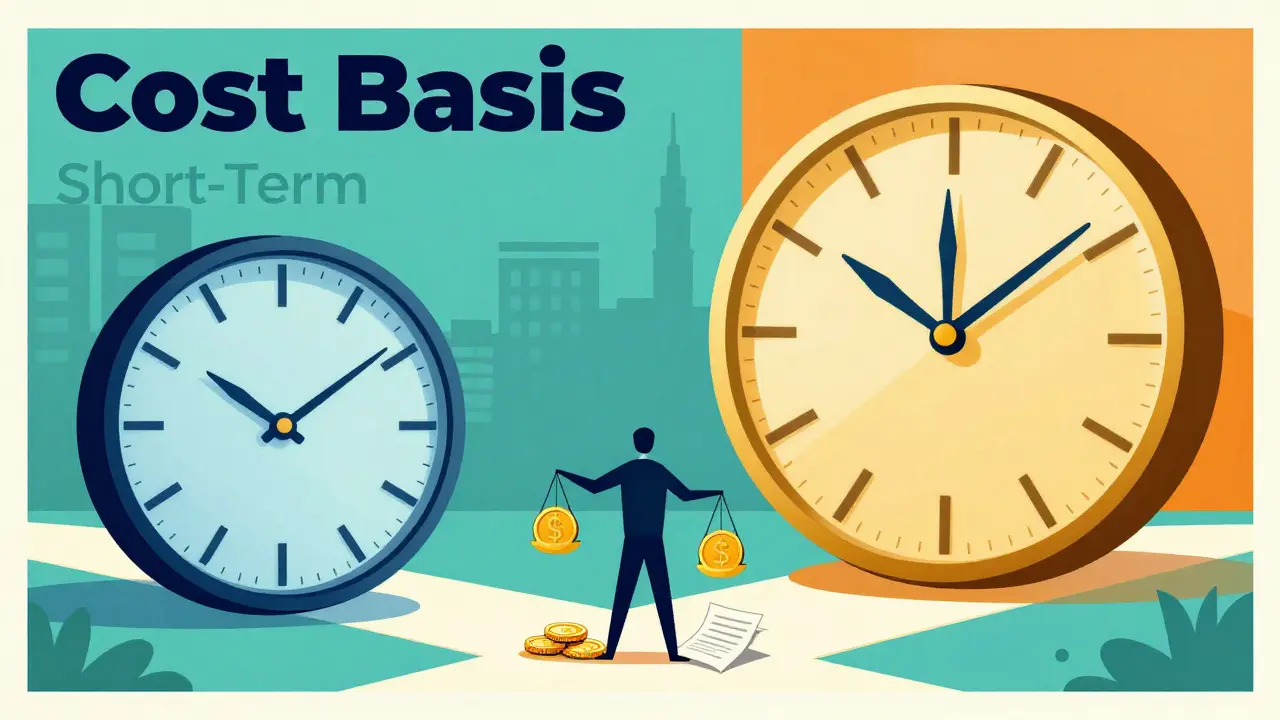
Form 8949 is split into two main parts. Which part you use depends entirely on how long you held the asset before disposing of it. This distinction changes your tax rate significantly.
| Category | Holding Period | Tax Rate (2025 Estimates) | Where to Report |
|---|---|---|---|
| Short-Term | One year or less | 10% - 37% (Ordinary Income) | Part I of Form 8949 |
| Long-Term | More than one year | 0%, 15%, or 20% | Part II of Form 8949 |
If you bought Bitcoin in January 2025 and sold it in June 2025, that is short-term. You pay your regular income tax rate on the profit. If you bought it in December 2024 and sold it in June 2025, that is long-term. You likely pay a lower rate. Knowing this difference can save you thousands if you plan your trades strategically around the calendar year.
How to Fill Out Form 8949: Step-by-Step
Each line on Form 8949 represents one specific transaction. Here is what you need to gather for every single swap, sale, or spend.
- Description of Property: Be specific. Write "0.5 BTC" or "10 ETH." Do not just write "Bitcoin."
- Date Acquired: The exact day you bought or received the crypto. If you mined it, this is the date you secured the block reward.
- Date Sold/Disposed: The day you sold, swapped, or spent it.
- Sales Price: The fair market value in USD at the moment of disposal. If you swapped ETH for USDT, this is the USD value of the USDT you received.
- Cost Basis: What you originally paid for that specific amount of crypto, including any network fees or exchange commissions. This is crucial. Many people forget to add the fees, which artificially inflates their gain.
- Code (Column f): Leave blank unless you need to adjust the basis reported by an exchange. For example, if the exchange didn't include your buy fee in the cost basis, you might use code "B" to add it manually.
- Gain or Loss: Subtract your Cost Basis from your Sales Price. Positive number = Gain. Negative number = Loss.
Here is a concrete example. Let’s say you bought 1 ETH for $2,000 on May 1, 2024. You paid a $10 fee. Your total cost basis is $2,010. On August 1, 2024, you sold that 1 ETH for $3,000. You paid a $15 sell fee. Your net sales price is $2,985.
Your calculation looks like this: $2,985 (Sales) - $2,010 (Basis) = $975 Gain. Since you held it for less than a year, this goes in Part I (Short-Term).
The Cost Basis Nightmare: FIFO, LIFO, and Specific ID
This is where most traders get stuck. What if you bought Bitcoin five different times at five different prices? Which one did you sell when you clicked "Sell" on your exchange?
The IRS allows three methods to determine which units you sold:
- FIFO (First-In, First-Out): You assume you sold the oldest coins first. This is the default method used by many exchanges and tax software because it is easy to verify.
- LIFO (Last-In, First-Out): You assume you sold the newest coins first. This can sometimes lower taxes in a rising market but is harder to justify without detailed records.
- Specific Identification: You point to the exact lot of crypto you sold. This offers the most control over your tax bill but requires meticulous record-keeping. You must prove to the IRS which specific wallet address or transaction hash corresponds to the sale.
Most experts recommend sticking with FIFO unless you have a sophisticated setup. Changing your method mid-year or switching between methods without IRS approval can trigger red flags. Consistency is key. Pick a method, document it, and stick to it for all similar assets.
Common Mistakes That Trigger Audits
I see these errors constantly in client files. Avoiding them keeps you safe.
Ignoring "Zero-Gain" Transactions: Just because you broke even or lost money doesn't mean you skip the line. The IRS instructions explicitly state you must report all dispositions, even those with $0 gain or loss. Omitting these makes your total volume look lower than what the exchange reported, which is a classic audit trigger.
Forgetting DeFi and NFTs: Buying an NFT and selling it later? That’s a capital gain. Providing liquidity to a decentralized exchange and earning rewards? That’s ordinary income, but when you withdraw that liquidity, it’s a disposition requiring Form 8949. These transactions don’t always show up on a standard 1099-B from a centralized exchange, but they are still taxable.
Mismatched Dates: Exchanges operate on UTC time. Your local bank statement might show a settlement date that is a day later. Always use the timestamp from the blockchain or the exchange’s transaction history for the "Date Disposed." Using the wrong date can accidentally turn a long-term gain into a short-term one, costing you extra tax.
Manual Entry vs. Tax Software
If you have fewer than 10 transactions a year, you can probably do this manually with a spreadsheet. But if you are an active trader, manual entry is a recipe for disaster. A study of US crypto traders found that 42% spent 5-10 hours preparing Form 8949, while 12% spent over 20 hours. Errors compound quickly.
Crypto tax software like Koinly, CoinTracker, or CoinLedger connects directly to your exchanges via API. They pull every transaction, categorize them, apply your chosen cost basis method (like FIFO), and generate a CSV file ready to import into TurboTax or H&R Block. This reduces preparation time from days to minutes. For anyone with more than 50 transactions, this tool is not a luxury; it is a necessity.
However, do not trust the software blindly. Always review the output. Check that airdrops were categorized correctly. Ensure that cross-chain swaps were linked properly. The software is only as good as the data you feed it.
What’s Changing in 2026? The Rise of Form 1099-DA
The landscape is shifting. Starting with tax year 2025 (filed in 2026), the IRS introduced Form 1099-DA. This new form replaces the old 1099-B for digital assets. Crucially, it requires brokers to report both the proceeds AND the cost basis.
In previous years, exchanges often reported only the gross proceeds. You had to dig up your own purchase records to find the cost basis. With 1099-DA, the exchange does the heavy lifting. This simplifies Form 8949 for centralized exchange users. However, it also means the IRS has even more accurate data to compare against your return. There is nowhere to hide unreported gains anymore.
For decentralized finance (DeFi) users, the change is slower. Self-custody wallets and peer-to-peer swaps do not involve a broker who issues a 1099-DA. You remain fully responsible for tracking these transactions and filling out Form 8949 manually or via software. The burden of proof stays with you.
Next Steps and Troubleshooting
Ready to tackle your taxes? Here is your action plan.
- Gather Records: Export transaction histories from every exchange, wallet, and DeFi platform you used in the tax year.
- Choose a Tool: If you have significant volume, upload your data to a reputable crypto tax aggregator.
- Verify Cost Basis: Check that fees are included and that the cost basis method matches your strategy.
- Generate Form 8949: Export the form from your software or fill it out manually.
- File Early: Don’t wait until April 14. If you realize you missed a transaction, you can file an amended return (Form 1040-X) later, but it is easier to get it right the first time.
If you made a mistake on a prior year’s return, consider filing an amendment. The IRS generally does not penalize you if you voluntarily correct an error before they contact you. Ignoring it is far worse.
Do I need to report crypto losses on Form 8949?
Yes. You must report all dispositions, including losses. Reporting losses can help offset your gains, potentially lowering your overall tax bill. If your losses exceed your gains, you may be able to deduct up to $3,000 of net capital losses against other income, carrying forward the rest to future years.
What if I swapped one cryptocurrency for another?
A swap is a taxable event. When you trade ETH for SOL, you are technically selling the ETH and buying the SOL. You must report the fair market value of the SOL received as the sales price of the ETH on Form 8949. Calculate your gain or loss based on the original cost basis of the ETH.
How do I handle crypto earned as staking rewards?
Staking rewards are taxed as ordinary income at the fair market value on the day you receive them. This establishes your cost basis. When you eventually sell or dispose of those staked coins, you use that initial value as your cost basis on Form 8949 to calculate capital gains or losses.
Can I claim a loss if my crypto was stolen or hacked?
Yes, but it is complicated. Theft losses are generally treated as casualty losses. You must report the theft to law enforcement and obtain a police report. The loss is usually deductible as a miscellaneous itemized deduction subject to certain limitations, and it may require Form 4684 rather than just Form 8949. Consult a tax professional for this scenario.
Do I need Form 8949 if I only hold crypto and never sell?
No. Simply holding cryptocurrency is not a taxable event. You only need to file Form 8949 when you dispose of the asset-by selling, swapping, spending, or gifting it. If you just bought and held Bitcoin all year, you do not report it on Form 8949, though you may still need to answer "yes" to the crypto ownership question on Form 1040.